
Lombok Island Escape Beyond Bali – From Rinjani Summit to Secret Southern Bays
Lombok – The Beautiful Neighbor of Bali You’ll Wish You Found Sooner
There is a moment on Lombok when the world goes silent. The sun slips quickly below the horizon, the sky deepens into indigo, and within minutes the island is wrapped in velvet darkness. No neon glow. No traffic roar. Just the rhythm of the sea and the distant outline of Mount Rinjani rising into cloud.
Most travelers rush to Bali. Few look east. And that is precisely why Lombok feels like a discovery.
Located in West Nusa Tenggara, Indonesia, Lombok sits between Bali to the west—separated by the Lombok Strait—and Sumbawa to the east across the Alas Strait. Its geographical position between the Pacific Ocean and the Indian Ocean gifts the island with long, seemingly endless beaches and dramatic coastal lines shaped by two mighty bodies of water.
You can reach Lombok from Bali in about two hours by boat or just 30 minutes by plane. The journey is short. The difference in atmosphere is profound.
A Landscape Ruled by Mount Rinjani
At 3,726 meters high, Mount Rinjani dominates the northern skyline like a sacred guardian. Sometimes visible. Sometimes hidden in mist. Always present.
From the summit, on a clear day, you can see across northern Lombok and even toward Mount Agung in Bali. It is a view that redefines scale. The island unfolds beneath you—forests, coastline, villages, ocean—layered in shifting light.
Rinjani is not merely a mountain. It is a spiritual anchor. Local communities regard it with reverence, and its slopes hold waterfalls, villages, and stories that stretch back generations.
Standing there, you understand Lombok immediately: this is an island shaped by nature, not by tourism trends.
What You Should Know Before You Go
Lombok is not Bali. And that is the point.
Infrastructure here remains relatively basic. You won’t find the polished urban convenience of its western neighbor. There are no widespread taxi systems, no public phone booths lining the streets. English is not commonly spoken across the island, especially outside tourist hubs.
Traffic? Almost nonexistent compared to Bali’s congestion. Travelers move mostly by motorbike. Some locals still travel by horse. Yes—horse. And yes, you may encounter chickens and cows wandering calmly along the roadside. It’s part of daily life.
The dry season runs roughly from mid-June to September. If you prefer clear skies and less humidity, this is your window. During the wet season, the island takes on a lush intensity, but humidity can be high.
One detail surprises many first-time visitors: darkness arrives quickly. Shortly after sunset, the island is enveloped in night. Plan accordingly.
Lombok rewards those who adapt. Come prepared for simplicity. Stay for the authenticity.
Kuta and Southern Lombok – Where the Ocean Turns Sapphire
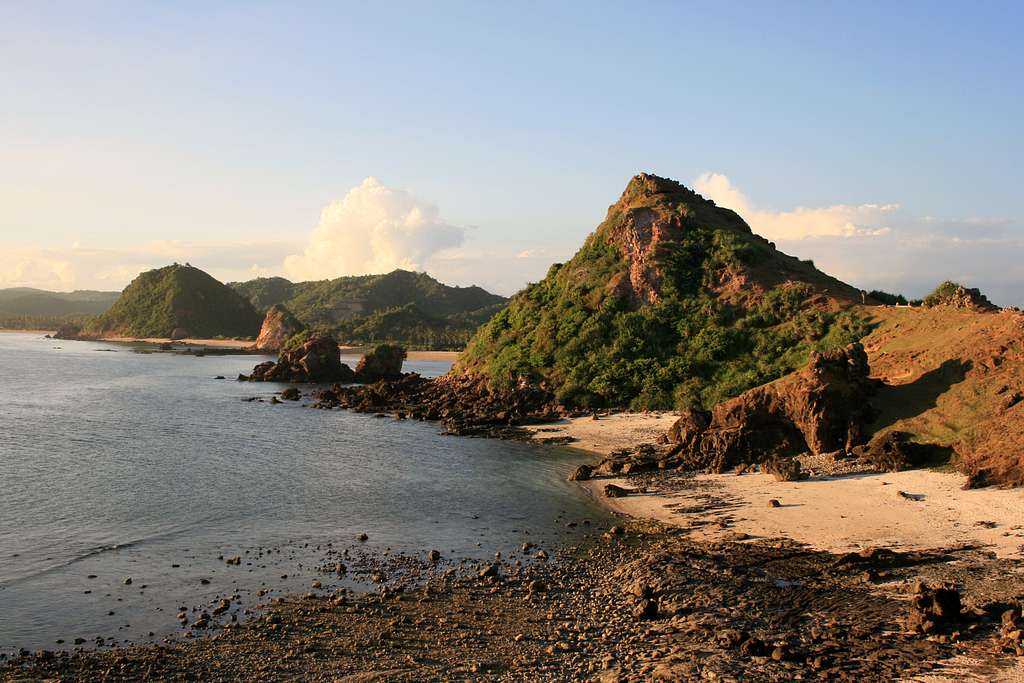
On the southern coast lies Kuta Lombok and its surrounding bays—an area defined by crystalline water and untouched curves of sand.
Beaches like Mawun and Selong offer long stretches of soft shoreline and blue gradients that seem almost engineered by nature. Spend a day moving between them. Swim. Sit. Watch the wind sculpt the surface of the sea. There’s a raw elegance here—no overdevelopment, no overcrowded beach clubs competing for attention.
Accommodation ranges from modest guesthouses to refined resorts, allowing you to choose your own pace of luxury. But regardless of where you stay, the real indulgence is space. Southern Lombok gives you room to breathe.
Senggigi – The Island’s Social Coastline
On the western side, Senggigi offers a different rhythm. Its 10-kilometer coastline makes it Lombok’s most visited area, yet it still feels relaxed by international standards.
Here, you’ll find restaurants, bars, nightclubs, travel companies, currency exchange points, souvenir shops, and everything needed for a comfortable stay. Hotels and upscale resorts line the coast, offering ocean views framed by palm trees.
Senggigi is where you unwind after exploring. Where you enjoy seafood as the sky turns gold. Where you listen to waves after an evening walk along the beach.
It has development—but not excess. Energy—but not chaos.
Traditional Craft Villages – Living Artistry
Beyond beaches and mountains, Lombok’s cultural depth reveals itself in its craft villages.
In West Lombok, Banyumulek is renowned for pottery. In central Lombok, Penujak continues the ceramic tradition. Masbagik in East Lombok adds its own regional character. Each village produces handcrafted pieces shaped by technique passed through generations.
Weaving villages like Sukarare (West Lombok), Puyung (central Lombok), and Pringgasela (East Lombok) showcase intricate textiles that reflect local identity. These are not staged performances for tourists. They are working communities where art is daily life.
Spend time here. Watch hands move with quiet precision. Understand the patience behind each object.
Lombok’s culture is tactile. You feel it in clay, in fabric, in the rhythm of village life.
Sindang Gila and Tiu Kelep – Waterfalls of the North
Near Senaru village, on the slopes of Mount Rinjani, lie two waterfalls that feel almost mythical: Sindang Gila Waterfall and Tiu Kelep Waterfall.
Sindang Gila cascades powerfully, its name often associated with “crazy lion” due to its force. A short trek brings you close enough to feel the spray on your skin.
Further along, Tiu Kelep feels more hidden. More secretive. The water drops into a natural basin surrounded by lush greenery. Locals and foreign travelers alike gather here, drawn by the refreshing escape from tropical heat.
These waterfalls are not just scenic stops. They are immersion points—places where Lombok’s wild character becomes undeniable.
Pura Lingsar – Where Faith Converges
In a world often divided by belief, Pura Lingsar stands quietly unique.
This temple complex is the only place on Lombok where followers of Hinduism, Buddhism, Christianity, and Islam gather to pray for prosperity, fertile land, favorable weather, health, and success. Two sacred temples share the same spiritual space.
It is not loud. It is not theatrical. It is simply meaningful.
In Pura Lingsar, you see Lombok’s soul—interwoven faiths coexisting under one sky.
Why Lombok Feels Different
Lombok doesn’t perform for you.
It doesn’t overwhelm with nightlife. It doesn’t compete for social media dominance. It does something more powerful—it remains itself.
The air is clean. The streets are calm. Mount Rinjani watches over the island. The beaches stretch uninterrupted. Craft villages continue their quiet work. Waterfalls thunder without marketing campaigns.
And at night, when darkness falls swiftly, you realize something rare: you are somewhere authentic.
If Bali is the jewel, Lombok is the secret garden beside it. Less polished. More intimate. And unforgettable.
You can arrive in half an hour from Bali. But emotionally, it feels like you’ve traveled much farther.
Once you experience Lombok, the thought is simple and immediate:
Why didn’t I come here sooner?
Traditional Villages of Lombok – Pottery, Weaving, and Living Heritage
Lombok Island travel, Lombok vs Bali, Mount Rinjani trek, Kuta Lombok beaches, Senggigi coastline, Lombok waterfalls, Sindang Gila waterfall, Tiu Kelep waterfall, Pura Lingsar temple, Lombok craft villages, Banyumulek pottery, Sukarare weaving, Lombok dry season, Indonesia island escape, West Nusa Tenggara travel
