
There are countries you visit, and then there are countries that insinuate themselves into your imagination and refuse to leave. Vietnam belongs to the latter. Mention a single place name and seasoned travelers nod, already halfway there in their minds. The country unfolds not as a checklist but as a series of invitations, each more persuasive than the last. From jungled peninsulas to imperial tombs, from limestone seas to volcanic coastlines, Vietnam offers a geography that feels composed rather than accidental.
Travel here is never singular. It is layered. Landscape slides into history. Nature converses with architecture. A hotel room window frames not just a view, but a narrative you have been waiting to step into.
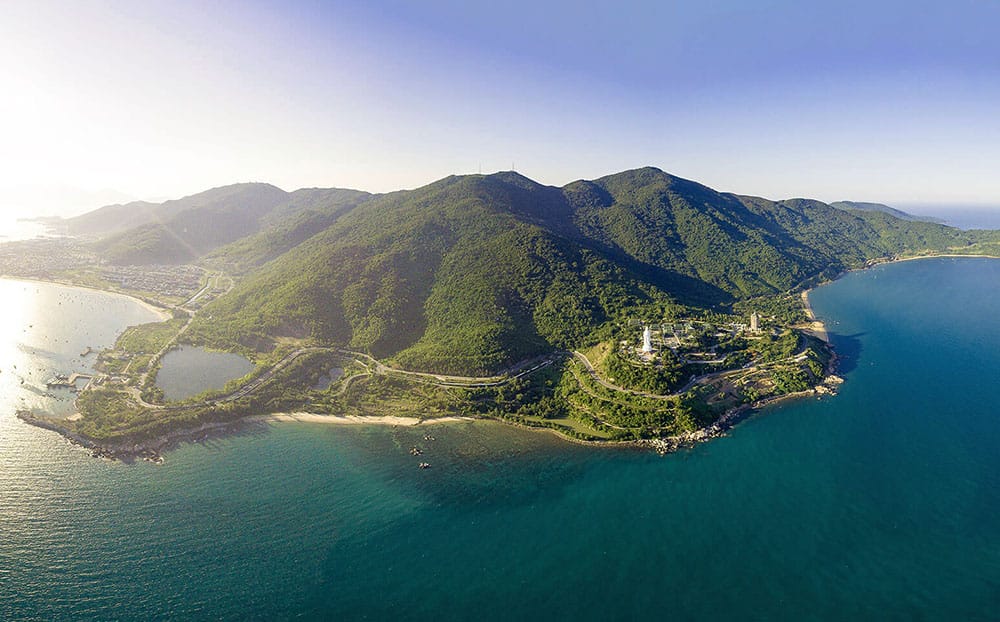
Begin in Da Nang, where the Son Tra Peninsula rises unexpectedly from the city like a green afterthought that became essential. This is not wilderness at a distance. This is forest breathing beside concrete. Son Tra carries old growth jungle in its spine and warm sea along its edges, allowing travelers to move effortlessly between altitude and tide. One hour you are tracing shaded paths through dense canopy, the next you are watching fishing boats idle on a glassy horizon. Tours here are varied and unhurried, from guided forest explorations to coral diving with local fishermen who know these waters by instinct rather than map. Hotels in Da Nang understand this duality. They offer early breakfasts for mountain departures, sea facing balconies for evenings that require nothing more than a breeze and time.
Further north, Hue waits with a different posture. Quiet. Reflective. The Nguyen Dynasty tombs rest beyond the city center like chapters of a long, thoughtful book. Each mausoleum is distinct, shaped as much by the personality of its emperor as by the surrounding land. Minh Mang feels measured and philosophical. Tu Duc appears lyrical, almost melancholy. Khai Dinh breaks convention entirely, fusing Eastern symbolism with Western ornamentation in a way that still surprises first time visitors. To walk these grounds is to move slowly, inevitably. Hue’s hotels mirror this mood. Courtyards replace corridors. Silence is treated as a feature, not an absence. Staying here is not about proximity alone, but about alignment with the city’s contemplative rhythm.
Then there is Phu Quoc, an island that seems to have arrived slightly ahead of its time. Long beaches of pale sand stretch with an almost careless generosity. The water remains improbably clear. Inland, dense forests rise into hills that reward those willing to leave the shoreline. This is not a resort island that forgot its roots. It still feels elemental. Snorkeling reveals coral gardens below. Hiking leads to viewpoints where the island’s scale finally makes sense. Hotels in Phu Quoc are designed to disappear into the landscape, low profile structures that emphasize open space, outdoor living, and the pleasure of doing very little very well.
The Mekong Delta tells its story horizontally. Life here flows. Rivers split and rejoin. Markets float. Villages lean toward the water as if listening. This is Vietnam at its most intimate and least performative. You wake early to watch boats converge at dawn, fruit changing hands with practiced efficiency. Canals wind through rice fields and past orchards heavy with promise. Staying in the delta often means choosing smaller, locally inspired accommodations where hospitality feels personal rather than procedural. The benefit is immersion. You are not observing life here. You are temporarily part of it.
In the northwest, Sapa shifts the narrative again. Mountains dominate the conversation. Valleys fold into one another like careful origami. Terraced rice fields trace the hillsides with a patience that borders on devotion. Ethnic minority villages dot the landscape, each with its own textures and traditions. The climb toward Tram Ton Pass tests resolve and rewards it in equal measure. For those drawn higher still, the ascent of Fansipan offers a perspective that recalibrates scale entirely. Hotels in Sapa are positioned for pause. Fireplaces. Broad windows. Spaces designed for recovery as much as rest.
Central Vietnam shelters one of its most astonishing secrets at Phong Nha Ke Bang National Park. Beneath the forest lies a world of stone and shadow, carved over millions of years. Vast caves open like subterranean cathedrals, rivers running silently through their cores. Stalactites and limestone formations feel less decorative than architectural, as though nature were rehearsing for something monumental. Exploring here is equal parts adventure and reverence. Nearby accommodations prioritize simplicity and access, understanding that the caves themselves are the primary luxury.
Ha Long Bay hardly requires introduction, yet it still manages to exceed expectation. From above, it resembles an ink painting rendered in three dimensions. Limestone pillars rise from calm water with an elegance that seems rehearsed. Overnight cruises transform the experience entirely. Evening light softens the stone. Morning brings mist and quiet movement. Cabins on the bay function as floating hotels, offering comfort without distraction. The benefit is presence. You wake inside the landscape rather than looking at it.
Hanoi contributes a moment of stillness within the capital’s energetic pulse at One Pillar Pagoda. Modest in scale, profound in symbolism, it stands like a thought made physical. Rising from a lotus pond, it reminds visitors that meaning does not depend on size. Nearby hotels blend colonial legacy with modern convenience, placing guests within walking distance of both historic calm and urban momentum.
Along the south central coast, Ganh Da Dia defies easy metaphor. Basalt columns form interlocking patterns that appear almost designed, though their origin lies in ancient volcanic activity. The sea breaks against these formations with rhythmic insistence. It is geology made theatrical. Accommodations nearby remain understated, allowing the landscape to retain its authority. Staying here feels like discovering a place before it decides what it wants to become.
Finally, Hue returns in full, not as a collection of tombs but as an imperial capital. Recognized as a UNESCO World Heritage Site, the city’s citadel integrates architecture and environment with uncommon grace. The Perfume River curves past walls and gardens as if assigned the role centuries ago. Ngu Binh Mountain anchors the view. Staying in Hue places travelers within a living composition where every element feels intentional.
Across these destinations, Vietnam’s hotels share a quiet understanding. Comfort is not excess. Service is not spectacle. Features are designed to support experience rather than overshadow it. Strategic locations reduce transit fatigue. Thoughtful amenities restore energy. Staff act as interpreters of place, not merely attendants.
This is why travelers leave Vietnam with urgency rather than closure. The country does not conclude. It continues, patiently, until you return.
Vietnam travel blog, Vietnam tour destinations, best places to visit Vietnam, Vietnam travel experience, Vietnam hotel guide, Vietnam nature travel, Vietnam cultural tour, Vietnam luxury travel, Vietnam adventure destinations, Vietnam UNESCO sites, Vietnam coastal travel, Vietnam mountain travel, Vietnam island vacation, Vietnam travel itinerary, Vietnam tourism guide
