
Seoul city tour guide, five destinations you feel before you photograph
Seoul is not a city that waits politely to be understood. It rushes you, seduces you, then pauses unexpectedly, inviting reflection in the most unlikely corners. It is a capital built on contradictions that somehow cooperate. Glass towers loom over palace roofs. Ancient rituals unfold a subway stop away from the latest fashion launches. Seoul does not blend the old and the new. It lets them coexist, side by side, occasionally arguing, often inspiring.
For travelers who want more than a checklist, Seoul offers a sequence of encounters that feel personal. These five places are not merely famous. They are expressive. Each one reveals a different register of the city, and together they form a portrait that lingers long after the flight home.
Bukchon Hanok Village
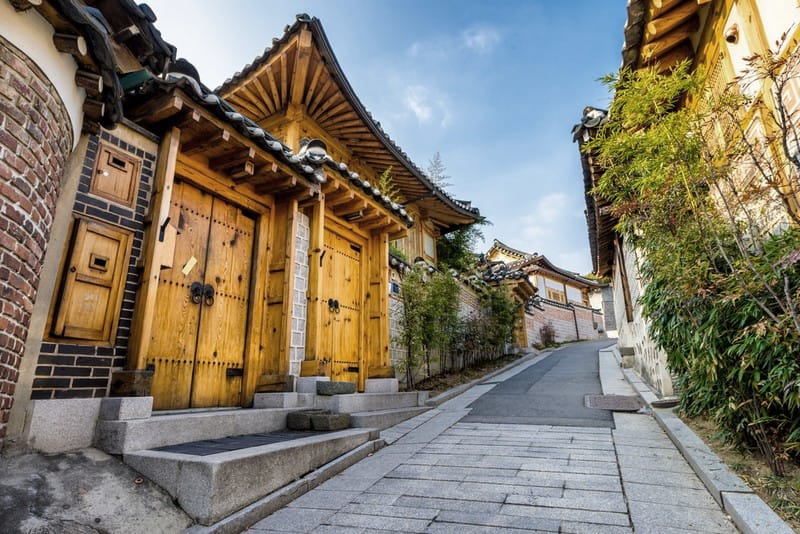
Bukchon is Seoul speaking softly. Set between two royal palaces, this village of traditional hanok houses survives not as a museum but as a lived neighborhood. Wooden beams curve gently under tiled roofs. Stone lanes climb and dip, narrow enough to slow your pace and quiet your voice.
Walking through Bukchon feels like stepping into a paragraph written centuries ago and never edited. The houses date back to the Joseon Dynasty, yet laundry dries in courtyards and the smell of morning coffee mingles with pine and old timber. The past here is not preserved behind glass. It breathes.
Travelers come early, when the light is pale and forgiving, and the city below has not yet found its rhythm. From certain corners, the view opens suddenly, revealing modern Seoul rising beyond the rooftops, a reminder that time here layers rather than replaces itself.
Staying near Bukchon means mornings begin calmly. Boutique hotels and restored hanok guesthouses offer understated comfort, heated floors, thoughtful design, and hosts who understand the etiquette of the neighborhood. The benefit is proximity not just to a place, but to a mood. You wake inside history, then walk downhill into the present.
The Korea Furniture Museum
Tucked into a hillside and half-hidden by gardens, the Korea Furniture Museum is one of Seoul’s quiet revelations. It is not loud. It does not advertise itself. It rewards those who seek.
The museum houses more than two thousand pieces of traditional Korean furniture displayed across multiple hanok buildings. Each structure is an exhibit in itself, arranged with a sensitivity that allows objects to speak rather than shout. Cabinets, chests, tables, and screens reveal a design philosophy rooted in restraint and balance.
Here, you learn how Koreans once lived with space. Furniture is low, portable, adaptable. Rooms transform with need. Light filters through paper doors, softening edges, encouraging patience. The experience is meditative, almost domestic, as though you are visiting an impeccably kept home rather than an institution.
Hotels nearby tend to be small and discreet, appealing to travelers who value depth over display. They offer peaceful gardens, attentive service, and easy access to both cultural sites and transport. The benefit is immersion without exhaustion. You leave the museum not overstimulated, but steadied.
Insadong
Insadong is Seoul in conversation with itself. This historic street and its surrounding lanes are alive with calligraphy shops, antique dealers, tea houses, and contemporary galleries that reinterpret tradition rather than abandon it.
Here, the city slows enough to be tasted. You sip green tea brewed with ceremony. You watch craftsmen shape paper, carve wood, glaze ceramics. Souvenirs are not trinkets but fragments of cultural memory you can carry home.
Yet Insadong is not nostalgic in a sentimental way. Modern cafés hide behind wooden doors. Rooftop spaces offer views over tiled roofs and tangled power lines. The old survives because it adapts, and Insadong proves that preservation can be lively rather than static.
Hotels around Insadong are strategically placed for walkers. From here, palaces, markets, and museums lie within easy reach. The advantage is efficiency paired with atmosphere. You spend less time commuting and more time wandering, which in Seoul is always rewarded.
Gangnam
Gangnam announces itself without apology. Wide boulevards, polished storefronts, and a sense of momentum define this southern district of Seoul. It is a place where ambition dresses well and eats late.
Shopping here is an experience in scale and confidence. Luxury brands line the streets, while underground malls hum with constant movement. Restaurants serve some of the city’s finest Korean barbecue, where grilling meat becomes a social ritual and a sensory event.
Gangnam’s fame, amplified globally by pop culture, barely hints at its complexity. Beyond the gloss lies Bongeunsa Temple, an ancient Buddhist sanctuary that seems almost defiantly calm amid surrounding skyscrapers. Built centuries ago when the area was remote and quiet, the temple now offers a lesson in endurance. Chanting drifts through incense smoke while traffic murmurs nearby, a coexistence uniquely Seoul.
Hotels in Gangnam cater to travelers who expect efficiency and indulgence. Spacious rooms, excellent transport links, fitness facilities, and dining options that rival standalone restaurants. The benefit is balance. After the intensity of the city, comfort feels earned, not excessive.
Dongdaemun Design Plaza and Doosan Tower
As night falls, Dongdaemun transforms. Lights flare on. Crowds thicken. The area becomes a living organism driven by fashion, commerce, and nocturnal energy.
Doosan Tower stands as a beacon for shoppers who value practicality without sacrificing style. Open around the clock, it offers clothing and accessories at prices that encourage experimentation. This is where trends are tried before they are perfected.
Nearby, the Dongdaemun Design Plaza curves and glows, a futuristic landmark that hosts exhibitions, markets, and events. The architecture itself feels like a promise, suggesting that Seoul’s future will be as imaginative as its past.
Staying in Dongdaemun means surrendering to the city’s rhythm. Hotels here are modern, efficient, and attuned to late nights and early mornings. The advantage is access. You step outside and the city is already awake, ready, insistent.
Seoul does not ask you to choose between eras, aesthetics, or energies. It offers all of them, often within the same afternoon. These five places are not simply attractions. They are entry points. Together, they explain why Seoul is not just visited, but revisited, each time revealing a new version of itself and, quietly, of you.
Seoul travel guide, Seoul city tour, South Korea travel blog, things to do in Seoul, Seoul cultural attractions, Seoul shopping districts, Bukchon Hanok Village travel, Insadong Seoul travel, Gangnam travel guide, Seoul hotel recommendations, Seoul sightseeing tour, South Korea vacation ideas, Seoul architecture travel, Seoul night shopping, Seoul heritage sites
