
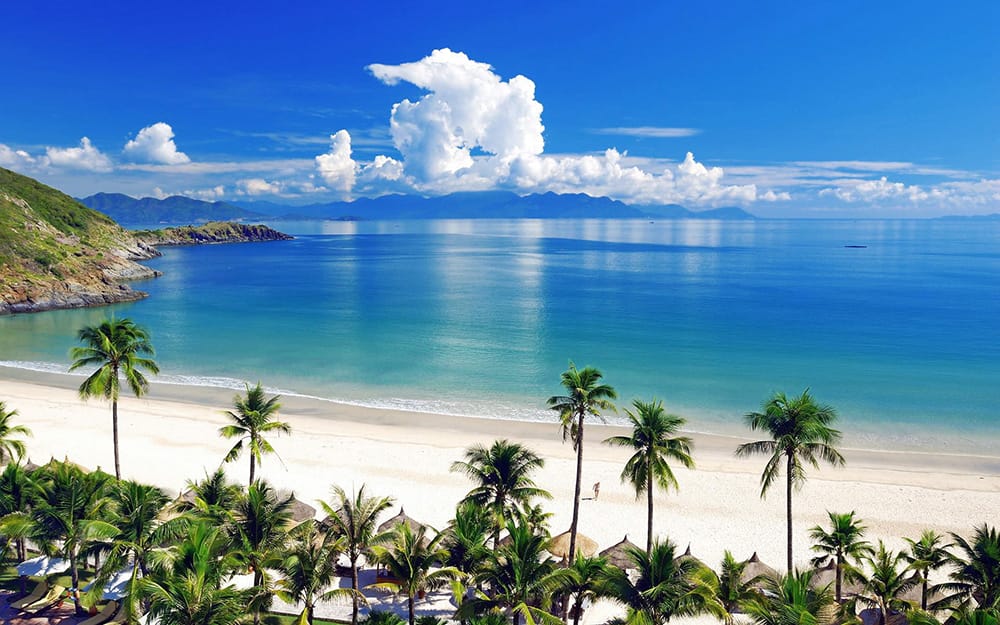
Summer arrives in Vietnam the way a tide arrives, quietly at first, then all at once. The air thickens. The light sharpens. Cities begin to feel impatient. And inevitably, almost instinctively, people turn toward the sea. Vietnam’s coastline stretches long and sinuous, a ribbon of sand and story running from the Gulf of Tonkin to the warm southern waters of the East Sea. These beaches are not interchangeable. Each one has its own temperament, its own rhythm, its own way of persuading you to stay.
This is not simply a list of beaches. It is a journey along the edge of the country, where hotels face the horizon, fishing boats creak at dawn, and time loosens its grip.
Nha Trang is often the first name spoken, and with reason. The city opens directly onto the sea, unapologetic and bright. The beach unfurls in a long, pale arc, sand fine as sifted flour, water shifting from turquoise to cobalt depending on the hour. This is Vietnam’s most confident seaside city. It knows it is beautiful and behaves accordingly.
Morning here belongs to swimmers and walkers. Locals move with purpose, cutting through the surf as if the sea were an extension of the street. By midday, the sun sharpens and the beach hums. Cafes spill onto the promenade. Parasols bloom. Nha Trang’s hotels rise close to the shore, offering sea view rooms where the sound of waves replaces alarm clocks. Many properties feature rooftop pools, private beach sections, and spas designed to cool and recalibrate the body after long hours under the sun. It is a place for those who like their beach life animated, social, and indulgent.
Drive south and the atmosphere changes. Mui Ne feels stretched out, sun bleached, and faintly nomadic. Here the sea meets sand dunes that look misplaced, as if a corner of the Sahara wandered east and decided to stay. The wind is constant, purposeful. It shapes the days.
Mui Ne is built for rest and motion simultaneously. Resorts are low slung, discreet, hiding among palms. Bungalows face the sea, hammocks sway, and the afternoons drift lazily until the wind picks up and the kites appear. Kite surfing, windsurfing, paragliding, the beach becomes kinetic. Even watching feels participatory. Dining here leans toward the elemental. Fresh seafood. Grilled fish. Salt, lime, fire. Mui Ne seduces travelers who want nature to remain slightly untamed, who find beauty in repetition and sky.
Further offshore, Phu Quoc rises from the sea like a rumor made real. For years it was spoken of in whispers, an island of forests and empty beaches. Development has arrived, yes, but the island’s essential character endures. Green still dominates. Water still glows.
Phu Quoc’s beaches vary dramatically. Sao Beach dazzles with white sand and shallow aquamarine water, gentle enough to feel unreal. Ong Lang Beach, quieter, offers sunsets that feel private even when shared. Inland, the forest presses close, reminding visitors that this is not merely a beach destination but an island ecosystem.
Hotels here range from intimate boutique properties to expansive luxury resorts with private villas, infinity pools, and beachfront dining. The benefit of staying on Phu Quoc is choice. You can disappear for days or socialize at beach clubs. You can snorkel in the morning, nap at noon, and dine barefoot at night. The island excels at convincing you that staying longer is not indulgent but sensible.
Con Dao is something else entirely. Remote. Introspective. It does not advertise itself loudly. It waits. This archipelago once served as a place of exile, and that history lingers in the air, giving the beauty a solemn undertone.
The beaches here are astonishing. Clear water. Powdery sand. Almost no one around. Forested hills descend abruptly to the sea. It feels preserved, not curated. Travelers who come to Con Dao are usually seeking quiet, not entertainment. The hotels reflect this sensibility. Elegant but restrained. Emphasis on space, silence, and service that knows when to retreat.
Snorkeling reveals coral gardens. Evenings bring soft light and an early hush. Con Dao offers the rare benefit of perspective. You do not come here to be distracted. You come to recalibrate.
Da Nang introduces a different energy. My Khe Beach stretches wide and generous, a beach that accommodates everyone without feeling crowded. The sand is pale and firm. The water warm year round. The waves polite. It is one of those beaches that feels immediately friendly.
What makes My Khe compelling is its balance. The city sits close, modern and efficient, yet the beach remains relaxed. Hotels line the coast, many offering expansive sea facing rooms, rooftop bars, and direct beach access. Families appreciate the gentle surf. Solo travelers appreciate the ease. Mornings are calm. Afternoons active. Evenings luminous.
Palm trees line the shore. Joggers pass. Children play. My Khe does not demand attention. It rewards presence.
A short journey south brings you to Cua Dai, near the historic town of Hoi An. The beach feels youthful, breezy, and slightly theatrical. Resorts here are more playful, embracing color and openness. Cua Dai’s great strength lies in contrast. Spend the morning swimming and sunbathing. Spend the afternoon wandering Hoi An’s lantern lit streets. Return to the beach as evening cools the air.
The sea here is fresh, the atmosphere light. Hotels emphasize comfort and convenience, offering shuttle services to town, beachfront pools, and expansive gardens. The benefit of Cua Dai is versatility. Culture and coast exist side by side, enhancing each other.
Finally, Doc Let waits quietly north of Nha Trang. It is not immediately accessible, and that is part of its charm. To reach the water, you climb sand dunes that feel absurdly tall, your feet sinking, your patience tested. And then, suddenly, the sea appears. Calm. Pale. Endless.
Doc Let is a study in understatement. No loud bars. No crowds. Just sand stretching beyond sight, dunes rising like gentle barriers, and a sense of isolation that feels earned. Hotels here are few, often modest, focused on sea views, natural materials, and simplicity. The benefit is purity. This is the beach for travelers who want to feel the effort of arrival, who believe beauty should require participation.
Vietnam’s beaches do not compete with one another. They converse. Each one answers a different mood, a different season of travel. Together, they form a coastal narrative that is varied, persuasive, and deeply human.
Once you go, you will understand. And you will start planning your return before the sand has fully left your shoes.
Vietnam beach travel, best beaches in Vietnam, Vietnam summer travel, coastal Vietnam tour, Nha Trang beach hotels, Mui Ne beach resorts, Phu Quoc island travel, Con Dao beach escape, My Khe beach Da Nang, Cua Dai beach Hoi An, Doc Let beach guide, Vietnam seaside destinations, luxury beach hotels Vietnam, Vietnam beach vacation blog, Vietnam coastal tourism
