
Slow travel Italy, towns that make you fall in love properly
Italy is often introduced like a greatest hits album. Rome, Venice, Milan, Florence. Names repeated until they lose friction, polished by postcards and queues. Yet Italy, in its truest register, lives elsewhere. It lives in places where laundry flutters between stone houses, where church bells mark time more faithfully than wristwatches, where dinner stretches because nobody is in a hurry to leave. These quieter cities do not shout. They wait. And when you finally arrive, they reward you with something rarer than spectacle: intimacy.
Ischia, floating in the Bay of Naples, feels like a whispered alternative to Capri’s bravado. An island shaped by volcanic moods and softened by thermal springs, Ischia understands pleasure without performance. Steam rises gently from natural hot springs tucked between cliffs and gardens, places where Italians come not to be seen but to heal. Dive sites slip beneath clear water, revealing a marine world still largely unbothered by tourism’s heavy footfall. Four star hotels line the island, elegant yet unpretentious, offering spa rituals rooted in local tradition at prices that feel almost conspiratorial.
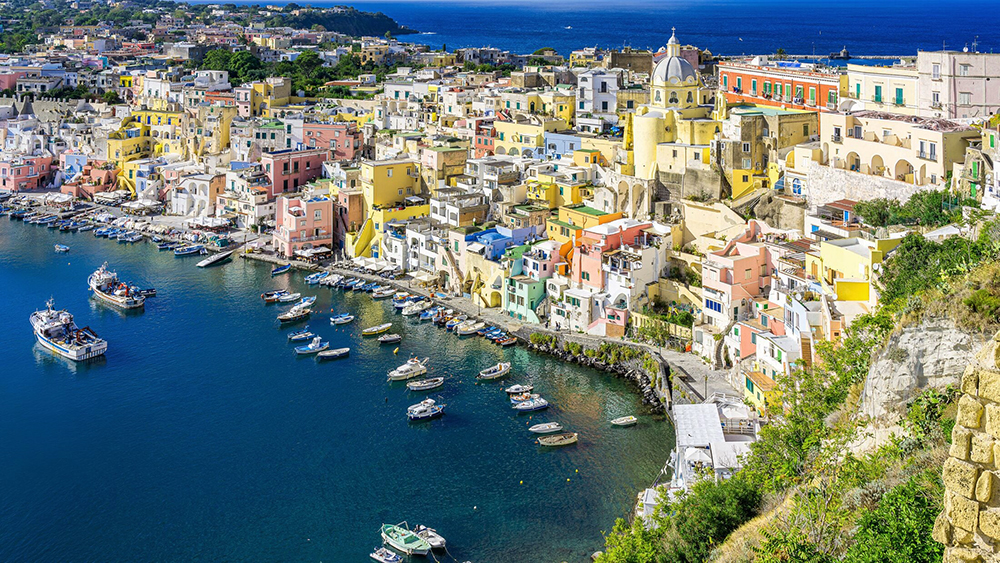
Evenings belong to Ischia Porto. Fishing boats bob lazily while restaurants along the harbor serve plates of just caught fish, grilled simply, dressed with olive oil that tastes of sun and patience. Above it all stands the Aragonese Castle, defiant and dignified, perched at the island’s highest point. Walk its ancient paths and Italy’s layered history becomes tangible beneath your shoes. This is not an island for ticking boxes. It is for staying longer than planned.
Sicily reveals itself slowly, and Caltagirone is proof that patience pays. Set among the Erei Hills, the town announces itself through ceramics and stone. The Santa Maria del Monte staircase climbs with theatrical confidence, 142 steps tiled in hand painted majolica, each one a fragment of Sicily’s artistic inheritance. Built in the seventeenth century, it is less a staircase than a civic heartbeat, climbed daily, admired endlessly.
The best way to meet Caltagirone is on foot. Wander past workshops where ceramicists still work with practiced hands, shaping bowls and tiles that carry centuries of technique. Stop when the mood strikes. Order coffee at a small bar. Sit. Watch. Sicily teaches observation. The town does not rush to impress. It trusts that you will notice.
In southern Apulia, Lecce glows. Its Baroque architecture seems almost malleable, carved from local stone that catches light like honey. Known as the Florence of the South, Lecce refuses comparison. Its beauty is warmer, more rural, stitched together with olive groves and quiet humor. Sheep graze unbothered near ancient walls. Time drifts.
Churches rise unexpectedly, ornate yet grounded, their facades telling stories in curves and flourishes. Lecce Cathedral anchors the city, its bell tower lifting seventy two meters into the sky, a vertical pause in the southern air. Sant Oronzo Square acts as Lecce’s living room, where locals gather, children play, and history feels comfortably domestic. Lecce is not a museum. It is a place where life and art share the same bench.
Further north, Mantua sits like a jewel placed deliberately in Lombardy’s flatlands. Birthplace of the poet Virgil, Mantua carries intellectual weight lightly. Surrounded by artificial lakes, the city appears almost theatrical in its reflections. UNESCO recognition has preserved its Renaissance soul, but the spirit of the Gonzaga family still lingers most clearly in the architecture. Palaces unfold with calm confidence, not ostentation.
Walk Mantua and the horizon feels unusually open. The city breathes. Art here is not compressed into galleries but integrated into daily space. Frescoes, courtyards, arcades. Mantua reminds you that wealth, when guided by vision, can leave something generous behind.
Then there is Matera, a city that feels less discovered than unearthed. One of the oldest continuously inhabited places on Earth, Matera’s stone dwellings, known as the Sassi, are carved directly into rock. No cars disturb the atmosphere. Silence settles naturally. The city gained global attention through cinema, most famously as a stand in for ancient Jerusalem, yet Matera remains resolutely itself.
Walking through Matera is a lesson in humility. Homes once considered symbols of poverty are now recognized as masterpieces of human adaptation. Churches hide within caves. Light behaves differently here, sliding along stone surfaces that have absorbed centuries of footsteps. Matera does not entertain. It confronts, quietly, profoundly.
At Italy’s geographic heart lies Narni, a town that blurs the line between history and imagination. Beneath its churches and squares runs a network of tunnels, prisons, and chambers etched with symbols, graffiti, Masonic signs, and alchemical formulas. This is a place where belief systems overlap, where secrecy once flourished. Narni’s atmosphere is dense, layered, and unmistakably influential. It inspired C.S. Lewis’s Narnia not through scenery alone, but through mood. Wander its underground passages and the connection feels obvious.
Tuscany offers many beauties, but Pienza feels intentionally composed, like a philosophical argument rendered in stone. Designed during the Renaissance under Pope Pius II, Pienza was meant to embody ideal urban planning. Streets curve gently, bearing romantic names, inviting walking without agenda. Cycling through Pienza’s lanes reveals a town designed for harmony, not dominance.
Gothic churches anchor the skyline, while the Piccolomini Palace frames views of the Val d’Orcia that feel almost unreal in their balance. Museums here do not overwhelm. They contextualize. Pienza does not exhaust. It restores.
These cities share a quiet agreement. They do not compete with Italy’s famous names. They complement them. They offer space to think, to taste, to linger. They remind you that travel is not about accumulation but connection. Once you have walked these streets, eaten at these tables, listened to these silences, Italy changes shape in your mind. It becomes deeper. More human. And suddenly, the urge is irresistible. You want to go. Now.
hidden Italy travel, underrated Italy cities, Italy slow travel destinations, Italy cultural tour, authentic Italy travel guide, Ischia travel experience, Caltagirone Sicily tour, Lecce Apulia travel, Mantua Lombardy heritage, Matera Sassi travel, Narni Umbria history, Pienza Tuscany Renaissance, Italy off the beaten path, Italy boutique city tour, best lesser known cities in Italy
