
Travel blog Bali secrets, quiet beaches tour, travel without crowds
Bali has learned how to perform. It smiles on cue. It poses beneath sunsets like a practiced actor who knows the audience will applaud anyway. More than two million visitors arrive each year expecting revelation and receiving, instead, choreography. Traffic. Noise. A sense that paradise has been laminated for protection. And yet Bali, when you step away from the spotlight, still whispers. Sometimes it almost mutters. You just have to listen.
I went looking for quiet, not isolation but the kind of calm that rearranges your breathing. A travel blog will often promise this and then betray you with a drone shot and a smoothie bowl. This journey did not. It took me down side roads, past warung kitchens breathing smoke and garlic, across stones that punished the feet and rewarded the patience. This was not a tour designed for speed. This was travel that asked you to slow your pulse.
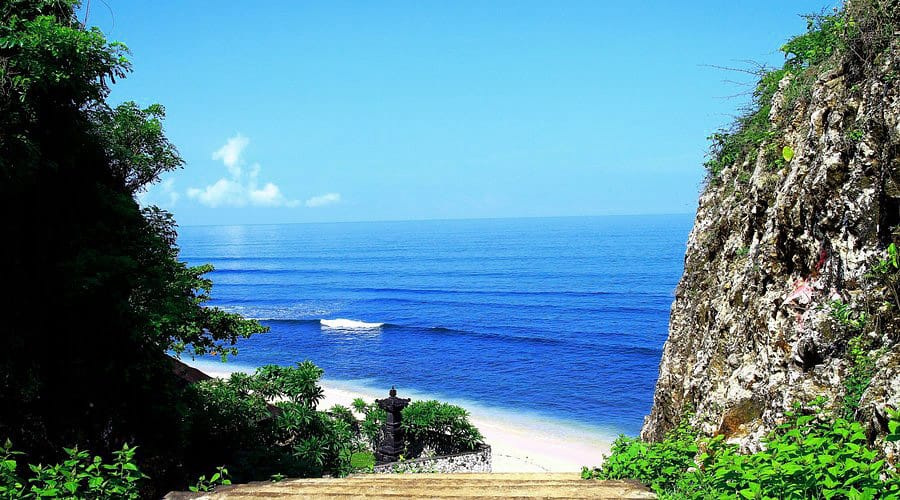
Balangan Beach appears suddenly, like an idea you have been circling for years. One moment there is scrub and limestone and the next there is an open page of sand, pale and generous, held in place by cliffs that look stern but are secretly protective. Surfers read the sea here as if it were a difficult book, waiting for the right sentence to break. Between sets, the beach rests. Warung lean toward the water, offering coffee that tastes of earth and time. You can swim, you can learn to surf, you can do nothing at all, which is harder than it sounds. The beauty of Balangan is not dramatic. It is convincing.
Geger Beach, near Nusa Dua, feels composed rather than wild, as though someone has gently edited the coastline for clarity. The sand is thick and forgiving, the sort that invites long walks that turn into accidental meditations. Golf courses hum quietly nearby, but the beach itself belongs to swimmers and snorkelers and the slow rituals of sun and water. The sea is blue in a way that seems almost deliberate, a studied calm. This is a place where a tour might begin with activity and end with stillness, where travel becomes less about collecting moments and more about releasing them.
Bias Tugal Beach does not reveal itself easily, and that is its first lesson. You walk. You stumble. Five hundred meters of stone and uneven ground ask whether you are serious. Most people turn back. Those who continue arrive slightly humbled and therefore ready. The beach is small, nearly shy, framed by palms that appear to be listening. The water is clear enough to make you doubt your eyesight. Here, the world feels paused. Not preserved. Paused. A travel blog rarely tells you how good it feels to earn a view, but Bias Tugal insists on it.
Ungasan Beach lies in the south, polished and improbable, its sand white as intention. The water carries a Mediterranean confidence, smooth and inviting, and the shoreline hosts beach clubs that understand luxury as a form of silence rather than noise. There is a price for entry, and it is not insignificant. Thirty dollars buys access to a private stretch of calm. Whether this is exclusion or preservation depends on your mood and your philosophy. What cannot be denied is the effect. Ungasan feels curated, yes, but also protected, a place where the sea seems grateful for the boundaries.
Amed waits far from the airport, two hours by road, which is precisely why it still belongs to itself. Fishing boats rest along the shore like tired animals, their colors muted by sun and salt. The sand is brown, touched by volcanic memory, and it warms quickly underfoot. This is not a beach for posing. It is a beach for looking down into the water and discovering entire neighborhoods of coral and quiet life. Divers come here not for spectacle but for intimacy. Snorkelers drift. Time loosens. Amed does not rush you because it has nowhere to go.
What binds these places is not their obscurity but their refusal to shout. Each beach offers a different grammar of calm. Balangan speaks in waves and patience. Geger edits your thoughts. Bias Tugal tests your resolve. Ungasan reframes luxury. Amed teaches endurance. Together they suggest a version of Bali that still exists beyond itineraries and algor
ithms.
A good tour through these beaches would not be efficient. It would be thoughtful. It would leave room for wrong turns and long lunches and conversations with people whose names you might forget but whose faces you will not. Travel, at its best, does not confirm what you already believe. It unsettles you gently. It replaces urgency with attention.
If you are building a travel blog, let it breathe. Write about the heat on the stones, the way coffee tastes after swimming, the silence between waves. If you are planning a tour, resist the temptation to overfill it. Leave gaps. Leave space for the island to speak back. And if you are simply traveling, go now, but go quietly. Bali is still listening.
