
Hidden Islands of Southeast Asia, Cu Lao Cham Travel Experience
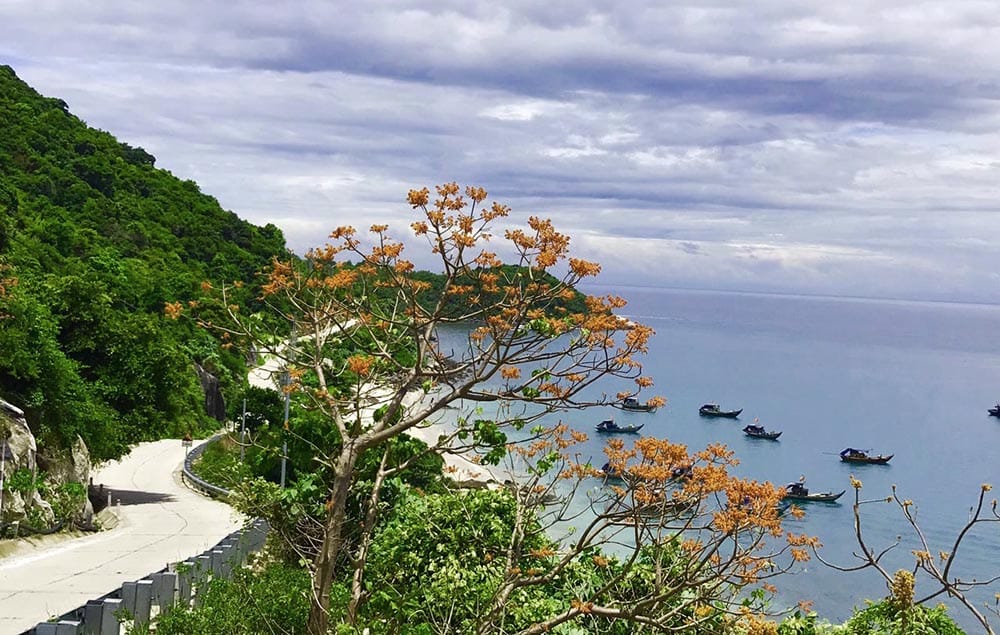
Twenty minutes is all it takes. Twenty unremarkable minutes on a speedboat skimming away from Cua Dai Beach, and the mainland loosens its grip. Hoi An fades. Motorbikes become rumor. The air changes texture. Then Cu Lao Cham appears, not with spectacle, but with restraint. Green slopes. Pale sand. A sea so lucid it feels composed rather than accidental. This is not a place that advertises itself loudly. It does not need to.
Cu Lao Cham is an archipelago of eight islands resting quietly in the East Sea, about fifteen kilometers off the coast of central Vietnam. Known administratively as Tan Hiep Commune of Hoi An City, Quang Nam Province, it occupies a curious position: close enough to the tourist conveyor belt of Da Nang, Hoi An, and My Son Sanctuary, yet somehow spared their excesses. UNESCO noticed. In 2009, the islands were designated a World Biosphere Reserve. The label fits, but the feeling matters more. Cu Lao Cham feels intact.
The main island, Hon Lao, is where most life gathers. Around three thousand residents live across the islands, bound by fishing tides, ancestral shrines, and a relationship with the sea that is neither poetic nor performative. It is simply necessary. Dawn arrives early here. Before the sun fully commits, the fish market is already awake, boats easing in heavy with silver catch, voices rising, transactions swift and unsentimental. This is daily life, not theater.
Movement around Cu Lao Cham is pleasingly unsophisticated. A bicycle is enough. A motorbike, if you insist. Roads are narrow, curling and zigzagging through dunes, past modest houses and fishing villages that seem to have leaned toward the water over generations. Ride slowly. Stop often. Let the island dictate the pace. It will.
The beaches are unshowy, and therefore beautiful. Bai Xep sits close to the fishing village, humble and welcoming. Bai Chong, often considered the finest beach on the island, offers a longer stretch of sand and a generosity of shade. Neither beach is cluttered with vendors or aggressive commerce. You will not be interrupted by menus or megaphones. The sea does the talking. At midday, the water wraps around the body with a cooling patience, as if designed for lingering. Swim. Float. Do nothing. This is, surprisingly, the point.
Come in April or May and you will encounter a small, bright miracle: rose apple season. Trees blush red with fruit, and the island seems briefly festive, even indulgent. Locals snack casually, as though abundance were a recurring condition rather than a fleeting one. It is a small detail, easily missed, and all the more memorable for it.
Cu Lao Cham is not merely a landscape. It is a palimpsest. At Bai Ong, archaeological remains trace human presence back three thousand years to the Sa Huynh culture, making it one of the oldest known settlement sites associated with Hoi An. This is not history behind glass. It is history underfoot. Nearby, Bai Lang reveals layers of Champa civilization, alongside artifacts from the Middle East, India, and China dating from the seventh to tenth centuries. Trade once moved through here. Ideas too. The island was never isolated. It was selective.
Spiritual architecture punctuates the island with a quiet authority. Communal houses, village shrines, temples to agricultural deities, whale mausoleums, and ancestral halls built largely between the seventeenth and eighteenth centuries still function as points of collective memory. On Hon Lao stands Hai Tang Pagoda, a Mahayana Buddhist temple constructed in the eighteenth century. Its wooden beams, layered roofs, and intricate carvings suggest devotion expressed through craftsmanship rather than scale. It is dignified, not grand. Like the island itself.
Adventure here is understated but real. Snorkeling and diving reveal coral reefs that justify the biosphere designation without trying to impress. Forest trails lead inward, away from salt and glare, into green quiet. Nights can be spent around beach bonfires, flames flickering against a horizon mostly free of artificial light. The stars appear unembarrassed. Few people are watching them.
Accommodation on Cu Lao Cham does not include resorts or branded hotels. There are homestays, modest guesthouses, rooms that open to sea air and morning light. Comfort exists, but it is human-scaled. Hosts cook when asked. Conversations unfold naturally. Privacy is respected. Those seeking infinity pools and room service should look elsewhere. Those seeking texture will stay.
Food here is honest and immediate. The island is known for its shellfish, especially the provocatively named sea snail vu nang, alongside rock crab, squid, shrimp, and lobster pulled from nearby waters. Meals taste of proximity. Nothing has traveled far. Nothing pretends to be anything else. You eat because you are here, and because it is good.
Cu Lao Cham has made an uncommon commitment: environmental restraint. Plastic bags are discouraged. Waste is managed collectively. Visitors are asked, not ordered, to participate. The request feels reasonable. After all, you are being allowed into a place that has chosen continuity over convenience.
This is not an island that begs for attention. It does not posture for photographs. It offers something rarer: coherence. Sea, history, daily life, belief, and leisure exist here without contradiction. Spend a day, and you will relax. Spend longer, and you may begin to recalibrate.
Cu Lao Cham does not shout “travel destination.” It murmurs something more persuasive. Stay awhile.
Cu Lao Cham travel blog, Cu Lao Cham island tour, Vietnam island travel, Cu Lao Cham snorkeling, Cu Lao Cham homestay, Cu Lao Cham beaches, Cu Lao Cham UNESCO biosphere, Cu Lao Cham from Hoi An, Cu Lao Cham seafood, Cu Lao Cham eco travel, Cu Lao Cham diving tour, Cu Lao Cham culture history, Cu Lao Cham summer travel, Cu Lao Cham island guide, Cu Lao Cham travel experience
