
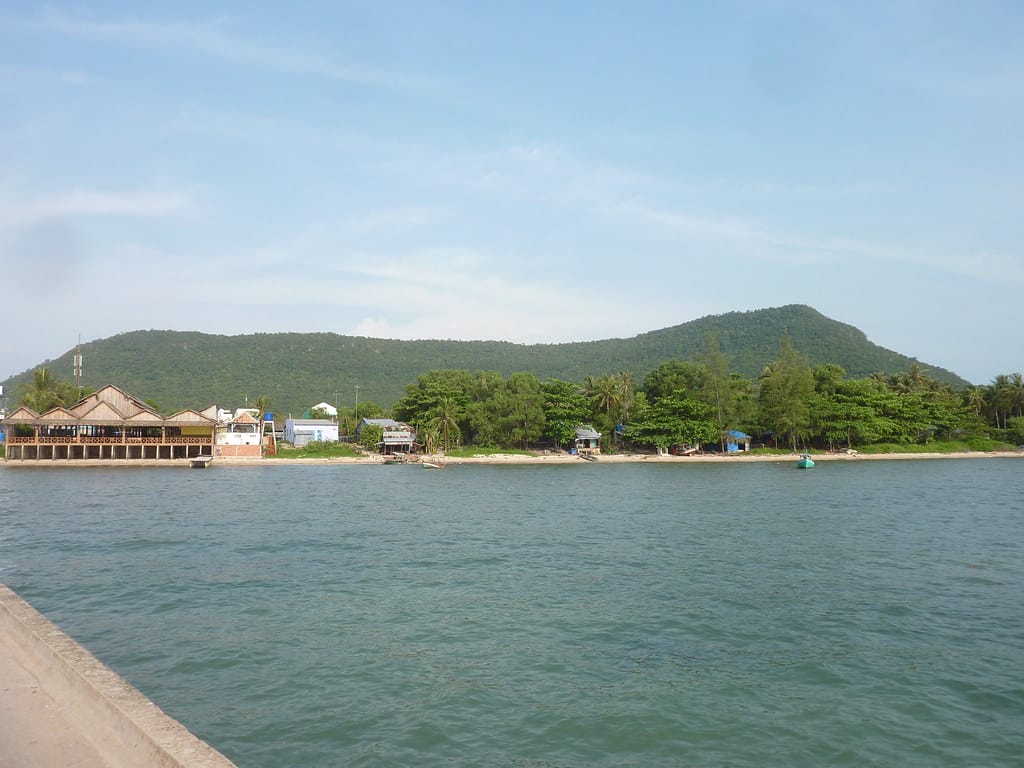
Ha Tien Borderland Escape Along Vinh Te Canal From Chau Doc To The Gulf Of Thailand
There are places you visit, and then there are places that quietly claim you.
Ha Tien is the latter.
Even if you come only once, you leave with a lingering ache — not of regret, but of attachment. This is Vietnam’s southwest frontier, where land leans toward Cambodia and the Gulf of Thailand opens like an unfinished sentence. History here is not preserved behind glass. It drifts in the wind over the water. It glows in the moonlight on Dong Ho Lake. It hides in the names of mountains and islands that sound like lines from an epic poem.
Ha Tien is not simply a destination. It is a borderland of memory.
Arriving the Slow Way – Along Vinh Te Canal
If time allows, do not rush. Begin in Chau Doc and travel by boat along the legendary Vinh Te Canal.
The canal stretches nearly 90 kilometers, carved in the early 19th century as a bold engineering effort to open the frontier, reclaim farmland, and control flooding toward the East Sea. As you glide along its straight, determined line, you are not merely moving through geography — you are passing through ambition.
On either side unfold golden rice fields of the Long Xuyen granary, punctuated by tall sugar palm trees. In the distance rise the solemn ridges of the Seven Mountains range. Fruit orchards cluster thickly along the banks, heavy with the generosity of the Mekong Delta.
The canal flows toward the Giang Thanh River, then opens into Dong Ho Lagoon before merging into the Gulf of Thailand. It is a journey that feels almost ceremonial — a gradual unveiling of a coastal town that has witnessed centuries of tides, traders, poets, and soldiers.
You arrive softened by water.
The First Glimpse – Kim Du Lan Dao And The Open Sea
If you come by road instead, Ha Tien greets you differently.
A bridge stretches toward the sea. Fishing boats rock gently in shifting light. Ahead lies Kim Du Lan Dao — literally “Golden Island Shielding the Waves.” Once detached, now connected to the mainland, it still holds the posture of a sentry guarding the shoreline.
From here, the panorama is theatrical: one side opens to endless blue water; the other reveals Ha Tien town resting quietly beside Dong Ho Lake and the slopes of To Chau Mountain.
Hotels and seaside resorts occupy this privileged promontory, offering views that shift by the hour — dawn’s pastel wash, afternoon brilliance, evening indigo. Few coastal towns in Vietnam possess such a harmonious convergence of mountain, lagoon, and open sea within a single frame.
Dong Ho Lake – Where The Moon Writes Poetry
Ha Tien is modest in size. That is part of its seduction.
Homes hide behind gardens. Streets curve along mountain feet. Boats gather at river mouths and estuaries, moving in and out with an unhurried rhythm. Nothing clamors for attention.
The heart of town is Dong Ho Lake. As evening descends, locals and visitors sit at cafés built almost directly over the water. The light fades. The lagoon darkens. A soft wind carries faint waves against wooden stilts.
Legends say celestial maidens once descended at the Giang Thanh River, giving the town its name — Ha Tien, “River of the Immortals.” Sitting there at twilight, listening to stories that blur fact and folklore, you understand why such myths persist. The setting invites imagination.
When the moon rises, the lake becomes a mirror. Reflections shimmer like ink strokes. It feels as if the landscape itself is composing poetry.
Literary Echoes – Chieu Anh Cac And Ha Tien Ten Scenes
Ha Tien is not only scenic — it is literary.
Along the road facing Dong Ho once lived two noted writers, known by their pen names Dong Ho and Mong Tuyet, figures who bridged the romantic literary era between the 19th and 20th centuries. They were closely connected to the Chieu Anh Cac poetry society, founded in the early 18th century under the patronage of the Mac family.
Chieu Anh Cac is often considered the second great literary assembly in Vietnamese history. Its poets celebrated Ha Tien through the “Ha Tien Ten Scenes,” a collection of verses immortalizing the region’s landscapes.
And those landscapes remain.
When you stand before them, you are not simply sightseeing. You are stepping into verses written three centuries ago.
Binh San Mountain And The Mac Legacy
Rising in layered green is Binh San Mountain — its name evoking calm waters and layered hills.
Here stand the temples and tombs of Mac Cuu and his son Mac Thien Tich, visionary leaders who developed Ha Tien into a flourishing trading port. They defended and expanded the frontier, encouraged commerce through the seaport, and championed education and culture.
Lighting incense within their temple is a solemn act. Wind moves gently through open courtyards. Incense smoke curls into the sky. The past does not feel distant here. It feels present, dignified, quietly proud.
On this exposed frontier — once vulnerable to invasion and piracy — a refined cultural life took root. That paradox defines Ha Tien: rugged geography intertwined with cultivated intellect.
Phu Dung Pagoda And A Story Of Love
Not far away stands Phu Dung Co Tu, linked to the poignant tale of Mac Thien Tich and his beloved Ai Co, who withdrew from worldly life to become a nun.
Though the Half-Moon Lake nearby has been rebuilt and modernized, the romance lingers in local storytelling. White lotus blossoms once symbolized purity and longing. Whether history or embellished memory, the emotional resonance remains strong.
From behind the pagoda, the sound of wooden prayer drums drifts softly. It is easy to imagine the weight of love, ambition, sacrifice — all suspended between worldly duty and spiritual retreat.
Ha Tien’s stories are rarely simplistic. They are layered, human, textured.
Toward The Sea – Hon Chong And Mui Nai
Leaving town, the landscape opens.
Duong Beach stretches in pale sand between mountain and sea, remarkably serene. At Ba Hon estuary, fishing boats cluster in lively motion, and seafood markets hum with energy along the riverbank.
Continue toward Hang Pagoda, and suddenly Hon Chong Bay appears — limestone formations rising dramatically from emerald water. The resemblance to a miniature Ha Long Bay is unmistakable, yet here the setting feels more intimate, less commercial, almost secret.
Boat excursions weave among rocky islets. Each turn reveals a new perspective — sharp cliffs, hidden coves, water shifting from turquoise to deep jade.
Further along lies Mui Nai Beach, a curved shoreline framed by coconut palms. This is Ha Tien’s relaxed seaside retreat. Visitors swim, drift in warm shallows, and savor fresh local specialties while sea breezes carry salt and sunlight.
The pace slows. The horizon widens.
Da Dung Mountains And Thach Dong Cave
Then comes the upward pull of stone.
The Da Dung mountain range carries marine sediments from millions of years past. Caves twist and descend in surprising formations, inviting exploration and a hint of adventure.
Thach Dong Cave, long famous in Vietnamese legend, is associated with the tale of Thach Sanh. Clouds often gather around its mouth, creating an almost theatrical mist. Climb inside and you find shafts of light piercing cavern darkness, revealing textured rock surfaces shaped by ancient seas.
From higher vantage points, expansive rice fields stretch outward, a patchwork of green and gold. The view reminds you how close everything lies here — mountains, farmland, lagoon, sea.
Few regions compress such diversity into such intimate proximity.
Evening Return – To Chau And The Mirror Of Water
After wandering through bays and caves, return again to Dong Ho at sunset.
Look across toward To Chau Mountain. Notice the red-tiled roof of Ngoc Tien Monastery halfway up the slope, along with other temples nestled in greenery. As the mountain casts its reflection into the lake, boundaries blur.
Where does Dong Ho end?
Where does the sea begin?
Right and left lose clarity. Water and sky merge. It feels like standing inside a painting that cannot decide between land and ocean.
Cross the bridge and climb slightly for a panoramic view. Ha Tien appears graceful, luminous with new white houses, resting like a peninsula cradled between cloud and water.
It is both frontier and sanctuary.
Why Ha Tien Stays With You
Ha Tien is not loud. It does not overwhelm with spectacle.
Instead, it works gradually — through story, atmosphere, historical texture, and geographic contrast. It invites reflection as much as recreation. You swim in Mui Nai. You explore Thach Dong. You honor the Mac lineage at Binh San. You sip coffee over Dong Ho at dusk.
And if you come during a full moon, the experience deepens. The lake becomes a polished mirror just as poets once described in the Ha Tien Ten Scenes. The same moonlight that inspired Chieu Anh Cac continues to drift across the water.
Somewhere, perhaps, a young local writer is still composing verses:
Soft sun over Binh San, mist veiling Thach Dong
Clouds crossing To Chau, whitening Dong Ho…
Ha Tien remains what it has always been — a meeting place of sea and mountain, commerce and contemplation, legend and lived experience.
A borderland, yes.
But also a beginning.
Thach Dong Cave And Hon Chong Bay Adventure On Vietnam Southwest Frontier.
Ha Tien travel guide, Vinh Te Canal journey, Dong Ho Lake sunset, Mui Nai Beach Vietnam, Thach Dong Cave legend, Hon Chong Bay tour, Binh San Mountain temple, Mac family history, Phu Dung Pagoda story, To Chau Mountain view, Ha Tien Ten Scenes, Chieu Anh Cac poetry, Giang Thanh River trip, Southwest Vietnam coast, Ha Tien borderland adventure
