Phu Yen is not loud. It does not elbow its way into your attention like some overconfident resort towns. It waits. It watches. Then, quietly, it rearranges your sense of what a coastal journey can be. Wedged between mountains and the South China Sea, Phu Yen feels like a place the map almost forgot, which is exactly why it feels so intact. Two mountain ridges hold the city of Tuy Hoa as if in cupped hands. Rivers slip into lagoons. The sea arrives in many moods, sometimes glassy, sometimes theatrical, always sincere.
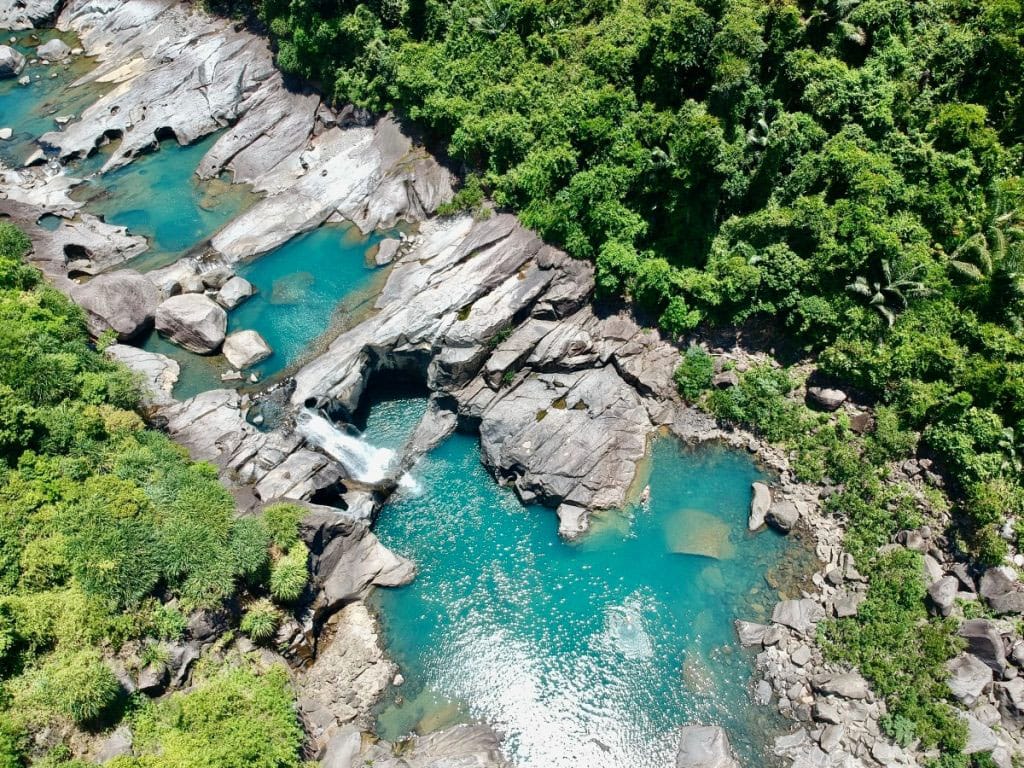
Begin inland, where the air cools and the soundscape changes. Vuc Phun Waterfall appears suddenly, a vertical exhalation of water plunging fifteen meters between dark rock walls at the headwaters of the Banh Lai River. The approach is half the pleasure. You travel west from Tuy Hoa through agricultural plains, then south into Hoa My Tay, and finally into the Da Den mountains, where the road narrows and the forest thickens. Here, travel is not passive. You hike, you climb, you swim in fresh water that smells faintly of leaves. Nearby, Huong Tich Pagoda stands with the unassuming dignity of age, reminding you that this landscape has been contemplated long before it was photographed.
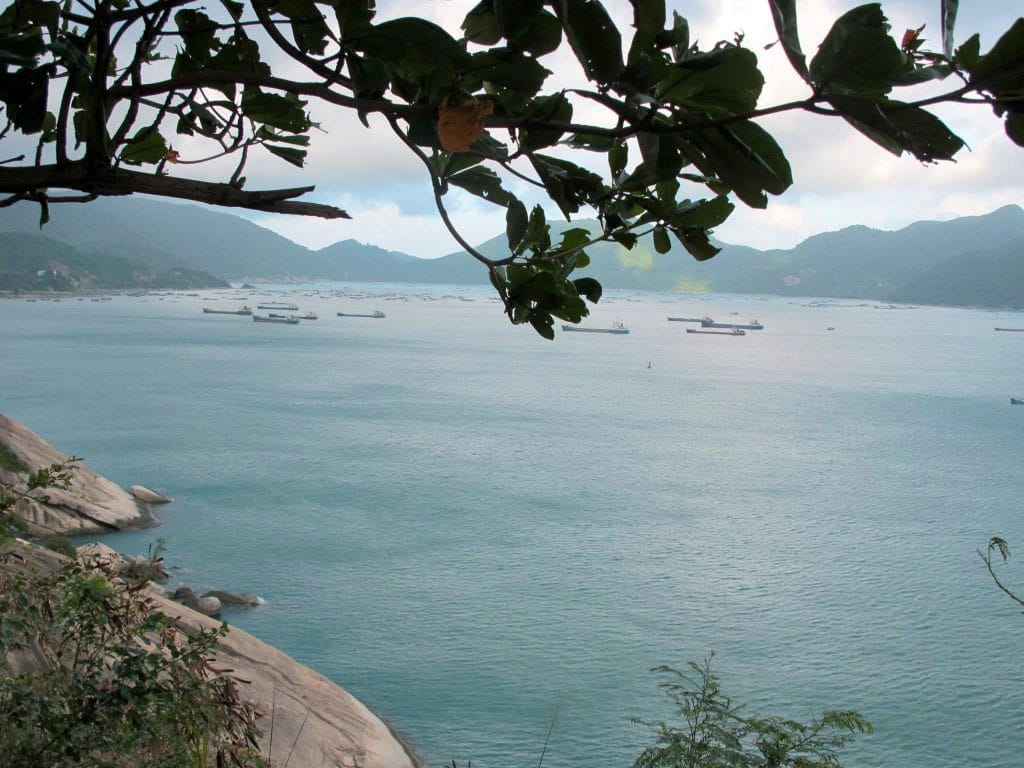
The coast pulls you back. Vung Ro Bay opens like a secret amphitheater, cradled by Ca Pass, Da Bia Mountain, and Hon Ba. Twelve small beaches line the bay, each with its own temperament. Some are all curve and calm, others a little wild, better suited to watching than swimming. Fishermen will take you out by boat, engines coughing briefly before the bay smooths everything into silence. Above it all, Da Bia Mountain rises, often lost in cloud, a climb that rewards patience with a view that makes the sea feel immeasurable.
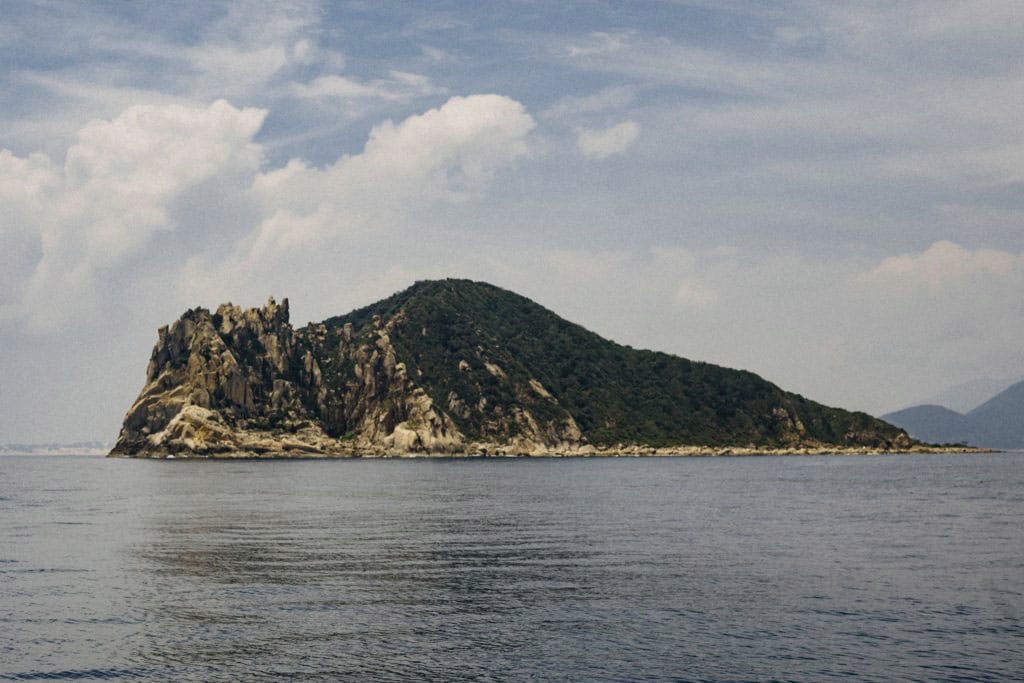
At the mouth of the bay stands Hon Nua Island, a 105 meter granite sentinel once recorded in old chronicles as a stone pillar marking the southern gate. From the boat, it looks severe. On shore, it softens. A crescent beach of white sand runs for half a kilometer, water so clear it seems rehearsed. There are no resorts shouting for attention here. You come for the simplicity of it. Swim. Walk. Sit. Leave with salt on your skin and very little else to explain.
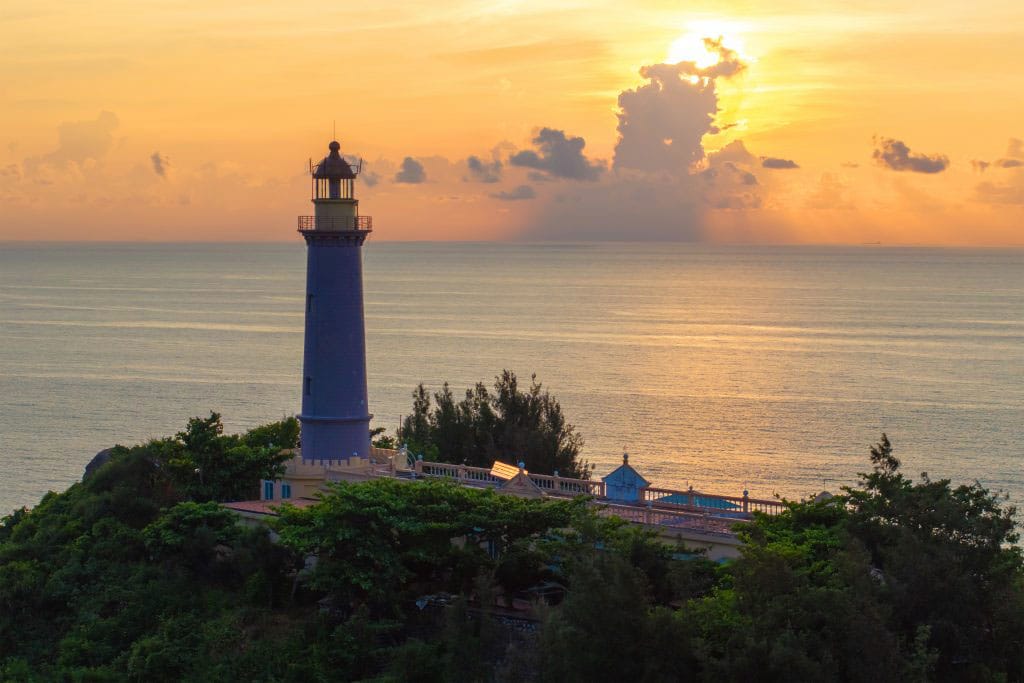
Morning belongs to Dai Lanh Lighthouse, also known as Cape Dien, a place that understands drama but does not overplay it. The path climbs gently, the sea expanding with every step, until you reach the lighthouse that has been standing for more than a century. This is often called the first place to greet the sunrise in Vietnam, and whether or not geography agrees, the experience does. Below, Bai Mon Beach glows pale gold, sand rolling in modest dunes. Ships drift like thoughts. Time behaves differently up here, slower, more generous.
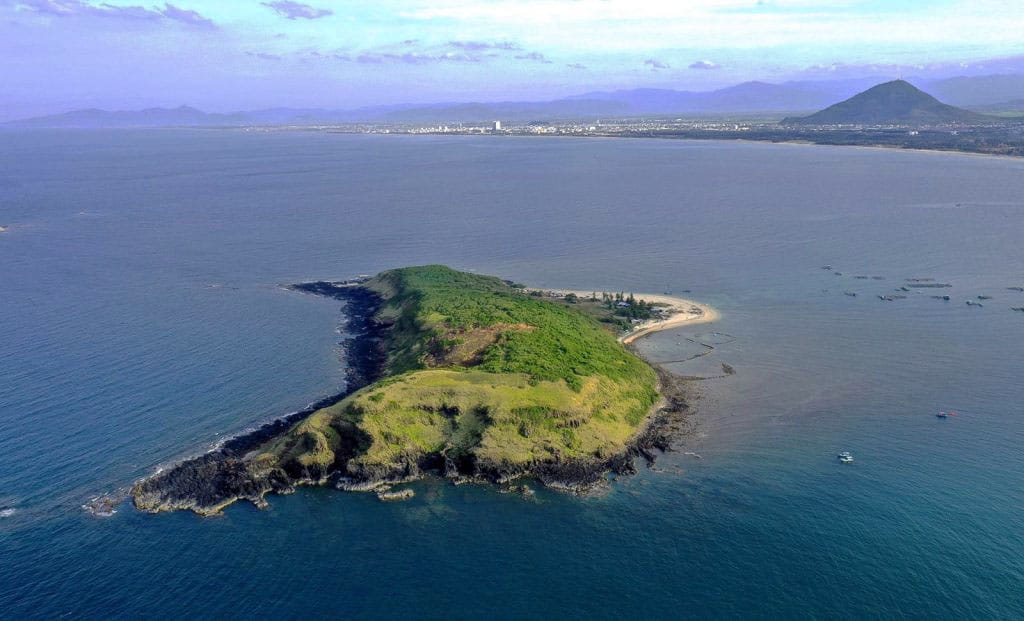
Off the coast near Long Thuy lies Hon Chua Island, a green silhouette floating six to seven kilometers from the mainland. From afar it looks like a simple shape. Underwater it becomes elaborate. Coral gardens spread in unexpected colors, sheltering lobster and fish that seem uninterested in human curiosity. Boats leave from the Da Rang estuary or Long Thuy Beach, and the journey itself is a small ceremony, the shoreline thinning until the island takes over your field of vision.
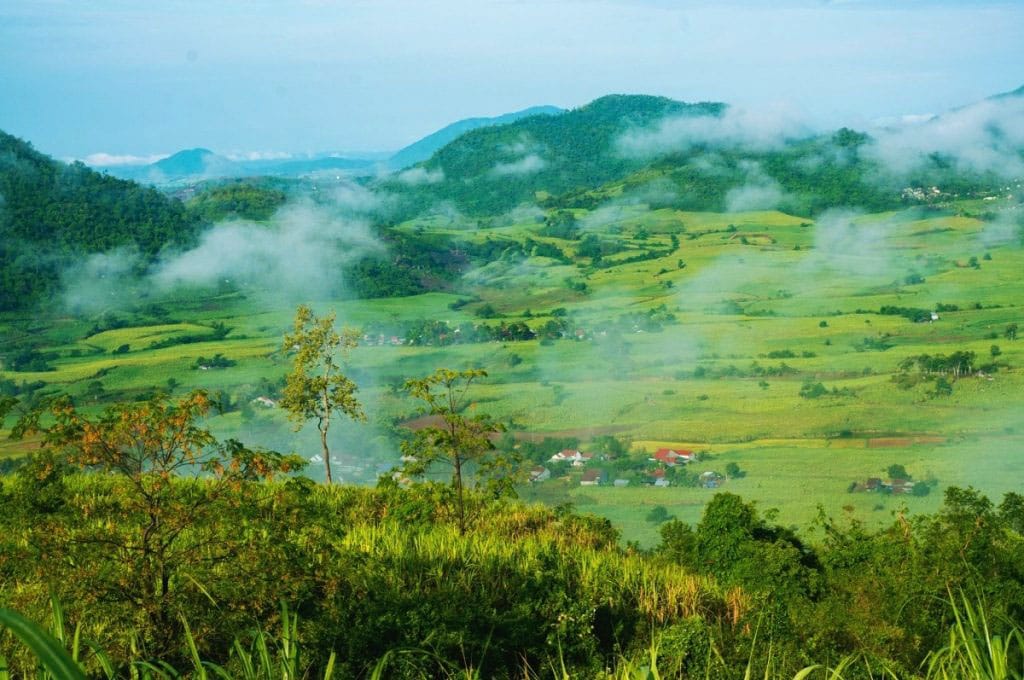
Northwest of Tuy Hoa, the land lifts again at Van Hoa Plateau, four hundred meters above the sea, often brushed with mist. Locals call it the Da Lat of Phu Yen, not because it imitates, but because it offers relief. Pineapple fields stretch beside jackfruit trees. Markets sell fermented specialities made from these fruits, flavors both sharp and comforting. The road winds through Hoa Da village and climbs steadily, revealing a rural life paced by weather rather than clocks.
Back on the coast, Hang Cop Cave refuses neat definitions. It is less a cave than a congregation of boulders piled and polished by the sea. The rocks are round, muscular, pressed together at the water’s edge. The ocean here is an unbroken blue, the kind that makes you stop talking mid sentence. It is close to the highway north of Tuy Hoa, yet feels oddly removed, as if distance were a state of mind.
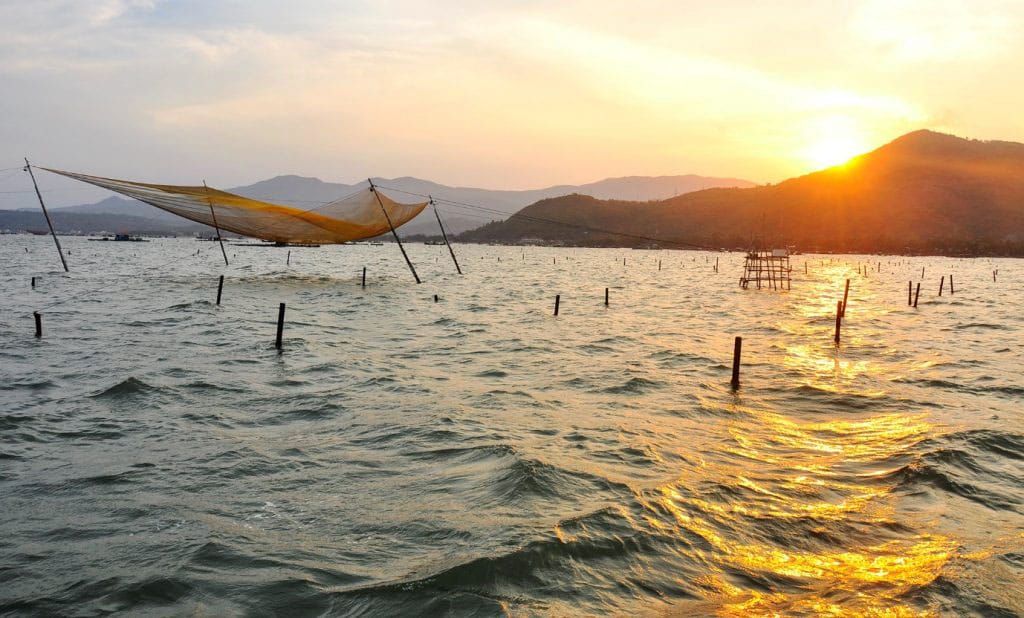
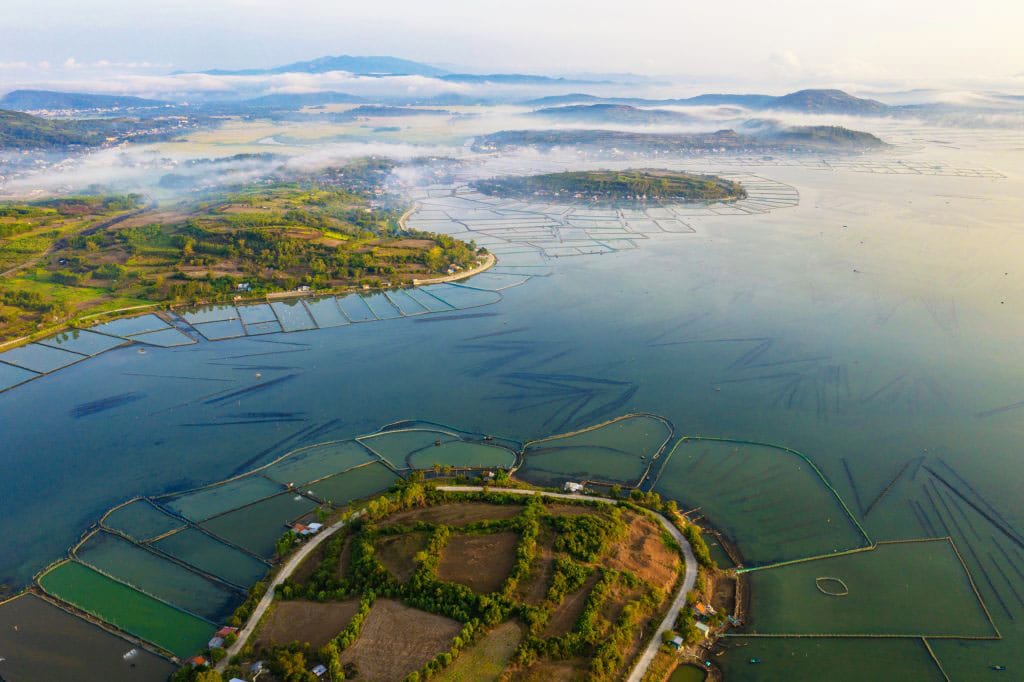
O Loan Lagoon is gentler. Seen from Quan Cau Pass, it looks like a painting still drying. Water ripples softly, catching the light in silvery gestures. This is a place of appetite as well as beauty. Seafood arrives at the table with minimal persuasion, and the blood cockles of O Loan have a reputation that travels faster than most tourists. Eat slowly. Look often. Let afternoon drift.
Then comes Ganh Da Dia Reef, Phu Yen’s geological signature. Two square kilometers of basalt columns rise like stacked plates or the steps of a submerged temple. The formations are precise yet accidental, nature briefly indulging in geometry. Walk carefully. The sea slips between the stones, patient, insistent. Nearby, a long beach stretches out, inviting you to undo the seriousness of the rocks with a swim.
The journey ends, or perhaps opens, at Xuan Dai Bay. From Gang Slope, the view is almost overwhelming, a layered composition of coves and inlets named Vung La, Vung Su, Vung Chao. The water is clear and forgiving, shallow enough to swim without vigilance. Boats glide out into the bay, and from the water the coastline reveals itself as a sequence of small, perfect moments rather than one grand statement.
Travel in Phu Yen is supported quietly but competently. Hotels and seaside resorts in and around Tuy Hoa favor space over spectacle, offering ocean facing rooms, attentive local staff, fresh seafood breakfasts, and the luxury of unhurried mornings. Many are well positioned for tours that link lagoon, lighthouse, island, and plateau in a single itinerary. This is a destination that rewards travelers who value flow, who like their days connected rather than compartmentalized.
Phu Yen does not ask to be conquered. It invites you to notice. To follow a road simply because it curves. To wake early for a lighthouse and stay late for a lagoon meal. Somewhere between the stone reefs and the first sunrise, you will feel it. That small internal click that says, not later. Now.
Phu Yen travel, Phu Yen tour, Phu Yen attractions, Phu Yen beaches, Phu Yen itinerary, Tuy Hoa travel, Vung Ro Bay tour, Ganh Da Dia Reef, Dai Lanh Lighthouse, Xuan Dai Bay, O Loan Lagoon, Hon Nua Island, Van Hoa Plateau, Phu Yen coastal journey, Phu Yen Vietnam destination