
Cambodia Beach Travel, Why Koh Rong Feels Like the World Before Crowds
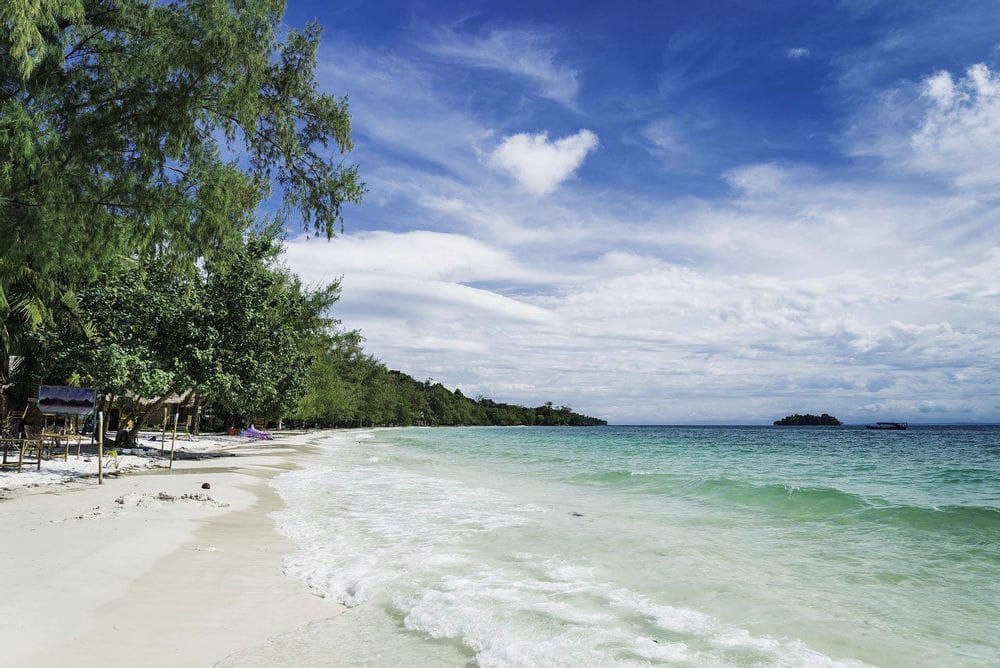
Koh Rong does not announce itself. It waits offshore, quietly, as if unsure whether it wants to be discovered at all. South of Cambodia, beyond the electric evenings of Sihanoukville, this island drifts in water so clear it feels almost rehearsed. White sand stretches with unembarrassed confidence. The sea holds its color even under cloud. Someone once called Koh Rong a forgotten paradise, and the phrase stayed, not because it was clever, but because it was accurate.
Long before Cambodia’s islands began appearing on travel wish lists, Koh Rong lingered outside the narrative. While Thailand refined its beach tourism into polished efficiency, Cambodia’s coast remained hesitant, slower, almost stubbornly uncurated. Koh Rong became famous accidentally, named by a foreign publication as one of the most compelling destinations of its year, yet even now it retains a sense of improvisation. You feel it the moment you arrive.
The journey begins in Sihanoukville, a city that never quite decides what it wants to be. By day it is casual, sun bleached, pragmatic. By night it becomes something else entirely. Beachfront restaurants glow with lantern light. Tables sink into sand. Music drifts without urgency. Seafood arrives generously, priced without arrogance. A plate of grilled squid, a cold Angkor beer, and the sea only a few steps away. This is where anticipation builds.
Reaching Koh Rong requires patience measured in waves. The boat ride takes roughly two hours, long enough for the shoreline to fade and your thoughts to recalibrate. Tickets are easily arranged through hotels or travel agents in town. Many travelers choose island tours that include meals and snorkeling, turning the crossing into part of the experience rather than a mere transfer. The sea opens. Time loosens.
For those who prefer momentum over efficiency, the Party Boat has become something of a legend. It leaves Sihanoukville with music already playing and expectations happily suspended. Two decks, a broad rooftop, a bar that never seems to close, and a DJ who understands that anticipation is a rhythm. This is not transport. This is a floating prelude.
As the boat cuts across the water, Morakot Bridge slides into view, a reminder of the mainland’s structure before the island dissolves it again. The first stop comes near a small islet where snorkeling gear appears effortlessly and lunch materializes without ceremony. Coral gardens reveal themselves beneath the surface. Fish move with unhurried confidence. Some passengers dive straight from the rooftop, chasing adrenaline. Others sit back, letting salt and sunlight do the work.
Then Koh Rong Samloem appears, and conversation fades. From a distance the island feels impossibly composed. Wooden piers extend gently into water colored like polished jade. Sand arrives pale and uninterrupted, framed by dense tropical forest that seems intent on protecting the beach rather than conquering it. Compared to the energy of Sihanoukville, this place feels like a held breath.
Koh Rong Samloem is quieter than its larger neighbor. There are no towns here, no crowds negotiating space. Accommodation exists, but discreetly. A single beachfront resort offers bungalows that open directly onto sand. Doors lead not to corridors but to sea air. Nights are shaped by waves rather than schedules. The bar serves cocktails without hurry. The dance floor waits for those who want it and leaves space for those who do not.
Days pass with minimal instruction. Swim until your thoughts loosen. Walk the beach and notice how few footprints interrupt the sand. Try fishing with locals who seem amused rather than surprised by visitors. Sit beneath palms that do not care who you are or how long you stay. This is the luxury Koh Rong offers. Not excess, but absence.
Back on the mainland, Sihanoukville resumes its performance. Fireworks appear unexpectedly, sold by local children along the beach. Small ones, loud ones, celebrations without official reason. Bars extend the night without apology. For travelers who enjoy contrast, the rhythm is perfect. Quiet island mornings balanced by sociable nights. Silence followed by laughter.
What makes Koh Rong and Koh Rong Samloem compelling is not novelty but timing. These islands still feel negotiable. They have not hardened into spectacle. The beaches are not curated backdrops but living spaces. The tours feel human, not industrial. You sense that development is approaching, but not yet arrived. This knowledge sharpens the experience.
There is also the rare pleasure of choice. You can join a tour and let everything unfold predictably, meals and activities included. Or you can slow down, stay overnight, wake to water so calm it seems paused. Both are valid. Both are rewarding. Few places still offer this balance.
Koh Rong does not compete with the world’s famous islands. It ignores them. It offers something more subtle. A feeling of having arrived before the conversation grew loud. A memory that feels personal rather than shared.
When the boat finally turns back toward Sihanoukville, the island recedes gently, without drama. No farewell performance. No final flourish. Just sand, trees, water, and the quiet confidence of a place that knows it will still be here when you return.
And you will consider returning. Almost immediately.
Koh Rong travel blog, Cambodia island tour, Koh Rong Samloem travel, Sihanoukville island tour, Cambodia beach travel, Koh Rong snorkeling tour, Party Boat Cambodia, Cambodia tropical island, Koh Rong resort stay, Cambodia island hopping, Southeast Asia beach tour, Koh Rong Samloem resort, Cambodia coastal travel, best islands in Cambodia, Koh Rong travel guide
