
There is a brief interval in Japan when time loosens its grip. Schedules soften. Voices drop. People begin to look upward instead of forward. This is cherry blossom season, and it is not merely a natural event but a national disposition, an annual recalibration of the soul. From late March into mid April, the country enters a state of collective attentiveness as sakura bloom, falter, and vanish with theatrical restraint. To travel to Japan during this season is not to observe beauty but to participate in it.
The cherry blossom festival typically unfolds between March 26 and April 15, though nature remains charmingly unpredictable. Blossoms open first in the south, then drift northward like a slow moving tide of pale color. The Japanese follow this progression through a phenomenon known as the sakura front, reported daily by national broadcaster NHK with the seriousness usually reserved for weather systems and elections. Where are the blossoms today. How long will they last. When will they peak. It is a forecast of emotion as much as botany.
Cherry blossoms are the national flower of Japan, but their symbolism extends far beyond decorative pride. Sakura carries the weight of contradiction. Joy and sorrow. Humility and resolve. The fragility of life and the sharp decisiveness of the warrior code. A single petal, almost weightless, is said to contain the conversation between heaven and earth, between yin and yang. This is not metaphor layered on afterward. It is meaning grown directly into the cultural soil.
A professionally designed cherry blossom tour in Japan understands this. It does not rush from site to site ticking boxes. It follows the rhythm of bloom, allowing travelers to experience not only where the flowers are, but how they are received. Parks become gathering rooms. Rivers turn reflective. Even the most hurried commuter slows, if only for a glance.
Tokyo, for all its steel and circuitry, surrenders completely to sakura. The blossoms appear unexpectedly, softening expressways and framing convenience stores. You might spend the morning deep in Akihabara, immersed in neon and circuitry, surrounded by the future at full volume. Step outside, and there they are. Cherry trees lining a canal, petals trembling like held breath. It is impossible not to feel recalibrated.
Tokyo offers some of the most iconic cherry blossom viewing in the country. Near the old Edo Castle, now part of the Imperial Palace grounds, blossoms reflect spring sunlight with quiet authority. Asakusa and the Senso ji Temple area glow gently beneath flowering branches. Ueno Park becomes a city within a city, where millions gather from early morning for hanami, the traditional custom of flower viewing. Families spread picnic cloths. Colleagues loosen ties. Strangers share space and beer beneath clouds of white and blush.
Yoyogi Park, Kudanshita, Shibuya, each offers a slightly different version of the same shared wonder. Sitting beneath the trees, drink in hand, watching petals detach and fall, you understand why this experience remains unforgettable. The falling blossom carries a philosophy without words. Beauty is complete because it ends. Presence matters because it is brief.
Staying in Tokyo during cherry blossom season is part of the experience. Hotels near parks and rivers provide more than accommodation. They offer proximity to dawn walks beneath empty trees and evening strolls when lanterns glow and petals gather like snow along sidewalks. Many hotels curate seasonal dining, sakura themed teas, and guided walks that transform a stay into immersion. The benefit is not luxury alone but access to the emotional center of the season.
After Tokyo, the journey often turns westward toward Kyoto, the former imperial capital. Where Tokyo feels spontaneous under blossoms, Kyoto feels ceremonial. The city has always known how to host beauty. In spring, its temples and shrines seem almost to anticipate the blooms, as if architecture and nature had rehearsed together.
Kyoto in cherry blossom season is quiet magic. The city’s scale invites walking, and every turn reveals another composition. Petals drift across temple courtyards. Stone paths soften. The air feels filtered. Kiyomizu Temple, built entirely of wood and poised on pillars along a steep hillside, becomes ethereal beneath flowering trees. Drinking from its three sacred streams, each representing longevity, health, and wisdom, you cannot help but believe in wishes.
Nearby, the Golden Pavilion, Kinkaku ji, glows beneath reflected blossoms, while Ginkaku ji offers a more subdued silver grace. Ryoan ji’s rock garden, already a study in contemplation, gains an added layer of impermanence when framed by spring bloom. Kyoto hotels during this period often occupy restored townhouses or garden properties, offering quiet interiors that echo the city’s restraint. Tatami floors, seasonal cuisine, attentive service. The benefit is not spectacle but harmony.
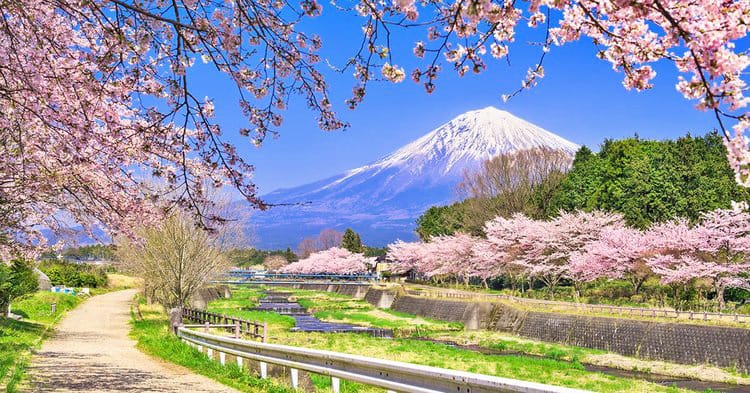
Further afield, the cherry blossom journey expands. Near Mount Fuji, petals drift against the backdrop of volcanic symmetry. At hot spring towns, travelers soak in open air baths, steam rising as blossoms float past. Folklore suggests that eating eggs cooked in sulfur rich springs adds years to your life. In spring, surrounded by blossoms, it feels entirely plausible.
The cherry blossom tour does not exist in isolation from modern Japan. Between viewings, travelers dive into contemporary culture. Shopping districts in Tokyo offer fashion and design at global scale. Akihabara continues to hum. Osaka’s fish markets pulse with appetite and sound. Nagoya’s marine parks display aquatic spectacle. Tokyo Disneyland provides its own version of carefully choreographed wonder. Yet through it all, the image that lingers is floral.
Hotels across Japan during cherry blossom season become part of the narrative. From luxury urban towers with blossom views to traditional inns near temple grounds, accommodation choices shape the experience. Features include seasonal menus highlighting spring produce, onsen baths positioned to face gardens, and concierge services attuned to bloom forecasts. The benefit is not convenience but alignment. You wake when the city wakes. You rest when petals fall.
What makes cherry blossom travel compelling is not that it is beautiful. Beauty is common. What distinguishes this journey is its emotional precision. The blossoms appear. They peak. They vanish. Entire trips are planned around a window that refuses extension. This urgency sharpens perception. Travelers look more closely. Walk more slowly. Feel more deeply.
To visit Japan during cherry blossom season is to enter a conversation already in progress. A conversation about time, attention, and acceptance. You do not leave with souvenirs so much as a recalibrated sense of presence. Long after the petals have fallen, the memory remains suspended, light and persistent.
And somewhere, far away, a single blossom drifts downward.
Japan cherry blossom travel, cherry blossom tour Japan, Japan spring travel blog, sakura season Japan, Japan cultural travel, Tokyo cherry blossom tour, Kyoto cherry blossom travel, luxury Japan spring tour, Japan hanami experience, cherry blossom festival Japan, Japan travel blog spring, Japan heritage travel, best time to visit Japan spring, Japan sightseeing cherry blossom, Japan seasonal travel experience
