There are moments in Europe when time does not merely slow, it pauses, looks at you, and invites you to step inside its memory. This is not the Europe of postcards and hurried photographs. This is a carefully composed journey, a cultural tour where cathedrals whisper, museums hum softly with accumulated genius, and cities reveal themselves layer by layer like a palimpsest that refuses to be simplified.
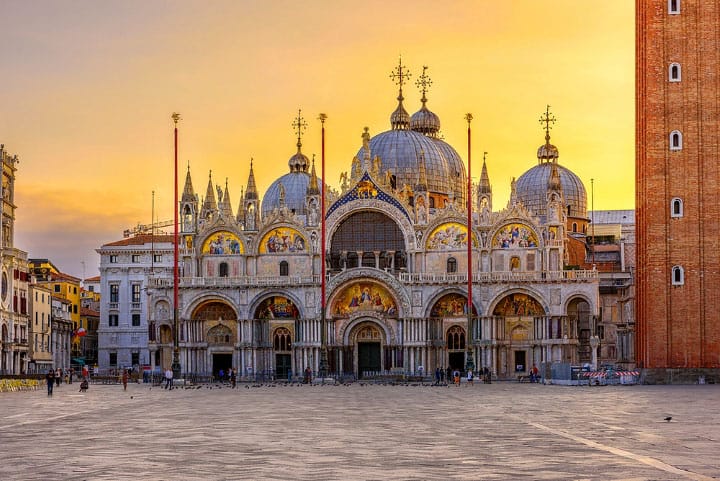
Begin in Venice, a city that appears to float not just on water but on accumulated belief. St Mark’s Basilica stands at the heart of it, shimmering with Byzantine confidence. Gold mosaics glow like stored sunlight, domes curve with Eastern ambition, and the entire structure feels less built than conjured. Over five million visitors arrive each year, yet the basilica never feels diminished. It absorbs them. Inside, the air is cool and reverent, heavy with the awareness that this was once a place worth stealing from. Relics vanished over centuries not out of vandalism but desire. Faith, after all, has always attracted thieves as much as pilgrims. Staying nearby allows early entry before the crowds thicken, when Venice belongs briefly to the birds and the bells.
Travel south into the quieter intensity of Assisi. Here, the Basilica of St Francis rises in Gothic humility, its stones pale, its presence profound. Built in the thirteenth century, it is not a single church but a layered spiritual complex of chapels, crypts, and silence. Giotto’s frescoes do not merely decorate the walls; they narrate a moral universe. Time has been unusually kind to them. Color remains confident, figures alive with motion. Assisi itself feels like a held breath, and an overnight stay offers the rare privilege of walking medieval streets after day visitors leave, when faith feels less curated and more intimate.
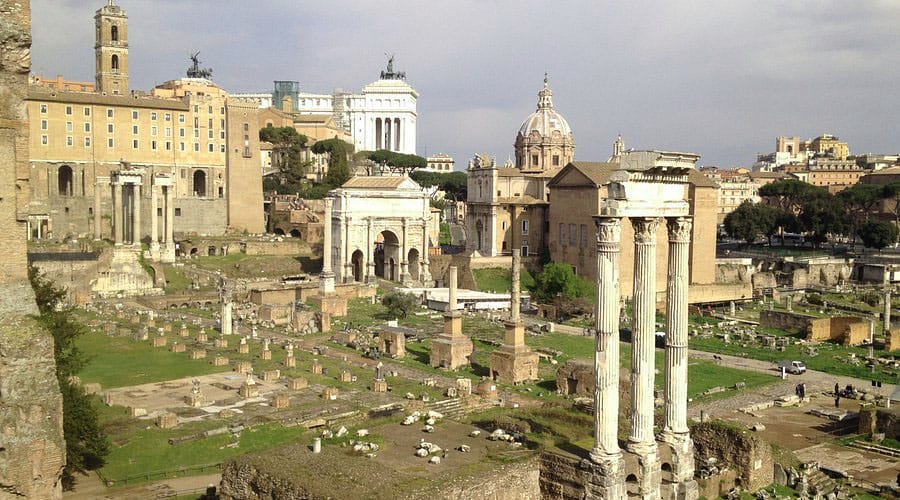
Rome follows, inevitably, like gravity. The Roman Forum is not a ruin so much as an exposed memory. For over a millennium it was the nerve center of an empire, a place of markets, speeches, conspiracies, and power. Today, broken columns and fallen temples sit in sunlit dignity. The Temple of Saturn still suggests authority even in collapse. More than five million visitors pass through annually, yet each person experiences a private Rome, framed by personal curiosity. Choose a hotel within walking distance and return at dusk, when the stones cool and history becomes contemplative rather than theatrical.
London shifts the tone. Tate Modern, anchored on the South Bank of the Thames, announces itself not with reverence but confidence. Opened in 2000, it redefined how modern art could be encountered. Six centuries of British artistic evolution unfold within a former power station, industrial bones repurposed for imagination. The galleries feel democratic, accessible, alive. Pair this with a stay along the river, where evening walks connect contemporary creativity with ancient tides.
Nearby, the National Gallery at Trafalgar Square offers contrast. Free to enter, generous in spirit, it holds Western European painting from the thirteenth to the nineteenth century with quiet authority. Here, art is not rarefied. It is shared. Standing before works by Turner, Van Gogh, or Botticelli becomes an act of participation rather than observation. London hotels nearby place you at the intersection of culture, politics, and daily life, an ideal base for exploration.
Cross continents to Istanbul, where the Blue Mosque and Hagia Sophia face each other across history. The Blue Mosque, completed in 1616, is an exercise in serene grandeur. Blue tiles ripple across interior walls like controlled waves, light filters through cascading domes, and prayer feels architectural. Hagia Sophia, meanwhile, defies categorization. Once a Christian church, later a mosque, now a museum, it is Byzantine ambition made stone. Its vast dome still astonishes, a feat of engineering and symbolism. Istanbul accommodations nearby allow dawn and dusk visits, when the city feels suspended between continents and centuries.
Return to Rome for the Vatican Museums, a vast accumulation of papal ambition and artistic patronage. Begun in the sixteenth century, expanded relentlessly, it is less a museum than a pilgrimage through human creativity. Raphael’s rooms, Caravaggio’s drama, Michelangelo’s ceiling in the Sistine Chapel overwhelm not through scale alone but through density of thought. The Sistine Chapel itself resists description. The Last Judgment dominates, while scenes of creation unfold overhead. Silence here is enforced, but the mind roars.
Paris offers release. Centre Pompidou breaks the spell of reverence with radical transparency. Pipes and staircases live on the exterior, art claims the interior. Sixty thousand works reside within, modern and unapologetic. Nearby hotels place you in a neighborhood where cafes argue with philosophy and art spills into the streets.
The Orsay Museum completes the arc. Housed in a former railway station, it bridges classical and modern, showcasing Impressionism and Post Impressionism with extraordinary intimacy. Monet, Degas, Renoir, Van Gogh appear not as distant masters but as companions in experimentation. The light through the old station clock feels deliberate, as though Paris itself insists on beauty.
This is not a rushed itinerary. It is a curated European tour designed for travelers who want to feel altered. Hotels are chosen for proximity and atmosphere, allowing early entry, late returns, and unplanned wanderings. Destinations connect through theme rather than distance. Faith, power, imagination, rebellion. Each city converses with the next.
You do not simply visit these places. You absorb them. And somewhere between Venice’s gold and Paris’s light, the urge becomes irresistible. You want to go now.