
Japan Island Tour, Five Encounters That Make You Leave Tomorrow
Hokkaido does not shout for attention. It waits. Quietly. Patiently. And then, almost without warning, it disarms you completely. Japan’s northernmost island feels like a country that drifted slightly off course and found freedom in the cold, in distance, in seasons that still behave like seasons. To travel here is to rediscover texture: the crunch of snow, the perfume of flowers, the stillness of water so blue it feels unreal.
This is not Tokyo’s nervous brilliance or Kyoto’s ceremonial elegance. Hokkaido is expansive, elemental, and oddly intimate. It speaks in landscapes rather than neon. And if you listen closely, it tells five stories you will carry long after the journey ends.
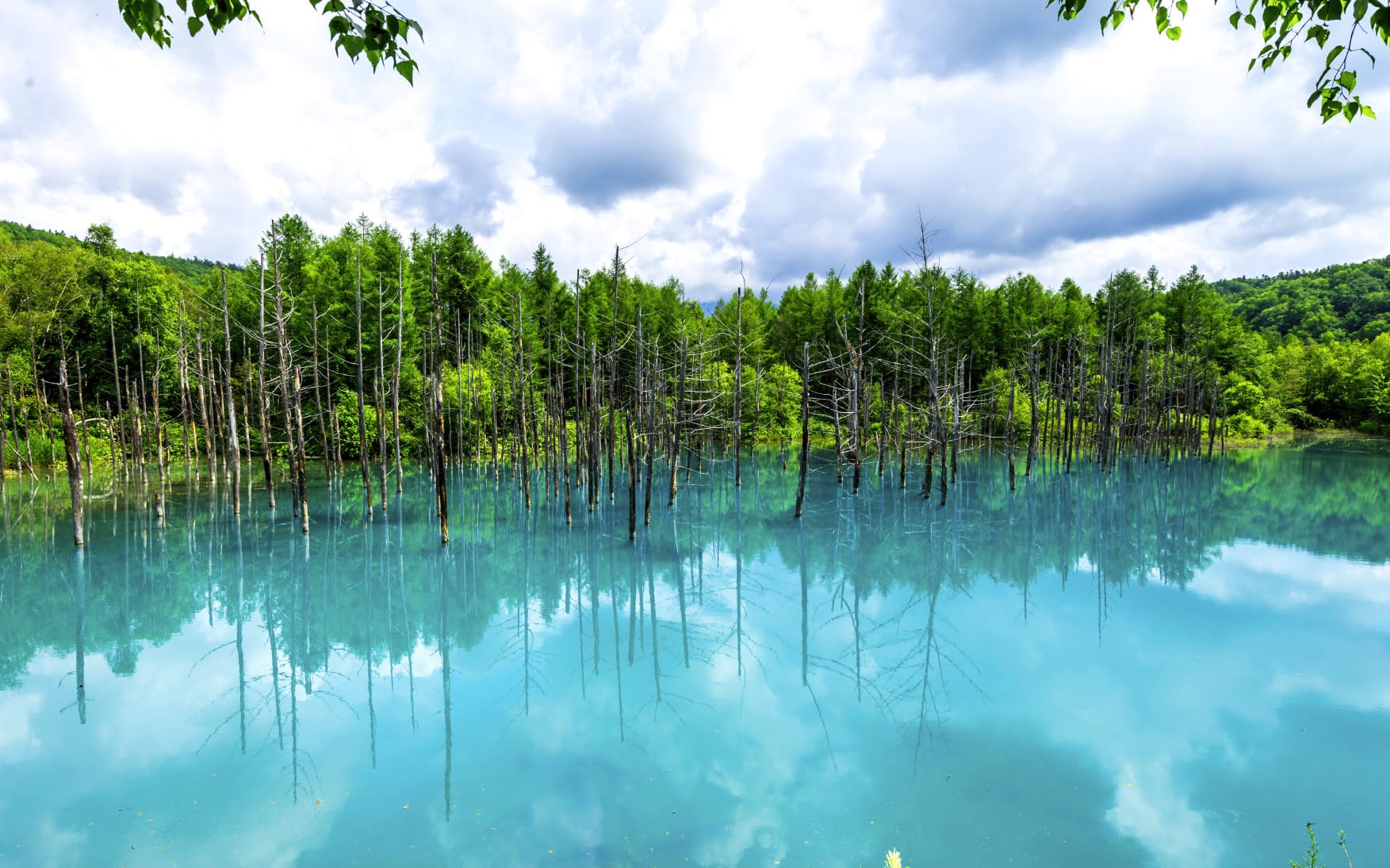
The Blue Pond in Biei is the kind of place that seems imagined rather than discovered. It sits quietly on the left bank of the Biei River, southeast of the town, pretending to be simple. Just a pond. Just water. Except the water is an impossible shade of blue, luminous and unsettling, as if the sky dissolved and forgot to leave. Scientists have tried to explain it, measuring minerals and light refraction, but the mystery remains stubbornly intact.
Pale tree trunks rise from the depths like unfinished thoughts, stripped of leaves, frozen mid sentence. On a still day, the surface becomes a mirror that doubles the illusion. Visitors lower their voices instinctively. This is not a place for haste. It demands reverence, contemplation, and a camera that will never quite capture the truth. The Blue Pond does not want to be explained. It wants to be remembered.
From water to land, Hokkaido shifts mood effortlessly. In Furano, the earth performs. Rolling fields stretch outward, layered with color, as if a painter lost restraint and decided restraint was overrated anyway. Lavender dominates the imagination here, and rightly so. Between June and September, purple unfurls across the countryside, perfuming the air with a sweetness that lingers on clothes and memory alike.
Sunflowers arrive like a shout of happiness. Yellow everywhere. Against blue skies that feel larger than elsewhere in Japan. Farms open their gates. Paths invite wandering. This is a place where time elongates. Where walking slowly feels like the correct decision. Furano is not about checking attractions off a list. It is about standing still while beauty insists on your attention.
Takino Suzuran National Park reveals another side of Hokkaido, one rooted in generosity. Green space unfolds gently here, designed not merely to impress but to welcome. Families arrive early. Children run ahead. And then there is the surprise. A vast play area constructed entirely from hand woven rope, colorful and improbably elegant. Architecture that understands joy.
The park balances tranquility with laughter. Adults stroll through open meadows and forested paths while children climb, swing, and invent games in structures that feel organic rather than imposed. It is a reminder that nature and design need not compete. In Hokkaido, they collaborate.
Autumn introduces a transformation that borders on theatrical. As September gives way to October, Hokkaido enters the season of Momiji Matsuri, the traditional maple leaf festival. The island blushes. Gold and crimson spread through cities and mountains alike. Streets become corridors of color. Parks resemble illustrated manuscripts.
Locals gather beneath trees that seem to be burning without heat. Food stalls appear. Conversations slow. There is celebration here, but also acceptance. Autumn in Hokkaido is not just admired, it is honored. The fleetingness of color is the point. You watch knowing it will not last, and that knowledge sharpens the pleasure.
Then there is beer. Leave it to Hokkaido to turn a beverage into a philosophy. Four colors, four seasons, each brewed with a sense of playfulness and precision. Blue beer, pale as winter light, made with water melted from drifting ice along the coast. Red beer for summer, infused with natural plant pigments from the Hamanasu flower, carrying warmth and brightness.
Green beer represents spring, drawing color from seaweed and native plants, tasting faintly of renewal. Pink beer, autumn’s signature, blends rose, glacial water, and potato, a combination that sounds improbable until it works perfectly. Drinking these beers is not about intoxication. It is about storytelling. You sip the island’s calendar.
All roads in Hokkaido eventually lead to Sapporo, the island’s capital and largest city. It feels young for a Japanese city, spacious, rational, unhurried. Yet once a year, it transforms completely during the Sapporo Snow Festival. Massive ice and snow sculptures rise across the city, illuminated at night, drawing more than two million visitors from around the world. Cold becomes spectacle. Winter becomes invitation.
Sapporo is also the birthplace of one of Japan’s most famous beers, and the home of Shiroi Koibito, the white chocolate biscuit that has achieved near mythical status among travelers. Cafes hum softly. Streets feel navigable. The city is confident without being aggressive, cosmopolitan without losing warmth.
Hokkaido does not ask for your attention with urgency. It earns it through accumulation. A blue pond that refuses explanation. Flower fields that reset your sense of scale. Parks that remember children matter. Festivals that celebrate impermanence. Beer that tastes like weather. A city that turns snow into celebration.
Once you understand this rhythm, leaving feels like interruption.
Hokkaido travel blog, Hokkaido tour guide, Blue Pond Biei travel, Furano flower fields, Hokkaido seasonal travel, Japan nature tour, Sapporo Snow Festival travel, Hokkaido unique experiences, northern Japan travel, Hokkaido sightseeing guide, Japan island travel, Hokkaido cultural travel, Hokkaido food and beer, Hokkaido luxury travel, best time to visit Hokkaido
