
The World’s Most Extraordinary Buildings – A Planner’s Guide to 10 Architectural Icons You Should Experience Once in Your Life
The World’s Most Extraordinary Buildings – A Planner’s Guide to 10 Architectural Icons You Should Experience Once in Your Life
Travel often begins with landscapes. But sooner or later, the journey turns toward buildings—structures so powerful they reshape entire cities. Some rise with daring modern materials. Others carry centuries of faith, power, or memory.
For travelers who design trips around culture rather than convenience, architecture becomes the map.
The following ten landmarks—spread across Europe, Asia, and the Middle East—are more than photogenic structures. They are the physical record of human imagination. Some challenge engineering limits. Others preserve spiritual traditions thousands of years old.
Instead of viewing them simply as tourist attractions, this guide approaches them from the perspective of a planner: how they fit into a travel route, why they matter culturally, and what experienced travelers often notice after the crowds disappear.
Quick Summary Table – Architectural Icons Around the World
| Landmark | City / Region | Architectural Style | Key Feature |
|---|---|---|---|
| Guggenheim Museum | Bilbao, Spain | Contemporary | Titanium exterior with dynamic curves |
| Potala Palace | Lhasa, Tibet | Tibetan Buddhist | 13-story palace with thousands of rooms |
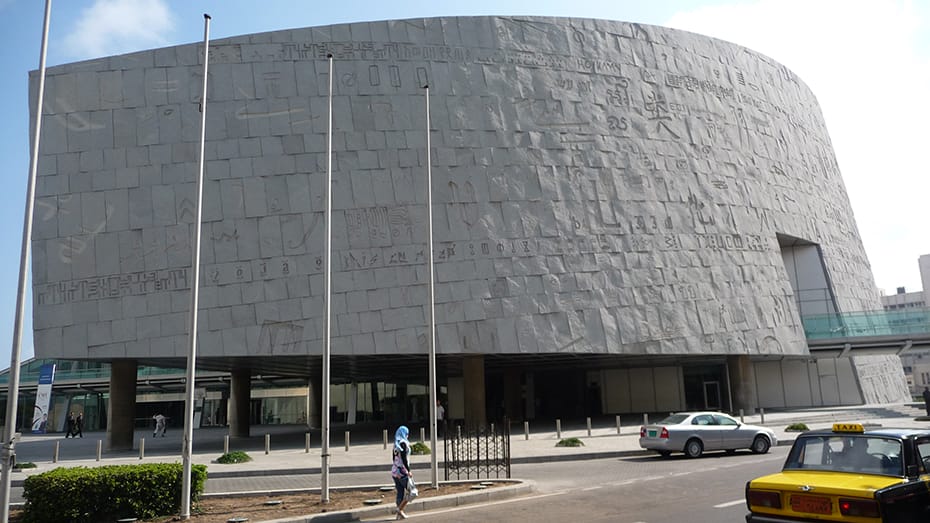
| Bibliotheca Alexandrina | Alexandria, Egypt | Modern cultural architecture | Library capacity of 8 million books |
| Sagrada Familia | Barcelona, Spain | Modernist / Gaudí | 18 towers and intricate facades |
| Taj Mahal | Agra, India | Mughal architecture | White marble mausoleum |
| Imam Mosque | Isfahan, Iran | Safavid architecture | Blue-gold tiled mosque with 54m dome |
| Winter Palace | Saint Petersburg, Russia | Baroque | Former residence of Russian emperors |
| Crac des Chevaliers | Homs, Syria | Medieval Crusader fortress | Hilltop castle complex |
| Oscar Niemeyer Museum | Curitiba, Brazil | Modernist | Eye-shaped museum design |
| Aya Sofya | Istanbul, Türkiye | Byzantine / Ottoman | Former cathedral and mosque |
Why Architecture Changes the Way We Travel
Architectural destinations operate differently from beaches or national parks.
They compress history into physical space.
In one week, a traveler might stand beneath medieval stone vaults in Syria, then step inside a titanium sculpture of modern art in northern Spain. The contrast reveals something powerful: architecture is the biography of civilization written in buildings.
Experienced travelers often design entire itineraries around these sites—not just to photograph them, but to understand the societies that created them.
1. Guggenheim Museum – Bilbao, Spain
Few buildings have changed a city’s economic destiny the way the Guggenheim Museum Bilbao did.
Designed by Frank Gehry, the museum initially puzzled observers. Many locals thought it resembled a giant steel box twisted into improbable shapes.
But the titanium exterior—paired with vast glass walls—creates a strange optical illusion. From certain angles the building seems to rotate, as if the structure itself were in motion.
Inside, the museum focuses primarily on 20th-century European and American art, turning Bilbao from an industrial port into a global art destination.
Planner’s insight:
The museum is often combined with a cultural route through northern Spain, linking Bilbao with San Sebastián and the Basque coast.
2. Potala Palace – Lhasa, Tibet
Towering above the sacred city of Lhasa, the Potala Palace dominates the skyline like a mountain carved into architecture.
Built in the 7th century, it once served as the winter residence of the Dalai Lama and the administrative center of Tibet. Construction required thousands of workers and years of labor.
The palace contains thousands of rooms across 13 floors, each decorated with Buddhist murals, prayer halls, and sacred relics.
Today the structure functions as a museum and a UNESCO-recognized cultural heritage site.
Planner’s insight:
Altitude in Lhasa exceeds 3,600 meters. Travelers often schedule several days for acclimatization before visiting the palace.
3. Bibliotheca Alexandrina – Alexandria, Egypt
In Alexandria, modern architecture meets ancient intellectual history.
The Bibliotheca Alexandrina opened in 2002 as a symbolic revival of the legendary Library of Alexandria, one of the most important centers of knowledge in the ancient world.
The design resembles a second sun rising over the Mediterranean Sea—a tilted circular disk emerging from the ground.
Inside, the library can house around eight million books, making it one of the largest cultural research centers in the region.
Planner’s insight:
Many travelers visit Alexandria as a day trip from Cairo, but architecture enthusiasts often stay overnight to explore the city’s coastal atmosphere.
4. Sagrada Familia – Barcelona, Spain
Few buildings inspire as much curiosity as the Sagrada Familia.
Designed by the visionary architect Antoni Gaudí, construction began in 1882 and continues today.
The church features three elaborate façades and 18 towers, each filled with symbolic details inspired by nature.
Its bell towers resemble organic forms—some travelers say they look like giant seashells or twisting coral.
If completed according to current plans, the basilica is expected to reach completion around 2026, marking a century since Gaudí’s death.
Planner’s insight:
Morning light transforms the stained glass interior. Architects often recommend visiting early rather than midday.
5. Taj Mahal – Agra, India
Few monuments combine romance and architecture as powerfully as the Taj Mahal.
The Mughal emperor Shah Jahan commissioned the marble mausoleum after the death of his wife Mumtaz Mahal in 1631.
Built entirely from white marble and decorated with delicate carvings, the structure has often been described by poets as a monument to eternal love.
The Indian poet Rabindranath Tagore famously called it “a tear on the cheek of time.”
Planner’s insight:
Sunrise visits reveal subtle color shifts in the marble—from pale pink to bright white.
6. Imam Mosque – Isfahan, Iran
Located in the vast square of Isfahan, the Imam Mosque represents one of the greatest achievements of Safavid architecture.
The mosque’s surface is covered with blue and gold tiles that change color depending on sunlight.
Its central dome rises 54 meters high, decorated with intricate geometric patterns. The main gateway reaches about 30 meters, forming a dramatic entrance.
Planner’s insight:
Architectural travelers often spend hours simply observing how light transforms the tile colors throughout the day.
7. Winter Palace – Saint Petersburg, Russia
Standing along the Neva River, the Winter Palace symbolizes the grandeur of the Russian Empire.
Designed by Francesco Bartolomeo Rastrelli, the palace served as the winter residence of Russian emperors.
Its Baroque façade stretches across the riverbank in dramatic green and white.
Today the building forms part of the Hermitage Museum, one of the largest art museums in the world.
8. Crac des Chevaliers – Syria
The Crac des Chevaliers rises above the Syrian hills like a medieval fortress preserved in time.
The British officer and writer T. E. Lawrence once described it as “the finest castle in the world.”
Built roughly 800 years ago by Crusader knights, the fortress includes defensive walls, chapels, baths, halls, and even agricultural spaces.
Inside the walls was essentially a small self-sufficient town.
9. Oscar Niemeyer Museum – Curitiba, Brazil
The Oscar Niemeyer Museum is often nicknamed “the Eye Museum.”
Designed by Brazilian architect Oscar Niemeyer, the structure resembles a giant glass eye floating above a reflective pool.
The bold modernist design demonstrates Niemeyer’s philosophy that architecture should feel sculptural rather than purely functional.
10. Aya Sofya – Istanbul, Türkiye
In central Istanbul stands the legendary Hagia Sophia (Aya Sofya).
Originally built in the 6th century as an Orthodox cathedral, it later became a mosque and then a museum in 1935.
Four towering minarets surround the central dome, giving the structure a striking silhouette against the skyline.
Few buildings in the world reflect such a complex intersection of religion, empire, and architecture.
Things the Media Doesn’t Tell You
Most travel guides treat famous buildings as simple photo opportunities.
Reality is more complicated.
• Crowds shape the experience. At places like Sagrada Familia or the Taj Mahal, timing your visit dramatically changes what you see.
• Architecture is often political. Sites such as Potala Palace or Hagia Sophia reflect complex historical narratives beyond their design.
• Scale can surprise you. Many visitors underestimate how massive these structures actually are.
• Context matters. The Guggenheim Museum isn’t just a building—it triggered an economic transformation in Bilbao.
Architecture is never just about walls and roofs.
It is about the societies that built them.
Community Perspective – Voices From Travelers
Travel forums and social media discussions reveal recurring impressions:
“Photos of Sagrada Familia don’t prepare you for the interior light. It feels almost organic.”
“The Guggenheim changed the entire mood of Bilbao. It’s not just a museum—it’s urban regeneration.”
“The Taj Mahal is famous, but the craftsmanship in the marble carvings is what stays in your memory.”
These perspectives show how architecture becomes emotional, not merely visual.
Final Thoughts – Designing a Global Architecture Journey
Some travelers chase landscapes.
Others chase stories.
Architecture gives you both.
Standing inside a Byzantine cathedral, a Mughal mausoleum, or a titanium museum reminds us that civilizations express their identity through buildings.
And sometimes the most memorable travel moment isn’t a view—it’s the quiet second when you look up and realize how extraordinary human creativity can be.
Planning an Architecture Journey – 10 Global Landmarks That Change How You See Cities.
world architecture landmarks, famous global buildings, architectural travel guide, guggenheim bilbao architecture, potala palace history, sagrada familia design, taj mahal architecture, imam mosque isfahan, winter palace russia, crac des chevaliers castle, oscar niemeyer museum, hagia sophia architecture, iconic world monuments, architecture travel destinations, historic world buildings
