
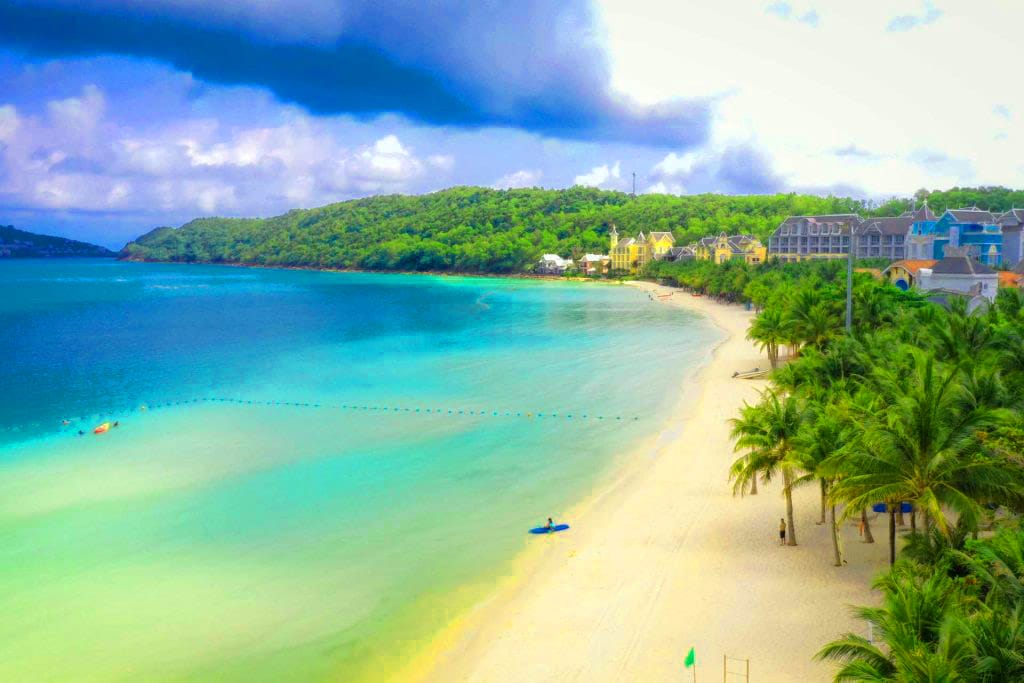
Two Vietnamese beaches quietly entered a global conversation usually dominated by louder names. Not with fireworks. Not with slogans. They arrived the way good places often do, by being themselves for a long time and letting the world catch up. Long Beach in Phu Quoc and An Bang Beach near Hoi An found their way into a list of the one hundred most beautiful beaches on Earth, not because they demanded attention, but because they deserved it.
Lists can be tiresome. Rankings reduce the planet to numbers and turn wonder into competition. Yet every so often, a list opens a door. This one does exactly that. It invites a different kind of travel, less about proof and more about presence. A tour through these beaches is not a victory lap around paradise. It is a slow walk through places that still remember silence.
Long Beach in Phu Quoc stretches out with an easy confidence. It does not rush toward the sea; it eases into it. The sand is pale and forgiving, the water clear enough to reveal its intentions early. What makes Long Beach linger in memory is not just the obvious beauty but the rhythm of life that edges it. Fishing boats drift in with the morning. Smoke curls from kitchens where pepper and seafood negotiate their futures. Renting a motorbike here is not a convenience but a philosophy. You ride without urgency, letting the island tell you where to stop. A travel blog might call this freedom. It feels more like trust.
An Bang Beach offers a different persuasion. Near Hoi An, it balances softness with social life, white sand with gentle surf, calm mornings with evenings that hum quietly. Restaurants and beach bars line the shore, not aggressively, but with an understanding that pleasure need not shout. Local dishes arrive fragrant and unpretentious, food meant to be eaten slowly while watching the light change its mind over the water. An Bang does not perform tradition. It lives it, and invites you to sit nearby.
Beyond Vietnam, the coastline of Southeast Asia unfolds like a series of thoughtful sentences, each beach a variation on calm, distance, and discovery. Puka Beach in Boracay avoids the crowds that give the island its reputation. Long and understated, it offers space to breathe and the rare pleasure of hearing your own footsteps. Koh Rong’s southwestern beaches in Cambodia feel forgotten in the best possible way, where white sand stretches without interruption and the water seems surprised to see you.
Tanjung Rhu in Langkawi hides behind limestone caves and mangroves, a beach that rewards curiosity rather than convenience. While others gather at Pantai Cenang, Tanjung Rhu waits, patient and unbothered, its calm broken only by wind and birds. Canggu in Bali shifts the tone entirely. Here the ocean is kinetic, restless, perfect for those who read waves the way others read books. Surf culture hums through the sand, energetic but focused.
Sunrise Beach on Koh Lipe lives up to its name with an almost indecent beauty. Mornings arrive softly, light spreading across the water as if testing its strength. The island is small enough to walk without destination, which is precisely the point. Juara Beach on Tioman Island offers restraint. Less developed, more honest, it allows the forest and the sea to finish each other’s sentences.
Maya Bay on Ko Phi Phi has become an icon, sometimes to its own detriment. Yet stripped of noise, it remains astonishing. White sand curves around water so clear it seems staged, limestone cliffs rising like a held breath. El Nido in Palawan expands the idea of a beach into a whole marine universe. Coral gardens below, karst islands above, and life moving through it all with confidence.
Palaui Island in the Cagayan Valley resists ease. No resorts. No shortcuts. You camp or stay with locals, learning quickly that effort sharpens pleasure. Volcanic rock, green water, and marine sanctuaries coexist here without explanation. Travel becomes participation rather than consumption.
At the far end of the list, Grande Anse on La Digue in the Seychelles stands alone. Isolated, muscular, unapologetic. Waves arrive with authority, sand glows white against granite and jungle. It is a beach that does not flatter. It challenges. Surfers understand this immediately. Others learn slowly.
What unites these places is not perfection but character. They are beaches that allow room for thought, for wandering, for the quiet recalibration that good travel brings. A tour through them would not chase highlights. It would linger. A travel blog worthy of them would avoid exaggeration and trust the reader to feel what is already there.
Vietnam’s presence on this list is not an arrival. It is a reminder. Beauty does not need permission. It only needs time.
