Hanoi does not introduce itself politely. It watches first. It measures you. Then, when you stop trying to conquer it with a checklist, the city leans closer and begins to speak. This is a capital shaped by scholarship and struggle, poetry and pragmatism, where layers of history sit side by side like overlapping conversations. You do not rush Hanoi. You walk it. Preferably slowly. Preferably curious.
Many of the city’s essential sites lie within a compact radius, making Hanoi an ideal destination for travelers who enjoy discovery on foot, by bicycle, or astride a motorbike humming through narrow streets. What emerges is not a collection of attractions, but a narrative, one that unfolds page by page as you move.
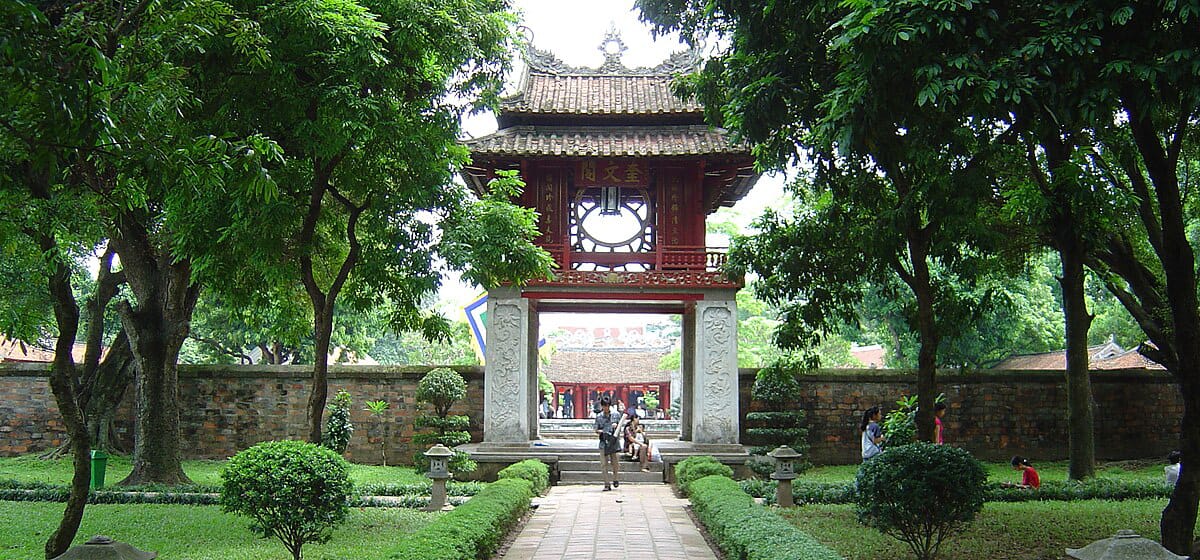
The Temple of Literature, known formally as Van Mieu Quoc Tu Giam, is where the story begins. Built in 1070, it served as Vietnam’s first university, a place where intellect was currency and moral rigor mattered as much as brilliance. The courtyards are hushed. Stone turtles carry stelae engraved with the names of scholars who passed imperial examinations centuries ago. These are not merely names. They are ambitions made permanent. Walking through the gates feels like entering a long, patient argument about learning, discipline, and national identity. It is impossible not to feel slightly straighter here.
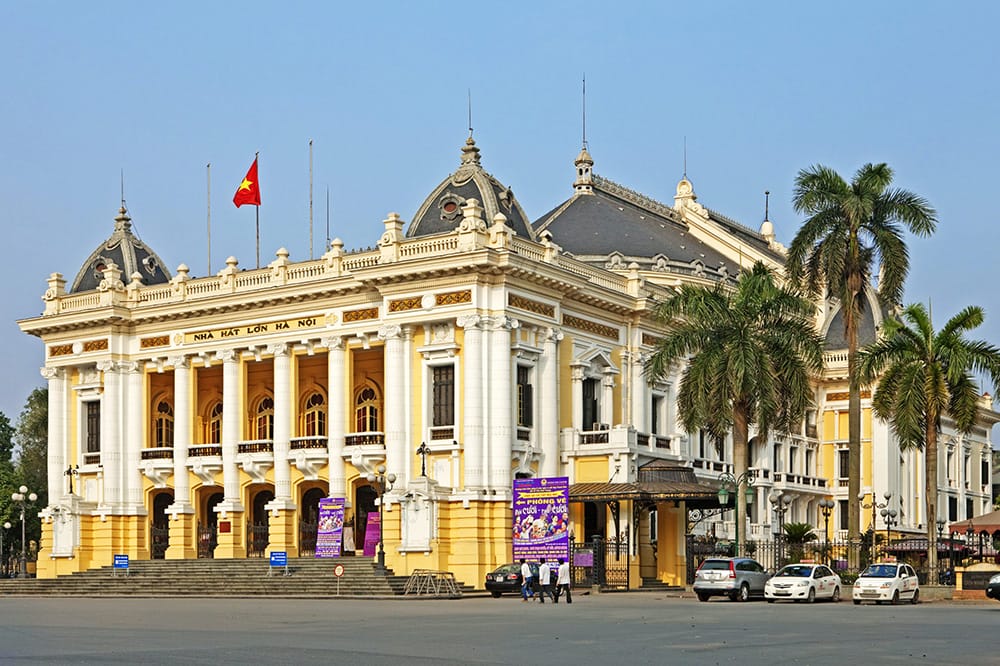
A short distance away stands the Hanoi Opera House, a colonial echo that has been absorbed rather than rejected. Completed in 1911 and modeled after the Opera Garnier in Paris, it retains elegance without arrogance. Performances range from classical opera and ballet to traditional Vietnamese music and international symphonies. Even when no performance is scheduled, the building commands attention. It reminds visitors that Hanoi’s cultural life has always been outward looking, absorbing influences and quietly reshaping them.
Then comes Hoa Lo Prison, a place where silence speaks loudly. Built by the French in the late nineteenth century, it once housed political prisoners under harsh conditions. Today, only a portion remains, but that is enough. The exhibits do not sensationalize. They present facts, artifacts, and photographs that force reflection. Hoa Lo is often listed among the most notorious prisons in the world, yet standing inside, the dominant feeling is not horror alone, but endurance. The human capacity to persist leaves a deeper impression than the walls themselves.
Hanoi exhales at Hoan Kiem Lake. Locals circle it at dawn and dusk, escaping traffic noise and daily pressure. The lake sits at the emotional center of the city, anchored by Turtle Tower and watched over by Ngoc Son Temple, reached via the scarlet curve of The Huc Bridge. Each structure carries symbolism. Words carved into stone declare lofty ideals. Pavilions suggest contemplation. Here, Hanoi pauses, and visitors instinctively do the same. Coffee tastes better nearby. Time slows willingly.
From reflection, the city moves toward reverence at Ba Dinh Square. This vast open space, often described as the heart of Hanoi, witnessed the declaration of Vietnam’s independence. Ho Chi Minh Mausoleum stands solemnly at its edge. Visiting is a ritualized experience, governed by rules of dress and conduct, yet deeply moving. Nearby, the stilt house and fish pond where Ho Chi Minh lived provide intimacy to the narrative. Just steps away, the One Pillar Pagoda rises delicately from a lotus pond, a structure both symbolic and architectural, balancing grace on a single column.
The Imperial Citadel of Thang Long adds another layer, older and more fragmented, yet no less compelling. Recognized by UNESCO as a World Heritage Site, it reveals traces of royal life across dynasties. Foundations, gates, and archaeological remnants hint at former grandeur. This is not a polished palace complex. It is an excavation of time. Visitors walk through centuries, guided by imagination as much as signage.
For those seeking a broader understanding of Vietnam’s diversity, the Vietnam Museum of Ethnology offers clarity. Dedicated to the cultures of Vietnam’s fifty four ethnic groups, the museum combines indoor exhibitions with expansive outdoor displays of traditional houses. Each structure tells a story of climate, belief, and adaptation. This is not abstract anthropology. It is lived experience presented with respect. Travelers leave with a deeper appreciation of how varied the nation truly is.
Quan Thanh Temple brings spirituality back into focus. One of the ancient guardian temples of old Thang Long, it houses a monumental bronze statue of Tran Vu, cast in the seventeenth century. The statue’s weight and presence are unmistakable. Surrounding wood carvings depict mythical creatures and scenes from both earthly and celestial realms, executed with astonishing finesse. This is craftsmanship as devotion.
The Vietnam Women’s Museum shifts the narrative once again, this time toward resilience and creativity. Established in the late twentieth century, it explores women’s roles in family life, history, fashion, and conflict. Exhibits are thoughtfully curated, multilingual, and emotionally resonant. Stories of war, migration, and daily labor coexist with textiles and contemporary commentary. It is no surprise that international travelers consistently rank this museum among Hanoi’s most rewarding experiences.
Finally, the Old Quarter reveals itself not through institutions but through architecture that still breathes. The historic house at 87 Ma May Street exemplifies traditional Hanoi domestic design. Built in the late nineteenth century, it demonstrates how families lived, worked, worshipped, and adapted within narrow urban plots. Courtyards invite light and air. Spaces shift function with time of day. It is modest, intelligent architecture, deeply human.
Accommodation in Hanoi complements this layered experience. Boutique hotels in the Old Quarter offer proximity and personality, often housed in restored buildings with attentive service. Larger hotels near Hoan Kiem Lake provide comfort and calm after long days of exploration. Common benefits include walkable locations, knowledgeable concierge teams, curated tours, and spaces designed for rest rather than spectacle. The right hotel becomes a refuge, a place to absorb the city rather than escape it.
Hanoi is not a city you finish. It is one you begin. Each street suggests another story. Each courtyard invites another pause. The longer you stay, the more generous it becomes. And when you leave, it does not feel complete. It feels interrupted.
That is how you know you must return.
Hanoi travel guide, Hanoi cultural tour, Hanoi city travel, Hanoi heritage attractions, Temple of Literature Hanoi, Hoan Kiem Lake travel, Hanoi Old Quarter tour, Hanoi historical sites, Hanoi museum tour, Ho Chi Minh Mausoleum visit, Imperial Citadel Thang Long, Hanoi walking tour, Hanoi destination travel, best places to visit Hanoi, Hanoi travel experience