Hoi An does not announce itself loudly. It does not need to. You arrive expecting a charming old town and instead walk into a carefully preserved state of mind. This is not merely a tourist destination. It is a living archive of trade winds, belief systems, architectural patience, and human adaptation. The town sits quietly near the Thu Bon River, modest in scale, immense in resonance. You can cross it on foot in an afternoon, yet spend days discovering how deeply it settles into you.
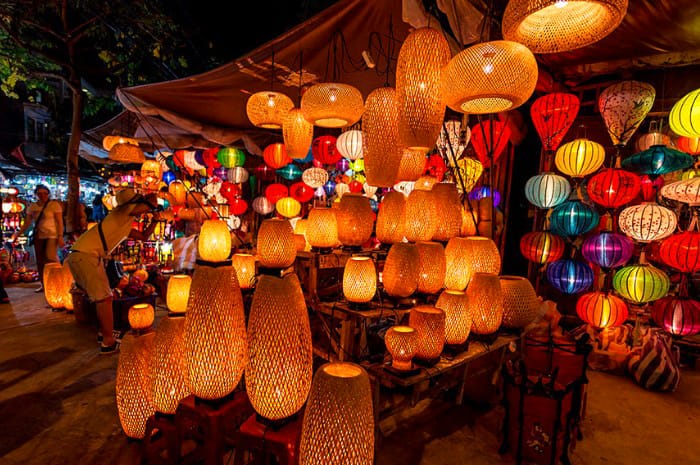
Hoi An was once one of Southeast Asia’s most important trading ports. Japanese merchants, Chinese guilds, Portuguese sailors, and later French administrators all left something behind. What remains today is not a museum city frozen in amber but a functioning town that breathes history while serving coffee, tailoring suits, and lighting lanterns at dusk. A professional Hoi An tour understands this rhythm. It does not rush. It allows the town to unfold.
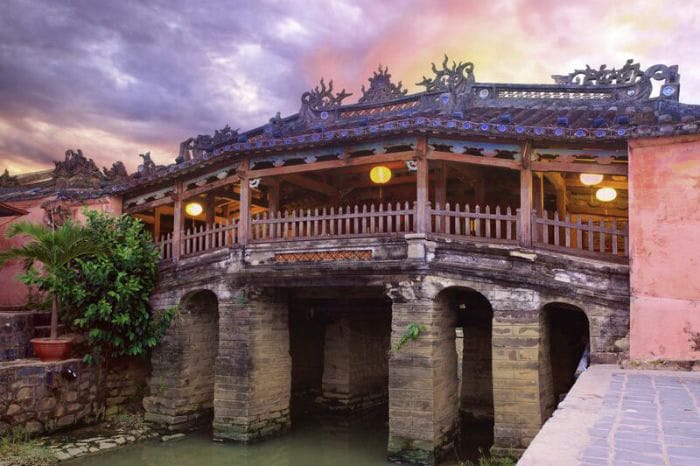
The Japanese Covered Bridge stands at the symbolic heart of Hoi An. Small, roofed, quietly confident, it spans a narrow canal that feeds into the river. Built at the end of the sixteenth century by the Japanese community, it was meant to connect neighborhoods and cultures. In 1719, a visiting Nguyen lord named it Lai Vien Bridge, meaning a bridge welcoming travelers from afar. The name still holds. Inside the bridge rests a small shrine dedicated to Tran Vo Bac De, a deity believed to control storms and earthquakes. The architecture is a careful marriage of Vietnamese, Chinese, Japanese, and subtle Western elements. Standing here early in the morning, before the tour groups arrive, you hear footsteps echo softly on wooden planks and feel the town waking around you. Nearby boutique hotels offer early breakfast and river views, allowing guests to experience the bridge before it becomes a photograph rather than a moment.
A short walk away, the Fujian Assembly Hall expands the story. Its origins trace back to a modest shrine built in 1697 to honor Thien Hau, protector of seafarers. Over time, as the Fujian merchant community prospered, the hall grew into an architectural statement. Today it is richly ornamented, confident in its colors and carvings. Incense smoke drifts upward, carrying wishes written on red paper. Couples come here to pray for children. Traders once prayed for safe passage. The hall reminds visitors that Hoi An’s wealth was built on risk and faith. Hotels in the Old Town often arrange guided visits that explain the symbolism embedded in every courtyard and gate, turning a visit into understanding rather than sightseeing.
The Chaozhou Assembly Hall speaks a slightly different dialect of devotion. Built in 1845 by the Teochew Chinese community, it honors General Ma Yuan, revered for his power over water and waves. The wooden framework here is a marvel, carved with precision that rewards slow looking. Ceramic reliefs shimmer softly, telling stories of migration and perseverance. This hall feels inward, contemplative. You sense the weight of long journeys across unpredictable seas. A cultural tour that includes this stop often pairs it with tea tasting nearby, allowing travelers to absorb atmosphere rather than simply move on.
The Cantonese Assembly Hall, constructed in 1885, brings a more ceremonial presence. Stone and wood are balanced with authority. Every year during the Lantern Festival and the celebration of Guan Yu’s birthday, the hall becomes animated with ritual and sound. Even on a quiet afternoon, it feels prepared for gathering. Travelers staying in heritage hotels nearby can time their visit to coincide with these festivals, gaining access to experiences that transform architecture into living tradition.
Beyond the assembly halls lies the Tran Family Chapel, built in 1802 by a Mandarin of the Tran lineage. Set on expansive grounds by Old Town standards, it follows traditional feng shui principles shared by Vietnamese and Chinese culture. The space feels orderly, intentional, respectful. Unlike the more public halls, this is a family space, preserved with remarkable integrity. Walking through it offers insight into domestic values, ancestor worship, and social structure. For travelers seeking depth, this chapel reveals how private life mirrored public commerce in Hoi An’s golden age.
The Hoi An Museum of History and Culture provides essential context. Established in 1989, it houses more than two hundred original artifacts that trace the town’s evolution from the Sa Huynh culture through the Cham period and into Vietnamese dynasties. Ceramics, metalwork, wooden tools, and written records create a timeline that grounds everything you see outside. A well designed Vietnam heritage tour often begins here, allowing travelers to walk into the Old Town already equipped with understanding.
Among the most compelling private structures is the Tan Ky Ancient House. Nearly two centuries old, it exemplifies the traditional Hoi An townhouse. The front opens onto the street for trade, the back connects to the river for goods transport. Inside, spaces are arranged by function rather than ornament. Flood marks on the walls quietly record centuries of seasonal inundation. Materials are local. Craftsmanship is intimate. Staying at a nearby heritage hotel allows guests to visit at quieter hours, when the house feels less like an exhibit and more like a lived space.
The Hoi An Handicraft Workshop completes the narrative by bringing tradition into the present tense. Here, visitors observe artisans weaving mats, working ceramics, lacquering wood, and shaping textiles. Hands move with muscle memory refined over generations. Travelers are invited to participate, to try, to fail gently. It is an experience that reconnects consumption with creation. Many hotels partner with the workshop, offering curated visits that emphasize respect over novelty.
Accommodation in Hoi An Old Town ranges from restored merchant houses to riverside resorts just beyond the historic core. The benefits are tangible. Staying close allows you to walk everywhere, to return to your room during the midday heat, to emerge again as lanterns glow and the river reflects a hundred colors. Hotels here often blend heritage architecture with modern comfort, offering pools, courtyards, and attentive service without disrupting the town’s harmony.
Hoi An rewards those who linger. A single day introduces you. Several days allow friendship. You begin to recognize doorways, scents, rhythms. You stop checking maps. You follow sound, light, curiosity. A thoughtfully designed Hoi An travel experience does not overwhelm with stops. It curates encounters. It understands that the town itself is the attraction.
You leave Hoi An with a peculiar sensation. Not that you have seen everything, but that something has seen you. And remembered.
Hoi An travel blog, Hoi An Old Town tour, Vietnam heritage travel, Hoi An cultural tour, Hoi An travel experience, Hoi An Old Town hotels, Vietnam historical destinations, Hoi An walking tour, Hoi An ancient town travel, Vietnam cultural travel blog, Hoi An architecture tour, Hoi An heritage hotels, Vietnam UNESCO travel, Hoi An sightseeing guide, Hoi An traditional culture