
There is a moment in Saigon when the city stops being scenery and becomes a conversation. It usually happens inside a market. The air thickens with voices, bargaining, sizzling oil, crushed herbs, fabric dust, perfume, sweat, laughter. This is not background noise. This is Saigon speaking directly to you. To understand the city, its appetite, its industry, its humor and restlessness, you walk its markets. Not politely. Slowly. With curiosity and a little nerve.
Saigon’s markets are not relics. They are living organisms, adapting daily, absorbing generations of traders, migrants, and travelers. Each market has its own temperament, its own rhythm, and its own loyal following. Together, they form a map of the city that no museum or monument could ever replace. Staying in a well located hotel in Ho Chi Minh City allows travelers to drift easily between these marketplaces, turning shopping into an immersive urban tour.
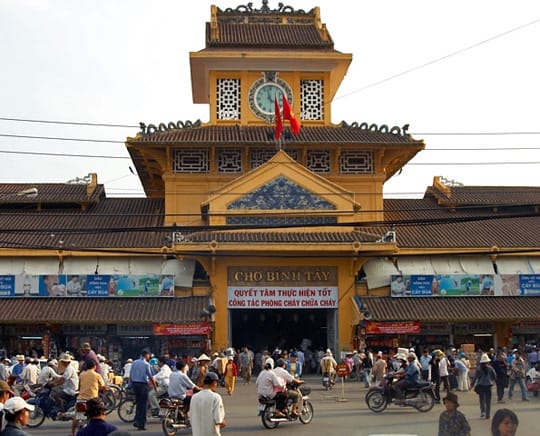
Binh Tay Market sits deep in the historic Chinatown district, a place where commerce feels ancestral. Built by a Chinese merchant whose philanthropy still echoes in stone and bronze, the market is both fortress and sanctuary. The architecture announces seriousness. A central clock tower rises confidently, flanked by curved tiled roofs that breathe heat upward, letting light and air circulate. Inside, wholesale trade dominates. This is where Saigon stocks itself. Dried seafood stacked like amber fossils. Spices in burlap sacks. Plastic goods, ceramics, textiles, everything in quantities that make retail shopping seem timid. The market wakes before sunrise and hums late into the night. Travelers staying nearby find that early morning visits reveal the market at its most honest, when traders count cash, sip bitter coffee, and prepare for another long day of exchange.
Ben Thanh Market occupies a different role entirely. It is Saigon’s handshake with the world. Built in the early twentieth century, it stands at the crossroads of history and modern tourism. The clock tower facing the central square has become a visual shorthand for the city itself. Inside, order dissolves into a carefully managed chaos. Thousands of stalls sell everything from lacquerware and silk scarves to coffee beans and seafood pulled from ice. Food aromas collide constantly. Grilled meat. Fermented fish sauce. Sweet desserts. The market evolves by hour. Before dawn, the northern side fills with fresh produce. By midmorning, the interior becomes a labyrinth of color and conversation. Staying in District 1 places travelers within walking distance, allowing repeat visits that reveal how the same space transforms throughout the day.
As daylight fades, Ben Thanh Market does not sleep. It changes costumes. The night market unfurls along the surrounding streets, trading raw commerce for performance. Clothing stalls glow under bright bulbs. Plastic chairs appear magically. Kitchens materialize on sidewalks. The clientele shifts toward international travelers and young locals who treat the market as a social arena. Prices soften. English floats through the air alongside laughter and clinking glasses. Hotels near Ben Thanh become ideal bases for evening exploration, letting visitors wander freely without concern for transport, returning whenever fatigue overtakes curiosity.
Tan Dinh Market feels more intimate, more neighborhood anchored. Built in the 1920s, it lacks architectural drama but compensates with specialization. This is where Saigon’s fabric trade thrives. Rolls of cloth spill from stalls in cascades of color and texture. Tailors, designers, and home sewists know this market by heart. Prices run higher than in outer districts, but so does trust. Food stalls here cater to regulars, offering familiar dishes rather than tourist theater. Staying nearby allows travelers to witness a quieter side of market culture, one rooted in daily routine rather than spectacle.
An Dong Market speaks the language of fashion. With thousands of stalls and a rapid turnover of styles, it supplies boutiques across the city and beyond. Trends appear here before they surface elsewhere. Lingerie brands, casual wear, accessories, all priced for volume rather than display. This market rewards travelers who enjoy the hunt, who understand that fashion here is less about labels and more about movement. Hotels in the surrounding area place visitors close to this commercial engine, where Saigon’s appetite for reinvention is most visible.
Ba Hoa Market offers something rarer. Memory. Founded by migrants from central Vietnam, it specializes in regional foods that carry emotional weight. Walking through its narrow aisles, travelers encounter flavors tied to home rather than novelty. Fermented sauces, dried chili, rustic cakes with names that sound almost defiant. For those far from their birthplace, this market offers comfort. For visitors, it offers intimacy. Small food stalls serve regional dishes prepared without compromise. Eating here feels like being invited into someone’s kitchen. Hotels near the airport make this market an easy final stop before departure, a place to gather edible souvenirs and last impressions.
What unites these markets is not merely commerce. It is character. Each market reveals a layer of Saigon’s identity, its immigrant roots, its adaptability, its relentless energy. Visiting them is not about buying things. It is about understanding how the city feeds itself, dresses itself, remembers itself. Guided market tours can add historical context and insider access, but wandering independently delivers its own rewards. A sudden conversation. A shared meal. A moment of recognition.
Saigon’s markets do not perform for visitors. They continue regardless. That is their power. And once you step into them, you are no longer watching the city. You are part of it.
Saigon markets travel guide, Ben Thanh Market tour, Binh Tay Market Chinatown, Saigon shopping travel, Ho Chi Minh City market tour, Saigon night market experience, Tan Dinh Market fabric, An Dong Market fashion, Ba Hoa Market food, Saigon local markets, travel shopping Saigon, market tours Ho Chi Minh City, Saigon street food markets, best markets in Saigon, cultural travel Saigon
