
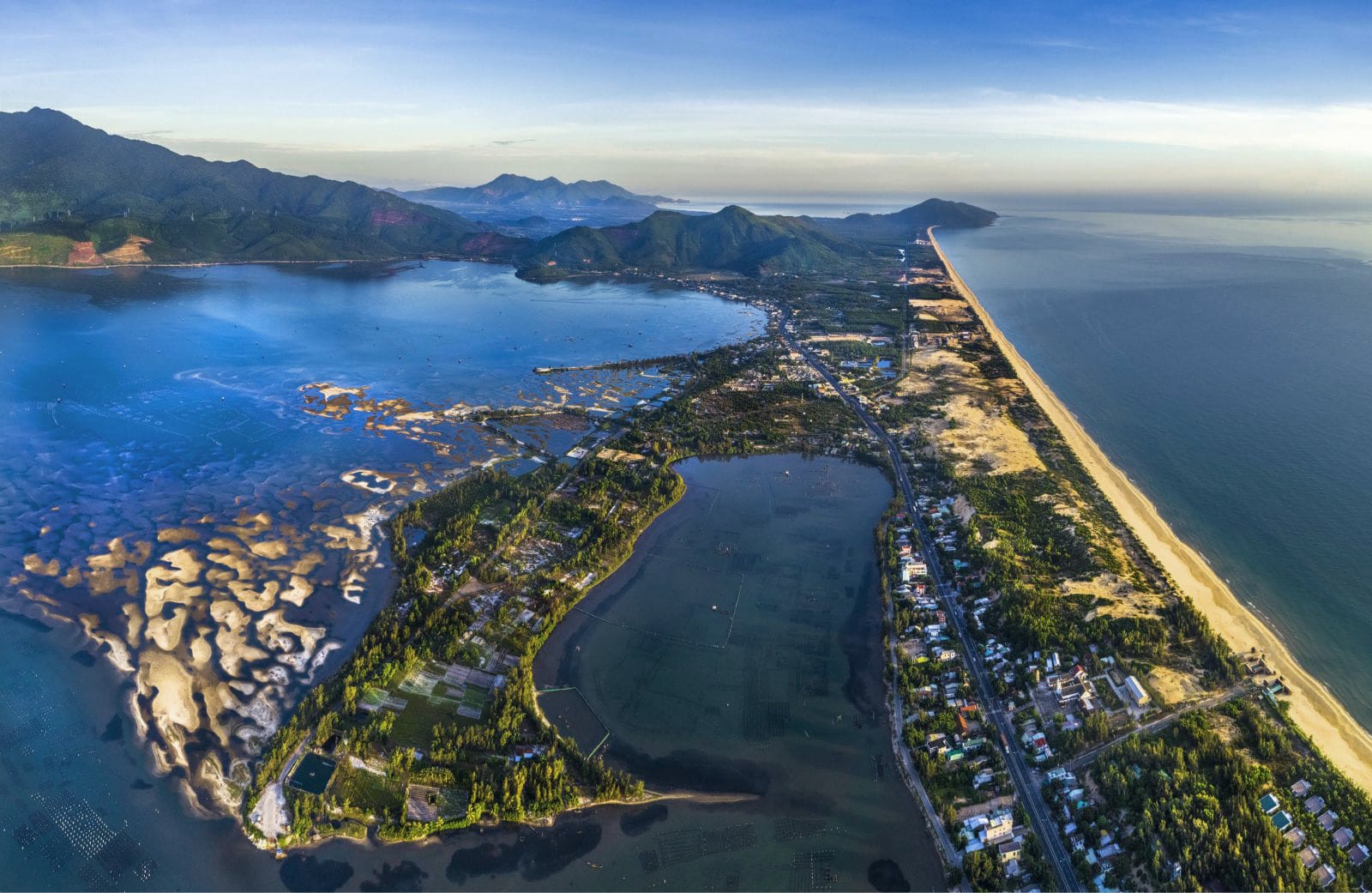
Some islands shout for attention. Others murmur. The most unforgettable ones do neither. They wait.
Con Dao belongs firmly to this latter, rarer category. Recently named by Lonely Planet as one of the nine most mysterious islands on Earth, this archipelago off the southern coast of Vietnam stands apart not because it dazzles immediately, but because it unfolds slowly, deliberately, like a secret told only to those who stay long enough to listen.
Con Dao is not a resort fantasy manufactured overnight. It is an island group shaped by history, endurance, restraint, and an almost stubborn devotion to wildness. Sixteen islands rise from the South China Sea, their interiors dense with tropical forest, their shores brushed by water so clear it seems unreal, their silence broken only by wind, waves, and the occasional monk’s bell drifting from a hillside pagoda.
Travel here feels purposeful. Almost reverent.
Torres Strait Islands, Australia
Between Australia and Papua New Guinea lies the Torres Strait, a cultural and geographical threshold formed by 274 islands scattered like punctuation marks across a vast blue sentence. This is Indigenous Australia at its most elemental, governed not by tourism boards but by tribal councils whose permission determines where visitors may go.
Coral reefs here are colossal, among the largest on Earth. Modern amenities exist only on Thursday Island and Horn Island. Elsewhere, visitors step into a world governed by ancestral law, sacred sites, and traditions that predate most maps. Travel feels less like sightseeing and more like an invitation.
Accommodations are limited, intentional, and respectful. The experience rewards curiosity and humility, offering travelers something increasingly rare: the privilege of not being entirely welcome everywhere.
Yaeyama Islands, Japan
At Japan’s southernmost edge, the Yaeyama Islands bask in sunlight and distance. Ishigaki, Taketomi, and Iriomote each offer a distinct personality bound together by turquoise seas and a rural cadence that feels untouched by Tokyo’s urgency.
Ishigaki delivers the most beautiful beaches and some of the freshest seafood imaginable. Taketomi preserves traditional Ryukyu architecture, its red tiled roofs and stone walls resisting modern intrusion. Iriomote remains largely wild, its jungle interiors threaded with rivers and hot springs.
Hotels here range from refined beachfront resorts to family run guesthouses where mornings begin with sea breezes and miso soup. Travel is gentle, restorative, and deceptively profound.
Con Dao, Vietnam
Con Dao’s past is inseparable from its present. Once a notorious prison complex used by colonial and imperial powers, the islands have transformed without erasing memory. Former detention sites now stand quietly amid forest and sky, offering solemn testimony rather than spectacle.
Nature has reclaimed much. Rainforests cover the islands’ interiors. Coral reefs flourish offshore. Sea turtles still return to lay eggs on protected beaches. Dolphins arc through deep blue channels. Development is carefully regulated, intentionally slow.
Hotels in Con Dao reflect this philosophy. Boutique resorts and eco sensitive lodges emphasize space, silence, and connection to place. Guests wake to birdsong rather than traffic. Spa treatments incorporate local botanicals. Dining highlights fresh seafood drawn from surrounding waters.
Travelers come not for nightlife but for clarity. For snorkeling over living reefs. For motorbike rides along empty coastal roads. For sunsets that feel ceremonial.
Iles du Salut, French Guiana
Eleven kilometers off the coast of French Guiana, the Iles du Salut sit isolated and unsettling. Once home to France’s most feared penal colonies, these islands still carry an atmosphere that unsettles even seasoned travelers.
The surrounding waters are unpredictable, shark populated, and treacherous. On land, palm forests sway above crumbling prison ruins, while vividly colored parrots flash between branches. Stories linger here, heavy and unresolved.
There are no luxury resorts. Accommodations are modest, respectful of history. Travel to the islands is guided by narrative rather than comfort, attracting those who believe that beauty and darkness often coexist.
Ulleungdo, South Korea
Rising abruptly from contested waters between Korea and Japan, Ulleungdo feels defiantly self contained. A volcanic island crowned by Mount Seonginbong, it offers cool sea air, dramatic cliffs, and a lifestyle rooted in simplicity.
Daily ferries connect Ulleungdo to the mainland, yet the island maintains a rhythm distinctly its own. Hiking trails lead to panoramic viewpoints. Fishing villages hum quietly. Meals feature squid pulled fresh from surrounding waters.
Guesthouses and small hotels focus on warmth rather than luxury, offering travelers a sense of temporary belonging. Ulleungdo rewards those who appreciate understatement.
San Blas Islands, Panama
Three hundred sixty five coral islands form the San Blas archipelago, shaped like crescents floating in warm Caribbean water. Governed by the Guna people, these islands blend traditional life with carefully managed tourism.
Visitors may choose between refined beachfront resorts or village stays where evenings end with freshly caught seafood and stories shared beneath starlit skies. Electricity is minimal. Expectations adjust quickly.
This is travel stripped of distraction. Days are measured by tides and sunlight. The effect is quietly intoxicating.
Penghu Islands, Taiwan
Ninety islands shaped by wind, basalt, and tradition make up the Penghu archipelago. Life here remains pastoral. Ox carts still appear on rural roads. Fishermen mend nets by hand. Temples honor the sea goddess Mazu, protector of those who depend on water for survival.
The landscape is elemental. Sun, wind, sand. Rice wine is shared generously. Accommodations are simple but sincere, emphasizing proximity to daily life rather than escape from it.
Travelers arrive curious and leave grounded.
Bay Islands and Hog Islands, Honduras
Once a haven for Caribbean pirates, the Bay Islands now draw divers and adventurers. Roatan, Utila, and Guanaja offer white beaches, coral reefs, and jungle interiors alive with sound.
Nearby, the Hog Islands provide an even more secluded escape. Thirteen coral islands host a single paradise like resort, surrounded by water so blue it seems artificial.
Hotels range from diver lodges to eco resorts, catering to those who prefer experience over excess. The atmosphere remains relaxed, slightly unruly, and deeply appealing.
Ssese Islands, Uganda
Inland yet unmistakably tropical, the Ssese Islands float within Lake Victoria, Africa’s largest lake. Eighty four islands remain largely undeveloped, their beaches golden, their forests dense with life.
Only three islands host resorts, allowing travelers to explore largely untouched landscapes. Activities range from swimming and sailing to guided forest walks where rare birds and primates appear unexpectedly.
Accommodations emphasize immersion rather than indulgence. Here, mystery feels alive rather than curated.
Con Dao’s inclusion among these islands is no accident. It shares their defining trait: restraint. It does not reveal itself easily. It rewards patience, respect, and a willingness to feel rather than consume.
Travelers leave changed. Quietly. Permanently.
Con Dao travel, mysterious islands travel, hidden island destinations, Con Dao island tour, remote island travel guide, Vietnam island travel, secret islands world, unexplored island destinations, island travel blog, Con Dao hotels and resorts, island adventure travel, cultural island tourism, eco island travel, off the beaten path islands, unique island experiences
