
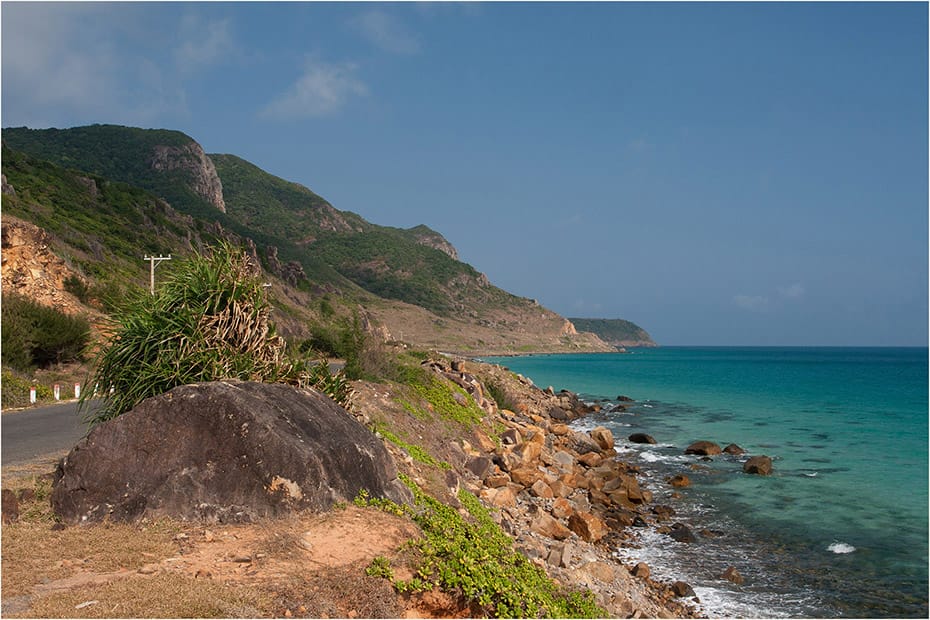
Hon Bay Canh Con Dao And A Wild Island Escape In Southern Vietnam
There are islands designed for postcards. And then there are islands that feel like they were designed before postcards existed.
Hon Bay Canh belongs firmly to the second category.
Located to the east of Con Dao, this is the second largest island among the 16 islands that make up the Con Dao archipelago. It does not advertise itself with beach bars or luxury developments. It does not compete for attention. Instead, it waits. Quietly. Confidently.
If you are searching for a place where forest meets sea without interruption, where coral reefs still pulse with life, and where night reveals creatures rarely seen elsewhere in Vietnam, Hon Bay Canh is not just a destination. It is an immersion.
A Living Ecosystem In The Middle Of The Sea
Hon Bay Canh is covered in primary forest and mangrove systems that belong to a tropical island ecosystem of remarkable diversity. Scientists have recorded 882 plant species and nearly 150 animal species here.
That number is not abstract. You feel it the moment you step ashore.
The air is thick with the scent of salt and leaves. Bird calls echo through the canopy. The forest appears layered, textured, alive. This is not manicured greenery. This is resilience shaped by wind, tide, and time.
The island’s surrounding waters are equally compelling. Snorkeling or diving here opens a new dimension. Beneath the surface, coral reefs stretch outward in complex formations. Plate corals, table corals, branching corals, massive coral heads – many listed in the Vietnam Red Book – create a natural underwater architecture that feels almost engineered.
Fish dart between structures. Butterflyfish flash their patterns. Sea cucumbers rest quietly on sandy patches. Brain corals form intricate ridges. This is not a sparse reef. It is dense. Layered. Dynamic.
And it is still intact.
Marine Wealth Beyond Expectation
The waters around Hon Bay Canh are known for their rich marine resources. Dolphins pass through. Green sea turtles nest along certain beaches. Dugongs, shy and rarely seen, inhabit these protected zones. Giant clams with textured shells rest among coral gardens.
Even rock snails and other reef dwellers contribute to the island’s ecological complexity. It is a reminder that biodiversity here is not limited to one spectacular species. It is a network.
For travelers familiar with marine parks in Europe or North America, the experience here feels different. Less curated. More authentic. There are no artificial barriers separating you from the environment. Respect and conservation are assumed, not staged.
This is marine life as it was meant to be observed.
The Mangrove Forest That Defies Expectation
One of Hon Bay Canh’s defining features is its mangrove ecosystem. Unlike many mangrove forests elsewhere, where mud can swallow your shoes and movement becomes a challenge, the mangroves in Con Dao grow largely on dead coral substrates, sand, and soft clay.
This geological difference changes everything.
When the tide recedes, you can walk through parts of the forest without sinking into deep mud. The roots rise like natural sculptures from pale coral ground. Sunlight filters through leaves and reflects off shallow tidal pools.
The result is a rare harmony. Forest meets sea. Sea embraces forest.
Standing there at low tide, you see how the two systems interlock. The mangroves protect the coastline. The coral foundations support the mangroves. Fish and small marine species use the submerged roots as nurseries.
It is an ecological lesson without a classroom.
When Night Falls And The Forest Moves
Hon Bay Canh does not sleep when the sun goes down. It transforms.
As evening settles, guides may introduce you to one of the island’s most fascinating residents: a land crab known locally as the “tank crab.” This species exists only in Con Dao.
The nickname fits. It is the largest land crab in Vietnam, with a carapace that can reach up to 10 centimeters in length. One claw is larger than the other, asymmetrical but powerful. Strong enough to tear leaves and feed on plant matter.
But do not expect it to pose for photographs. The tank crab is extremely shy. The slightest rustle of footsteps on dry leaves sends it disappearing into darkness.
There is something thrilling about that fleeting glimpse. You are not in a zoo. You are not observing a controlled exhibit. You are sharing space, briefly, with a species scientists are still studying and formally identifying.
Even more remarkable, if a claw breaks, it can regenerate. Nature here repairs itself in quiet, determined ways.
Coral Reefs As Natural Architecture
For those who appreciate structure and design, the coral formations around Hon Bay Canh are nothing short of extraordinary.
Plate corals layer outward like floating terraces. Table corals spread horizontally, casting shadowed sanctuaries below. Branching corals create intricate networks that resemble underwater forests. Massive corals anchor the seafloor with solid presence.
All of them contribute to a reef system recognized for its conservation importance.
Diving here is not about adrenaline. It is about observation. Slow movement. Careful breathing. You glide through an environment that feels both fragile and ancient.
In a world where coral bleaching headlines dominate environmental news, seeing such diversity in relatively healthy condition is profoundly encouraging. It reinforces the importance of protecting places like Con Dao.
A Sense Of Solitude Rarely Found
Hon Bay Canh is not built for crowds. That is part of its power.
There are no high-rise hotels breaking the skyline. No neon reflections in the water. The island remains largely undeveloped, and that restraint shapes the experience.
You wake to waves rather than traffic. You hear wind in leaves instead of engines.
The scale of the island invites exploration without exhaustion. Forest trails lead toward quiet beaches. Shorelines curve gently. The horizon feels endless.
For travelers accustomed to the Mediterranean’s lively beach towns or the Caribbean’s resort-lined coasts, Hon Bay Canh offers a striking contrast. It is not about entertainment infrastructure. It is about immersion in raw nature.
And that difference feels luxurious in its own way.
Forest Meets Sea In Perfect Balance
The most memorable image of Hon Bay Canh may not be a specific animal or coral formation. It is the simple, powerful intersection of ecosystems.
Forest touching water. Water cradling forest.
This visual harmony creates a deep sense of calm. You feel it while standing among mangrove roots at low tide. You feel it while snorkeling above coral gardens. You feel it at night when the forest hums with subtle life.
The island does not overwhelm you. It steadies you.
Why Hon Bay Canh Should Be On Your Radar
In the Con Dao archipelago, Hon Bay Canh stands out not because it is the largest, but because it remains authentically wild.
It represents a version of Vietnam that is still ecological rather than commercial. A place where biodiversity statistics translate into tangible encounters. Where a shy crab can spark as much fascination as a sea turtle.
If you are seeking a destination that combines marine exploration, mangrove ecology, rare wildlife, and the quiet poetry of forest and sea merging seamlessly, this island answers that call.
Not loudly.
But unmistakably.
Now is the time to go.
Hon Bay Canh Island And The Green Sea Turtle Habitat.
Hon Bay Canh,Con Dao archipelago,Con Dao mangroves,Vietnam coral reefs,Hon Bay Canh snorkeling,Con Dao wildlife,Vietnam land crab,Tank crab Con Dao,Green sea turtles Vietnam,Dugong Vietnam waters,Con Dao primary forest,Mangrove ecosystem Vietnam,Hon Bay Canh diving,Red Book coral,Southern Vietnam islands
