
There are journeys measured in miles, and then there are journeys measured in heartbeats. Diving belongs firmly in the latter. The moment you slip beneath the surface, gravity loosens, noise evaporates, and the planet reveals a secret face. The sea does not advertise itself loudly. It waits. Patient. Ancient. When you finally meet it on its own terms, travel becomes something closer to reverence.
Across the world, certain places have earned almost mythic status among divers. Not because they are easy. Not because they are comfortable. But because they deliver that rare sensation of being small in the presence of something vast and alive. These ten destinations are not simply beautiful. They are transformative. They turn holidays into obsessions.
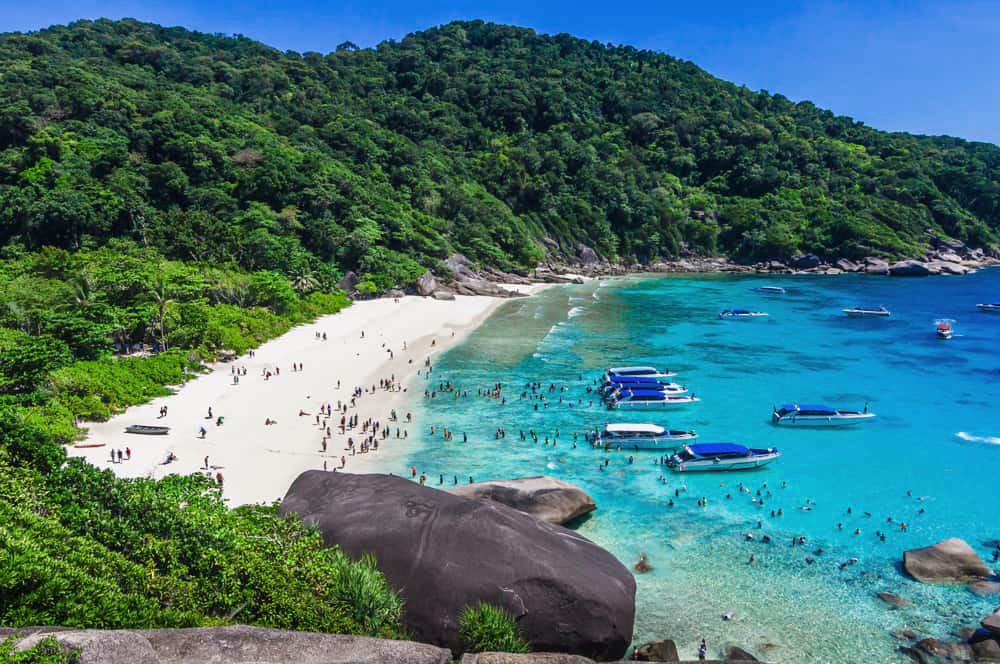
Similan Islands, Thailand sit quietly in the Andaman Sea, deceptively modest above water. White sand beaches, tropical forest, a calm invitation. Below the surface, however, the seascape becomes architectural. Coral gardens sprawl like submerged cities on the eastern side, while the western waters are dominated by immense granite boulders draped in coral and shadow. Depths range from fifteen to forty meters, enough to feel the ocean’s mood shift as light fades. Schools of fish sweep past like weather systems. Resorts and liveaboard dive tours in the region are tailored for serious underwater exploration, blending professional dive operations with relaxed island hospitality. This is Thailand at its most elemental.
Maldives reef systems are often described as postcard perfect, yet the real seduction lies beneath the turquoise surface. Here, coral reefs rise abruptly from the deep, forming underwater cathedrals known as thilas and kandus. Marine life congregates in extravagant numbers. Parrotfish crunch coral with audible enthusiasm. Sweetlips hover like painted sculptures. The currents bring nutrients, and with them life. Luxury resorts across the atolls have mastered the art of combining high end comfort with direct access to world class dive sites. Breakfast can be followed by manta rays. Sunset often arrives with whale shark sightings. In the Maldives, diving is not an activity. It is a way of structuring the day.
Bunaken, Indonesia occupies a privileged position off the northern coast of Sulawesi, where tectonic drama has sculpted vertical walls plunging into deep blue. Part of Bunaken Marine Park, this area boasts an extraordinary concentration of marine biodiversity, representing a majority of species found in the western Pacific. Diving here feels like drifting alongside a living encyclopedia. Soft corals ripple. Turtles pass with casual indifference. Visibility often seems infinite. The best season runs from April to November, and dive lodges around Bunaken are designed with functionality and immersion in mind, offering seamless transitions from breakfast table to dive boat. This is Indonesia reminding you why it sits at the heart of the Coral Triangle.
The Great Blue Hole of Belize is less a reef and more a geological statement. A perfectly circular abyss, visible from the air like a sapphire eye set in the sea. Formed by the collapse of an ancient limestone cave system, it descends into darkness with unnerving grace. Diving here is not about color or coral gardens. It is about scale and silence. Stalactites loom like relics from another world. Reef sharks patrol the perimeter. The experience is solemn, almost ceremonial. Liveaboard dive tours departing Belize City or Ambergris Caye are the preferred way to approach the Blue Hole, offering controlled access and expert guidance. This is diving as pilgrimage.
Cocos Island, Costa Rica sits far from the mainland, isolated in the Pacific and wrapped in rainforest. It feels undiscovered because it largely is. Access is limited, and diving is strictly regulated. What waits below is raw power. Hammerhead sharks assemble in staggering numbers. Tiger sharks glide through blue water with unsettling calm. Tuna and rays move in disciplined formations. There are no beach resorts here. Only liveaboard vessels equipped for serious expeditions. Comfort is secondary. Awe is guaranteed. Cocos Island does not entertain. It challenges.
Sipadan, Malaysia rises abruptly from the depths off the coast of Borneo, a limestone pinnacle surrounded by ocean. Protection measures limit daily divers, preserving the integrity of the ecosystem. The result is extraordinary. Barracuda form spiraling tornadoes. Sea turtles appear with improbable frequency. Reef sharks patrol the drop offs. Diving here is vertical, dramatic, and endlessly rewarding. Accommodation is based on nearby islands or mainland resorts, with regulated boat transfers ensuring controlled access. Sipadan proves that conservation, when done properly, enhances rather than restricts experience.
Palau, Micronesia offers a rare blend of natural wonder and historical resonance. Coral reefs flourish alongside shipwrecks from World War II, their steel hulls now draped in coral and anemones. Turtles are frequent companions. Lionfish drift like living ornaments. The water is warm, the visibility exceptional. Dive resorts in Palau focus on sustainability and education, encouraging travelers to engage thoughtfully with fragile ecosystems. This is a destination that rewards curiosity both above and below the surface.
Darwin and Wolf Islands, Galapagos represent diving at its most untamed. Located within the Galapagos Marine Reserve, these remote outposts are magnets for pelagic life. Hammerheads dominate the narrative here, appearing in numbers that defy expectation. Whale sharks pass through with ancient authority. Strong currents demand experience and respect. Liveaboard dive tours are the only viable way to access these sites, and they are designed for seasoned divers seeking encounters that border on the unbelievable. This is nature unconcerned with human comfort.
The Red Sea reefs of Egypt combine accessibility with abundance. Warm waters, exceptional visibility, and extensive coral formations make this one of the most reliable dive regions on Earth. Reef systems stretch endlessly, hosting thousands of marine species. Wreck dives add historical texture, from ancient trade routes to modern maritime stories. Coastal resorts and liveaboards cater to a wide spectrum of divers, from first timers to technical specialists. The Red Sea feels generous. It gives without hesitation.
The Great Barrier Reef, Australia remains unmatched in scale. Stretching over two thousand six hundred kilometers, it is less a single destination than a constellation of ecosystems. Thousands of reefs and islands form a living mosaic visible from space. Diving here varies dramatically by location, from shallow coral gardens to deep reef walls. Marine life is diverse and constant. Australia’s dive infrastructure is among the most professional globally, with resorts and tour operators offering everything from introductory dives to extended expeditions. The Great Barrier Reef is not simply a highlight. It is a reference point.
To dive these places is to recalibrate your sense of wonder. Hotels become sanctuaries between immersions. Dive boats become classrooms. The ocean becomes memory. If there is a single truth shared by all ten destinations, it is this. Once you have seen the world from beneath the surface, the idea of travel without water feels incomplete.
best diving destinations world, scuba diving travel blog, luxury dive tour travel, underwater travel destinations, best coral reef diving, world class dive sites, scuba travel guide, ocean adventure travel, professional dive tours, marine life diving destinations, luxury dive resorts world, liveaboard diving travel, global scuba travel, underwater world travel blog, best snorkeling and diving spots
