
Bangkok’s Street Food Streets – Where the City Truly Reveals Itself
Bangkok is famous for its golden temples, royal palaces, and intricate Buddhist architecture. You can stand before the glowing spires of Wat Phra Kaew, wander through the grandeur of the Grand Palace, and admire centuries of sacred artistry.
But if you want to understand Bangkok—not just photograph it—you follow the smoke.
You turn into narrow lanes where plastic stools line the pavement. You stand shoulder to shoulder with locals. You let the scent of grilled seafood, stir-fried noodles, and crushed chilies guide you.
Street food in Bangkok is not a backup plan. It is a cultural institution. It is dinner, theater, and anthropology rolled into one.
Here are five neighborhoods where Bangkok’s culinary identity unfolds in full color.
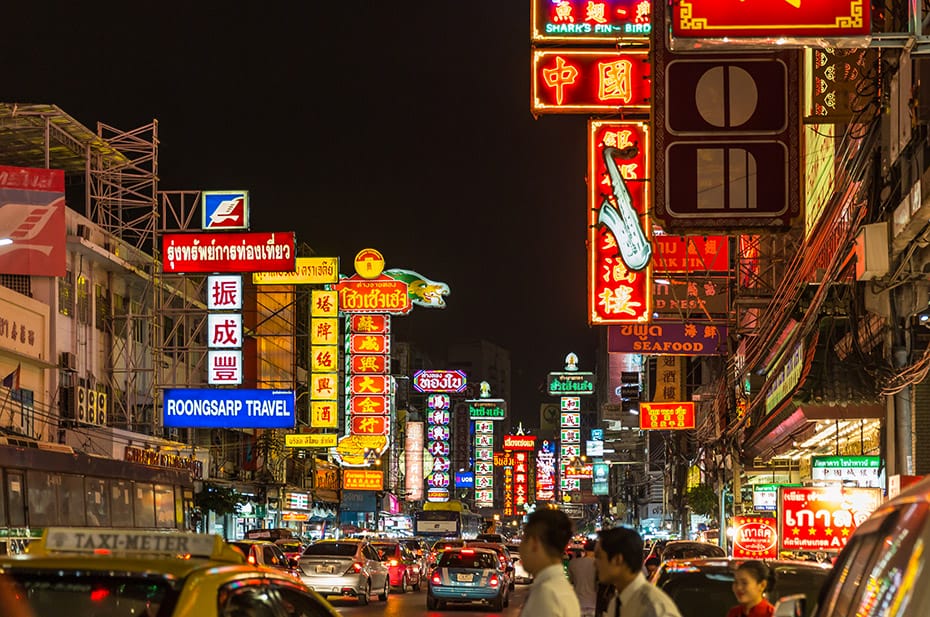
Yaowarat – Chinatown’s Electric Appetite
If someone tells you, “If you haven’t been to Yaowarat, you haven’t been to Bangkok,” believe them.
Yaowarat is Bangkok’s Chinatown, but the specialties here are not limited to Chinese cuisine. Instead, you’ll find a vibrant fusion of Thai and Thai-Chinese dishes that have evolved over generations.
By day, Yaowarat hums. By evening—especially after 6 PM—it ignites.
Lines stretch down the sidewalks. Diners squeeze into tightly packed metal tables. Vendors shout orders across sizzling woks. The energy feels choreographed yet spontaneous.
At Jaow Restaurant, you can indulge in what feels like a sidewalk buffet—sampling dish after dish without leaving your seat. Kuay Jay is known for comforting soups and noodles that balance sweetness, saltiness, and umami in a single spoonful. And then there is T&K Seafood, arguably the most talked-about seafood stall in the district, where grilled prawns and spicy seafood plates emerge in a constant, fragrant procession.
The experience is immersive. You don’t just eat—you participate.
And just steps away lies Pahurat, also known as Little India, where Indian street snacks and spices offer a contrasting flavor profile. One neighborhood flows into another. One culture blends seamlessly with the next.
Yaowarat is Bangkok at full volume.
Sukhumvit Soi 38 – The Compact Nighttime Paradise
Small in size. Massive in flavor.
Sukhumvit Soi 38 may be the smallest of Bangkok’s famous food streets, but what it lacks in length, it compensates with variety.
Located near Thong Lo BTS Station, this narrow alley becomes a culinary runway after sunset. Stalls open in the evening, transforming the quiet lane into a concentrated showcase of Thai street classics.
Here, you can sample Khao Na Pet (roast duck rice), Phat See-ew (stir-fried flat noodles), Pad Thai, Som Tum (green papaya salad), and mango sticky rice—all within a few steps of each other.
For visitors accustomed to food halls in Europe or night markets in the United States, Sukhumvit Soi 38 feels refreshingly unpolished. There are no curated lighting installations. No staged decor. Just stainless steel carts, gas flames, and decades of expertise.
It is efficient. It is authentic. It is deliciously overwhelming.
Victory Monument – The City’s Everyday Flavor
Around Victory Monument, street vendors and established restaurants coexist in a dynamic urban circle.
This area is particularly popular among students and young locals. The atmosphere is energetic but less tourist-heavy compared to Yaowarat.
You’ll find noodle soups in every variation imaginable—beef, pork, chicken, boat noodles served in compact bowls bursting with rich broth. Rice dishes, quick stir-fries, and modern snack trends mingle with traditional staples.
And then there are the “teen-style” treats—crispy waffle sticks and casual finger foods that reflect Bangkok’s evolving street culture.
Victory Monument feels local. Practical. Unfiltered.
You eat here not because it is famous—but because it is good.
Sam Yan Market – Smoke, Sizzle, and Coconut Ice Cream
In central Bangkok, Sam Yan Market stands as a temple of grilled and fried indulgence.
The surrounding streets are dense with vendors specializing in barbecue, skewers, and crispy delights. The aroma alone is enough to test your self-control.
Sam Yan is known for affordable grilled meats—smoky, caramelized, and expertly seasoned. Visitors often joke that they need to “expand their stomach” before arriving, just to sample everything.
After the savory marathon, head next door to Suan Luang Market for coconut ice cream paired with sweet sticky rice. The contrast—cold and creamy after hot and charred—is perfection.
Sam Yan is unapologetically indulgent. It celebrates appetite.
Lumphini Park – Traditional Spice by the Evening Breeze
Just outside Lumphini Park along Ratchadamri Road, evening street stalls gather as office workers and residents wind down their day.
This is where you encounter Som Tum, Laab, and traditional Thai sticky rice prepared exactly as locals prefer it—boldly seasoned and unapologetically spicy.
The flavors here are authentic and intense. If you’re sensitive to heat, remember to politely request less chili. Thai vendors are accommodating—but by default, the spice level reflects local standards.
Eating here feels communal. Casual plastic chairs. Shared tables. Conversations drifting between bites.
You may hear laughter from park joggers cooling down after sunset. You may see families ordering multiple dishes to share.
It is less about spectacle. More about belonging.
Street Food as Cultural Architecture
Bangkok’s street food districts are not random clusters. They function like architectural blueprints of urban life.
Yaowarat represents heritage and diaspora.
Sukhumvit Soi 38 embodies efficiency and accessibility.
Victory Monument captures youth and everyday resilience.
Sam Yan radiates indulgence and density.
Lumphini Park offers neighborhood authenticity.
Each district tells a story through flavor, layout, and rhythm.
Unlike formal restaurants, these streets operate as living ecosystems. They adapt quickly. They reflect local demand. They preserve tradition while absorbing influence.
For travelers from Europe or North America, Bangkok’s street food culture can feel both exhilarating and unfamiliar. Hygiene standards, seating arrangements, and spice levels may differ from what you’re used to—but that difference is precisely the appeal.
Here, cuisine is not separated from daily life. It is woven into sidewalks and street corners.
When to Go
Yaowarat thrives after 6 PM.
Sukhumvit Soi 38 awakens in the evening.
Victory Monument remains lively throughout the day.
Sam Yan pulses at mealtimes.
Lumphini’s stalls shine at dinner.
Bangkok’s food culture follows the city’s heartbeat. As the sun sets, grills ignite.
Why You’ll Want to Return
You don’t remember Bangkok solely for its temples.
You remember the crunch of green papaya.
The sweetness of mango sticky rice.
The burn of chili balanced by lime.
The scent of charcoal rising into humid night air.
Street food in Bangkok is democratic and sophisticated at once. It welcomes everyone. It requires no reservation.
You simply arrive.
You order.
You eat.
And somewhere between the first bite and the last, you realize:
This is the Bangkok you were searching for.
Lumphini Park Evening Eats – Som Tum and Laab by the City Lights
Bangkok street food, Yaowarat Chinatown, Sukhumvit Soi 38, Victory Monument food, Sam Yan Market, Lumphini Park street food, Bangkok night food, Thong Lo BTS, Thai street noodles, Som Tum Bangkok, T&K Seafood, Pahurat Little India, Bangkok food guide, mango sticky rice, Bangkok food crawl
