
Phuoc Hai Beach Guide – Vietnam’s Calm Alternative to Busy Vung Tau
Many travelers heading south from Ho Chi Minh City know the name Vung Tau. It has long been the city’s default coastal escape.
But continue driving a little farther along the provincial coastal road and something changes.
The traffic fades.
The hotels become fewer.
The shoreline opens up.
Suddenly you arrive at Phuoc Hai Beach, a coastal village where fishing boats still dominate the horizon and where the pace of life remains tied to the tides.
Located in Dat Do District of Ba Ria–Vung Tau Province, Phuoc Hai offers something that many beaches near large cities have gradually lost: space.
Wide sand stretches.
Casuarina trees swaying along the coast.
Rock formations scattered across shallow water.
For travelers who enjoy the sea but prefer quiet landscapes over crowded resorts, this small fishing village has quietly become a favorite weekend retreat.
This guide approaches Phuoc Hai not simply as a visitor—but as a travel planner, helping you understand how to structure a short coastal trip here.
Quick Travel Overview
| Category | Key Information |
|---|---|
| Destination | Phuoc Hai Beach |
| Province | Ba Ria Vung Tau |
| District | Dat Do District |
| Distance from Vung Tau | About 16 km |
| Closest Major City | Ho Chi Minh City |
| Landscape | Sandy beach, coastal rocks, casuarina trees |
| Nearby Landmark | Minh Dam Mountain |
| Local Economy | Fishing village |
| Famous Products | Fish sauce, dried seafood |
Where Exactly Is Phuoc Hai Beach
Phuoc Hai sits along the southern coastline of Vietnam, roughly 16 kilometers from the city of Vung Tau.
Travelers typically reach it by following Provincial Road 44 south along the coast.
The transition is noticeable.
Vung Tau feels like a seaside city.
Phuoc Hai feels like a working village that happens to sit beside an excellent beach.
The difference is subtle but meaningful.
Instead of high-rise hotels dominating the skyline, you see:
-
fishing boats pulled onto sand
-
small seafood stalls
-
long rows of casuarina trees lining the shore
And beyond the village rises the green silhouette of Minh Dam Mountain, forming a natural backdrop to the coast.
The Character of the Beach
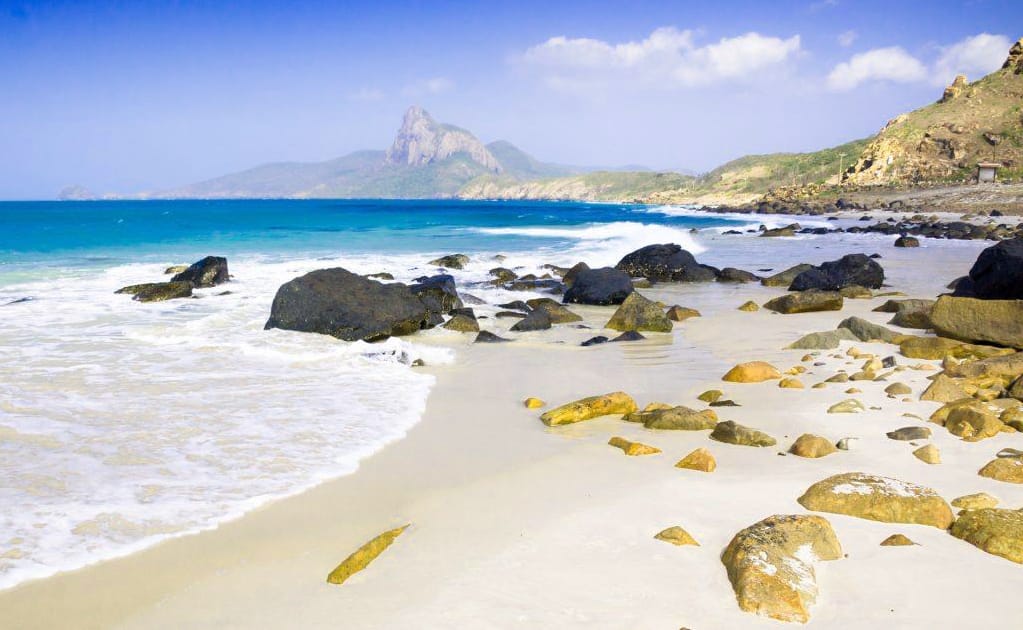
The beach at Phuoc Hai stretches wide and relatively quiet compared with nearby coastal towns.
Its defining features include:
Long sandy shoreline
The beach slopes gently into the sea, creating a comfortable swimming area for visitors.
Clear coastal water
On calm days the water appears surprisingly transparent near the shore.
Small shells and tiny sea creatures occasionally appear along the sand after waves retreat.
Rock formations along the waterline
Scattered rock clusters emerge from shallow water and create dramatic contrasts against the smooth sand.
When waves break against these rocks, the white foam adds a visual rhythm to the coastline.
Casuarina tree rows
The line of casuarina trees behind the beach provides shade and wind protection, producing a steady whispering sound whenever the sea breeze picks up.
Taken together, these elements give Phuoc Hai a coastal landscape that feels natural rather than curated.
A Fishing Village First – Tourism Second
Unlike resort towns that were built primarily for visitors, Phuoc Hai has long been a traditional fishing community.
Local residents have depended on the sea for generations.
Fishing boats leave the shore daily. Many are still the traditional round basket boats commonly seen along Vietnam’s central and southern coasts.
These boats head only a short distance offshore.
Fishing trips typically last two to three hours, focusing on nearshore seafood such as:
-
squid
-
shrimp
-
crabs
-
octopus
Because of this short distance, visitors walking along the beach in the early morning often see fishermen returning with their catch just as the sun rises.
For many travelers, this moment becomes one of the most authentic experiences of the trip.
Seafood Straight From the Boat
One of the advantages of staying in a fishing village is access to extremely fresh seafood.
After returning from the sea, fishermen often sell their catch directly near the shoreline.
Common seafood available includes:
-
crab
-
swimming crab
-
shrimp
-
squid
-
octopus
Many visitors buy seafood directly from fishermen and arrange for it to be cooked nearby or prepared informally along the beach.
Eating seafood while sitting beside the ocean—surrounded by wind, rocks, and the sound of waves—creates a sensory experience that no restaurant dining room can replicate.
The Products That Made Phuoc Hai Known
Long before tourism appeared, the village had already built a reputation for two local products:
Fish sauce
Traditional fish sauce production has long been an important industry here. The fermentation process follows methods used by coastal communities across Vietnam.
Dried seafood
Dried fish and seafood products from Phuoc Hai are widely sold across Ba Ria–Vung Tau Province.
Visitors often bring them home as culinary souvenirs.
These industries still support many local households today.
Development – Slow but Noticeable
For many years Phuoc Hai remained relatively unknown to travelers.
That began to change once coastal infrastructure improved.
New coastal roads and improved regional planning made the village easier to reach from nearby cities.
Gradually, tourism services began appearing:
-
small hotels
-
guesthouses
-
seafood restaurants
-
beachside services
The development has remained relatively modest compared with larger destinations.
As a result, the town still feels part village, part emerging beach destination.
What to Do at Phuoc Hai Beach
Although Phuoc Hai is not a large tourist hub, several simple activities define the experience.
Swimming and Relaxing
The gently sloping shoreline makes swimming accessible in many areas.
Visitors also spend time simply walking along the beach or sitting under casuarina trees.
Watching Fishermen at Sunrise
Early mornings reveal the rhythm of local life.
Basket boats return to shore while fishermen unload their catch.
For photographers and early risers, sunrise here offers some of the most atmospheric coastal scenes in southern Vietnam.
Exploring the Rock Formations
The rocky outcrops scattered along the beach provide unique viewpoints and photo opportunities.
During low tide they become easier to explore.
Swimming Pools Near the Sea
Some coastal accommodations offer seawater swimming pools located close to the shoreline.
These allow visitors to enjoy ocean views while swimming in calmer water.
The Weekend Escape from Ho Chi Minh City
Phuoc Hai has increasingly become a weekend destination for travelers from Ho Chi Minh City.
During major holidays and weekends, thousands of visitors travel here for short coastal breaks.
Typical travel options include:
-
organized tours
-
intercity buses
-
private cars
-
motorbike trips
Among younger travelers, the motorbike journey has become particularly popular.
The coastal roads allow riders to experience the landscape directly—salt air, ocean views, and quiet stretches of countryside.
For many travelers, the journey becomes just as memorable as the destination.
Things the Media Doesn’t Tell You
Travel photos often present Phuoc Hai as an untouched coastal paradise.
Reality is more nuanced.
First, it remains a working fishing village, which means parts of the shoreline are used for boats and fishing equipment.
Second, tourism infrastructure is still developing. While hotels and services exist, they are not as abundant or polished as in larger resort towns.
Weekend crowds can also appear, especially when visitors from Ho Chi Minh City arrive during holidays.
However, these factors are not necessarily drawbacks.
They are simply reminders that Phuoc Hai is not a resort designed solely for tourists. It is a coastal community that gradually welcomed visitors while continuing its traditional way of life.
Understanding that balance helps travelers appreciate the destination more realistically.
Voices from the Travel Community
Online travel groups and map reviews often highlight the same impressions.
One traveler described the beach experience like this:
“You can walk a long distance along the sand without seeing large crowds. The sound of the wind through the trees becomes part of the experience.”
Another visitor wrote:
“Watching fishermen bring in seafood at sunrise made the whole trip worthwhile.”
These comments reflect a consistent theme:
Phuoc Hai is less about attractions and more about atmosphere.
Planning Your Visit
If you are planning a short trip from Ho Chi Minh City or Vung Tau, Phuoc Hai works best as a slow coastal retreat rather than a packed sightseeing itinerary.
Consider structuring your visit around:
Morning beach walks
Seafood meals by the water
Sunset views along the rocky shoreline
Early morning fishing scenes
The village does not demand a strict schedule.
Instead, it rewards travelers who give themselves time to observe the rhythms of the coast.
Sometimes the most memorable travel moments happen not when you rush to the next attraction—but when you sit quietly beside the sea and let the landscape unfold.
Phuoc Hai offers exactly that opportunity.
A Planner’s 48-Hour Escape to Phuoc Hai Beach – Sand, Rocks, and Sea Wind.
phuoc hai beach, phuoc hai travel guide, phuoc hai fishing village, ba ria vung tau beach, phuoc hai seafood, minh dam mountain, phuoc hai weekend trip, vung tau coastal route, phuoc hai sunrise boats, phuoc hai vietnam travel, phuoc hai beach guide, phuoc hai motorbike trip, phuoc hai seafood village, beaches near ho chi minh, phuoc hai coastal village
