
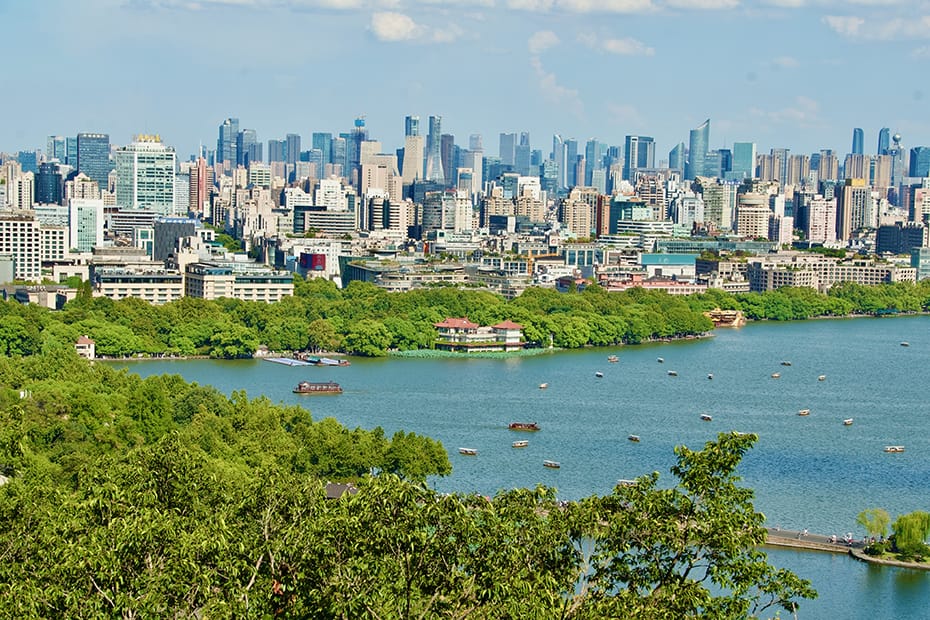
Hangzhou West Lake Weekend And The Most Beautiful Lake In China
There is a Chinese saying that translates loosely as “Above there is heaven. Below there are Suzhou and Hangzhou.” It sounds poetic. It also sounds exaggerated.
Then you arrive in Hangzhou.
And you understand.
Set in the Yangtze River Delta and serving as the capital of Zhejiang Province, Hangzhou lies about 180 kilometers northwest of Shanghai. It is modern, prosperous, and increasingly international. Yet its soul is ancient. Landscapes here feel painted rather than constructed. Water, mist, stone bridges, curved roofs, and distant hills combine into scenes that seem borrowed from classical scroll paintings.
If you have a weekend and a sense of curiosity, Hangzhou will reward you generously. But it helps to know how to move, where to linger, and what not to assume.
First Steps In Hangzhou. What You Should Know
Hangzhou has two main railway stations: the New Train Station and the East Train Station. If you are heading to Shanghai, tickets can be purchased at the New Train Station, making the city an easy extension of a larger China itinerary. The connection is smooth and efficient, linking two of the country’s most dynamic urban centers in a matter of hours.
Taxis in Hangzhou are affordable and generally friendly. For travelers who do not speak Chinese, it is wise to have your destination written in Chinese characters before you step into a cab. A small detail, but it makes a significant difference. And when waiting for a taxi, patience is part of the culture. Queuing is expected. Jumping the line is not.
Public buses and electric buses are impressively clean and practical, offering a convenient way to move around the city without stress.
If you plan to explore West Lake by boat, you will see clear pricing displayed directly on the vessels. Choose boats with visible price signs and avoid those that do not list them. Transparency is your friend.
Accommodation requires a bit of strategy. In Hangzhou, a four star label does not always match what travelers from Europe or the United States might expect. English speaking reception staff are not guaranteed. Five star hotels, on the other hand, often offer more consistent service standards and surprisingly reasonable rates. If comfort and smooth communication matter to you, it is worth considering the higher category.
Currency exchange can be complicated outside major hubs like Beijing and Shanghai. Procedures at local banks may feel bureaucratic. Exchanging a modest amount of cash at the airport before arriving in Hangzhou will save time and frustration.
These practical details are not glamorous. But they clear the path so you can focus on what truly matters.
West Lake. The Beating Heart Of Hangzhou
West Lake sits to the west of the city center and covers approximately 6.3 square kilometers. It is widely regarded as the most beautiful lake in China. After spending time here, that claim feels less like marketing and more like consensus.
The lake is not simply water. It is composition. Stone bridges arc gracefully over narrow causeways. Pavilions rest along the shoreline. Sculptures appear at thoughtful intervals. Willow trees lean toward their reflections. Everything feels curated yet organic.
Renting a boat and gliding across the surface offers a different perspective. The skyline softens. The city recedes. You float between history and horizon.
West Lake is not meant to be rushed. Walk slowly. Cross the bridges. Pause at the pavilions. Watch how the light shifts through the day. Morning mist gives the lake a dreamlike quality. Afternoon sun reveals sharp architectural details. At dusk, the water mirrors the sky in muted blues and golds.
It is easy to see why generations of poets, painters, and scholars found inspiration here. You do not need to be an artist to feel it.
Longjing Village. Where Tea Is A Way Of Life
Southwest of West Lake lies Longjing Village, the birthplace of the famous Longjing tea, also known as Dragon Well tea.
The road gently climbs into green hills covered in tea terraces. The air changes. It smells fresh, grassy, slightly sweet.
Visitors are welcomed to walk through the tea fields and even pick tea leaves themselves. It is a tactile experience. You bend down, feel the texture of the leaves, and suddenly tea is no longer a supermarket product. It is agriculture, heritage, and patience.
Longjing Village is not only about tea. It is also about taste. Longjing shrimp, a local specialty, pairs delicate shrimp with freshly brewed tea. The combination is unexpectedly refined. Light, aromatic, balanced. Sitting in a traditional setting, sipping tea while tasting this dish, feels like participating in a ritual rather than just having lunch.
For travelers who value authenticity and cultural depth, this village is essential.
Qinghefang Street. Silk And The Art Of Restraint
Qinghefang Street is Hangzhou’s lively pedestrian shopping street. If West Lake is serenity, Qinghefang is energy.
Shops line the street, displaying silk scarves, tea sets, ceramics, handicrafts, and souvenirs in abundant variety. Hangzhou has long been known as a center of silk production, and here you can find high quality silk products at accessible prices. A refined silk scarf makes a lightweight and elegant reminder of your trip.
But there is a warning embedded in the experience. The temptation to overspend is real. It is easy to become absorbed in the atmosphere and forget your shopping plan. Set a budget. Decide what you truly want. Then enjoy browsing without regret.
The architecture of the street retains traditional Chinese elements, offering a pleasant blend of commerce and culture. Even if you buy nothing, the walk itself is worth your time.
Lingyin Temple. Silence And Scale
Lingyin Temple is one of the most famous temples in Hangzhou and home to more than 3,000 monks.
Approaching the temple complex, you sense a shift. Noise fades. Movements slow. The main hall features three layered roofs, and at its upper level stands a large statue of Shakyamuni Buddha carved from solid wood. Surrounding figures, also carved from wood, display various expressions and gestures, each one detailed and deliberate.
The atmosphere is respectful and serene. Visitors are expected to follow the temple’s rules and maintain quiet. This is not a tourist attraction in the conventional sense. It is an active place of worship.
For travelers accustomed to Europe’s cathedrals or America’s historic churches, Lingyin Temple offers a parallel yet distinct spiritual architecture. It reveals how space, scale, and craftsmanship can shape contemplation.
Xixi Wetland National Park. The Ancient Water Gate
To the west of the city lies Xixi Wetland National Park, one of the rare areas in Hangzhou that has resisted full modernization.
This vast wetland is interlaced with waterways and traditional structures. The park preserves an older vision of China, where wooden buildings, arched bridges, and quiet canals define daily life.
Water surrounds you. Boats glide silently. Reeds sway in the breeze. It feels like stepping into a historical chapter that has not been edited by skyscrapers or neon lights.
Xixi has been described as an ancient gateway to China, and the phrase fits. It offers a glimpse into how water once shaped commerce, travel, and settlement patterns. For visitors interested in cultural landscapes and environmental preservation, this park adds essential depth to the Hangzhou experience.
Hangzhou In Perspective
Hangzhou is prosperous. It is developing quickly. International visitors are arriving in growing numbers. Yet the city’s identity remains anchored in water, tea, silk, and spirituality.
In a single weekend, you can drift across West Lake, harvest tea in Longjing Village, negotiate silk purchases on Qinghefang Street, stand in silence at Lingyin Temple, and wander through the wetlands of Xixi. Each location reveals a different facet of the same story.
Heaven above. Hangzhou below.
It sounds bold.
But after walking its bridges, tasting its tea, and watching the mist rise from its lake, the phrase feels less like exaggeration and more like invitation.
If you are searching for a destination that combines elegance, history, practicality, and emotional impact, Hangzhou is ready.
All you have to do is go.
Xixi Wetland National Park Hangzhou And The Ancient Water Gate Of China.
Hangzhou travel guide,West Lake Hangzhou,Longjing Village tea,Dragon Well tea China,Qinghefang Street shopping,Lingyin Temple Hangzhou,Xixi Wetland Park,Hangzhou silk market,Hangzhou weekend trip,Hangzhou to Shanghai train,West Lake boat ride,Hangzhou travel tips,Zhejiang capital city,Hangzhou cultural sites,China scenic destinations
