Hanoi Style Cafes Hidden Inside Saigon
Saigon has always been a city that moves quickly. Motorbikes surge like schools of fish, conversations spill into the street, and time itself feels elastic, stretched thin by ambition and sunlight. Yet within this restless city, there are places that seem to resist the pace entirely. Step through an unassuming doorway, climb a narrow staircase, or duck into a shaded courtyard, and suddenly Saigon loosens its grip. The air cools. The noise softens. Hanoi appears, not as imitation, but as memory.
These Hanoi style cafes are not themed curiosities. They are emotional spaces, built less with bricks than with longing. They exist for people who miss the slow afternoons of the North, the worn paint of old streets, the taste of coffee taken seriously and quietly. Even travelers who have never set foot in Hanoi feel something familiar here, a sense of inherited nostalgia that does not ask for explanation.
Cacophony Cafe
Cacophony is not a cafe you simply enter. It is a place you climb into, one level at a time, shedding Saigon with each step. Spread across three floors, each level tells a different story, but it is the third floor that stays with you long after the cup is empty.
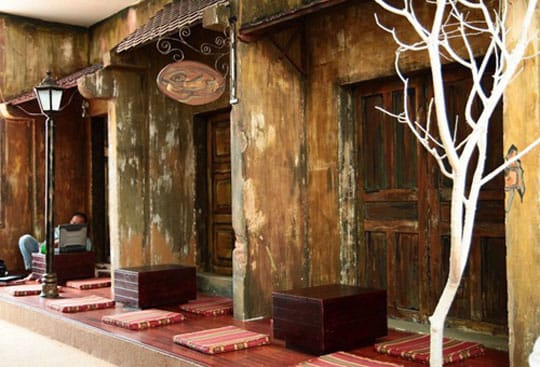
Here, the space is built like a fragment of an old Hanoi neighborhood suspended in midair. Weathered street signs lean against peeling walls. Lamp posts rise where tables should not logically be. Cracked window frames, moss toned tiles, rusted rooftops, and low seating recreate the feeling of a pavement cafe tucked into a forgotten corner of the Old Quarter. You sit close to the ground. Your knees pull in. Conversations drop to murmurs. Even the light feels older.
This is not decoration. It is atmosphere crafted with intent. Cacophony attracts photographers, writers, and travelers who want more than caffeine. They come for the sensation of being elsewhere. For those visiting Ho Chi Minh City, this cafe becomes an unexpected cultural stop, a quiet tour through memory without narration.
Le Gout Cafe
Le Gout feels like a short journey designed by someone who understands how emotion moves through space. Conceived by designer Tien Loi, the cafe unfolds gradually, almost ceremonially. The first room greets you with cool air and dark, warm tones, evoking the private salons and refined interiors once favored by Hanoi’s old elite. Nothing is loud here. Even the furniture seems to speak softly.
Move further inside and the space opens into light. Sun spills across plants and open air, mimicking the experience of wandering a Hanoi street in autumn, leaves falling, the scent of green rice lingering somewhere between memory and imagination. This transition is deliberate. It mirrors the way Hanoi itself reveals beauty slowly, not all at once.
Le Gout’s menu extends beyond drinks. Simple dishes recall childhood afternoons, barefoot lunches, and the taste of food that did not need explanation. Sit back with a cup of coffee, and Hanoi love songs drift through the room. Laughter rises and falls. Books sit open, then forgotten. This is a cafe that encourages staying. Travelers often plan to stop briefly and remain for hours, rearranging their schedules around comfort.
Acoustic 90 Cafe
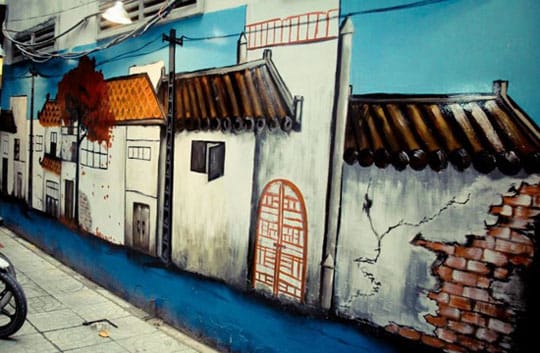
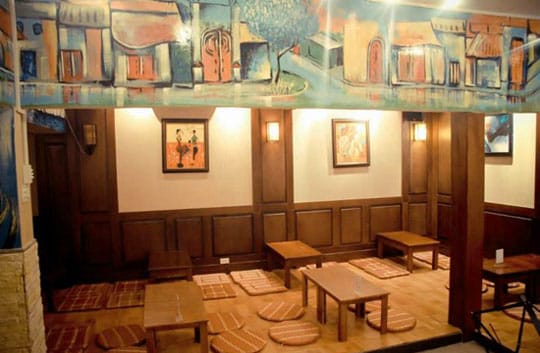
From the outside, Acoustic 90 announces itself with murals that capture the understated charm of Hanoi. The paintings do not shout. They suggest. Inside, the Old Quarter spreads across walls, ceilings, and wooden frames, rendered in muted colors and raw textures. Low wooden tables invite floor seating. The scent of aged wood hangs in the air, grounding the space.
What sets Acoustic 90 apart is not just its design, but its soundscape. At times, a distant street vendor’s call echoes through the speakers. At others, the hum of passing traffic blends with acoustic melodies. It feels less like a curated playlist and more like an aural memory stitched together from lived experience.
For visitors from Hanoi, this cafe can be unexpectedly emotional. A laugh overheard, a breeze passing through an open door, the scrape of a chair on the floor. Small details stir something deep. For travelers, Acoustic 90 offers a cultural immersion without explanation, a way to understand Hanoi not through landmarks, but through feeling.
Moc Cafe
Moc is housed in a structure that seems to have been standing long before the city grew around it. With yin yang roof tiles darkened by time and softened by moss, the building carries the visual language of an ancient capital. Inside, the cafe unfolds through multiple rooms, each with its own rhythm and character. Red and brown tones dominate. Classical paintings line the walls. Narrow staircases lead upward, inviting exploration.
Wood is the soul of Moc. It forms the bones of the house, the furniture, the handrails, even the way light moves across surfaces. Greenery frames the entrance, and a small pathway leads inward, creating a sense of arrival rather than entry. This is not a place for hurried meetings. It rewards patience.
Moc appeals to travelers seeking authenticity rather than novelty. It feels lived in. The kind of cafe where time settles instead of passing. For visitors building a slow travel itinerary in Ho Chi Minh City, Moc becomes a restorative pause between louder attractions.
Coffee as Cultural Travel
These Hanoi style cafes are not merely places to drink coffee. They function as cultural micro journeys. For travelers exploring Saigon, they offer an emotional contrast to rooftop bars and modern cafes. They provide insight into the quieter, more introspective side of Vietnamese urban life.
From a travel perspective, including these cafes in a city tour adds depth. Many hotels in Ho Chi Minh City now recommend them as part of curated neighborhood walks, pairing coffee experiences with nearby markets, galleries, and boutique accommodations. Staying in a centrally located hotel allows visitors to move easily between vibrant Saigon streets and these pockets of calm, creating a balanced travel rhythm.
Choosing accommodation near Phu Nhuan, District Three, or other central areas places travelers within reach of these cafes while maintaining access to major attractions. Hotels that emphasize boutique comfort, soundproof rooms, and local experience pair particularly well with this style of exploration. After a morning of city sightseeing, returning to a Hanoi style cafe feels like stepping into a different chapter of the same story.
In a city defined by speed, these cafes insist on stillness. They remind travelers that Vietnam is not one rhythm, but many. And sometimes, the most memorable journeys happen without distance at all.
Hanoi style cafes Saigon, Hanoi cafes in Ho Chi Minh City, Saigon coffee culture travel, Hanoi inspired coffee shops Vietnam, cultural cafes in Saigon, coffee travel experience Vietnam, nostalgic cafes Ho Chi Minh City, Hanoi atmosphere Saigon cafe, Vietnam cafe hopping guide, Saigon slow travel spots, best themed cafes Saigon, Hanoi coffee experience Saigon, Vietnam urban travel cafes, boutique cafes Ho Chi Minh City, local coffee culture Vietnam