
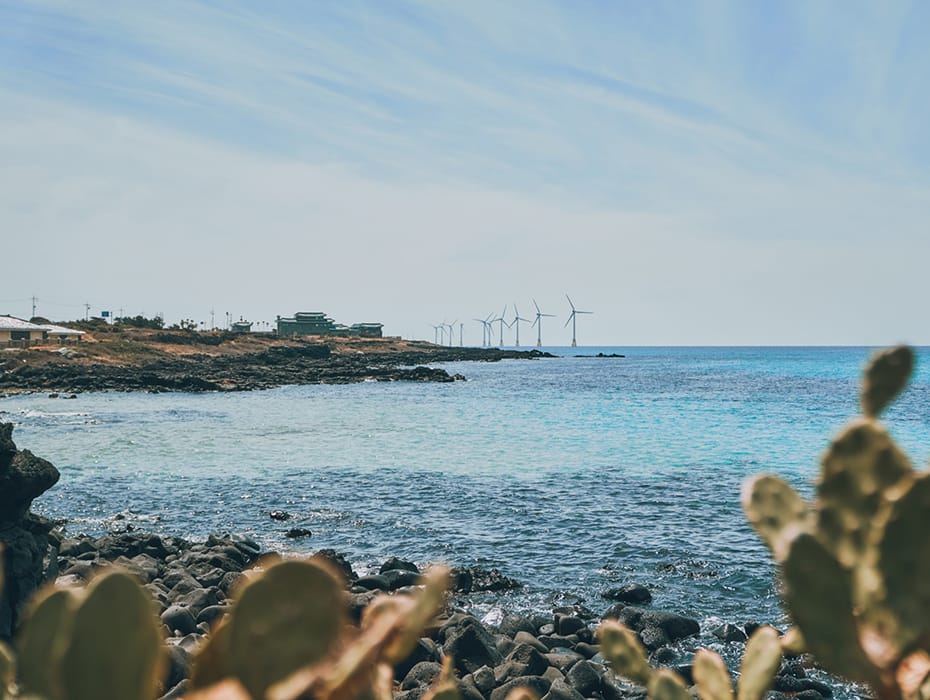
Jeju Island Weekend Escape Through Olle Trails And Sunrise Peaks
There are places that look good in photos. And then there are places that change the way you breathe.
Jeju Island does the second.
You arrive thinking it will be a pleasant weekend by the sea. You leave wondering why you do not live here already. The air feels cleaner. The horizon feels wider. Even the silence seems more deliberate. With its volcanic peaks, winding coastal trails, bright beaches, unusual museums, and unforgettable food, Jeju has quietly become one of the most rewarding short escapes in South Korea.
And the best part? You can experience an astonishing amount in just one weekend.
Walking the Curves of Jeju Olle
The word “olle” in the local dialect means a narrow path with many turns. That definition alone tells you something about Jeju’s personality. It does not unfold in straight lines. It invites you to wander.
Jeju Olle is a network of 25 walking routes circling the island, each one tracing the coastline through forests, fishing villages, stone walls, and open sea views. Route 1, beginning at Siheung Elementary School, is where many travelers choose to start. And it is easy to see why.
You step onto the path and immediately feel removed from city life. The sound of waves replaces traffic. The scent of pine and saltwater follows you around every bend. One moment you are walking beside emerald fields; the next, you are staring out at cliffs carved by lava thousands of years ago.
There is something deeply satisfying about moving at this pace. You are not rushing. You are not checking boxes. You are simply walking, breathing, noticing. And that is exactly how Jeju wants to be experienced.
Hallasan. The Sleeping Giant
At 1,950 meters, Hallasan is the highest mountain in South Korea. It rises calmly at the center of the island, a dormant volcano that has slept for thousands of years.
But do not mistake quiet for ordinary.
Hallasan and its surrounding volcanic landscape are part of a UNESCO World Heritage designation, recognized for their geological and cultural importance. The mountain dominates the skyline from nearly every direction on the island. It feels less like a landmark and more like a guardian.
If you begin early in the morning, it is possible to hike up and back down in a single day. The Seongpanak Entrance at San 137-24, Gyorae-ri, Jocheon-eup, Jeju-si, is one of the main access points and a popular starting route.
The climb is steady but rewarding. In spring, bright azaleas burst into color along the slopes. In autumn, leaves scatter in shades of gold and red. Winter transforms the summit into a white world of snow and silence. Each season reshapes the mountain’s personality, but the feeling at the top remains constant.
You stand at the crater rim, wind brushing your face, and realize that the effort was not just physical. It was emotional. You earned this view.
And it is magnificent.
Udo. A Smaller World With Bigger Charm
Just a 15-minute ferry ride from Jeju’s coast lies Udo, a tiny island of about six square kilometers with fewer than 2,000 residents.
You can walk around it in an afternoon.
That simplicity is its magic.
Udo’s shoreline is edged with striking black lava cliffs, reminders of the volcanic forces that shaped the region. But the island’s most extraordinary feature is its white coral sand beach, the only coral sand beach in South Korea. The sand is pale and luminous against the clear blue water. It feels almost tropical.
There are no overwhelming crowds, no sprawling resorts. Just fishing boats, open sky, and the steady rhythm of waves. You walk. You pause. You sit. Time slows down.
If Jeju is a deep breath, Udo is the exhale.
Seongsan Ilchulbong. Sunrise That Redefines Morning
Some mornings are forgettable. Others stay with you forever.
Seongsan Ilchulbong literally means “Sunrise Peak.” It is a volcanic tuff cone with a crater shaped like a giant bowl, about 600 meters in diameter, ringed by jagged rock formations.
It was formed by volcanic eruptions under the sea. Today, it is one of the most iconic landscapes on the island.
Arrive before dawn. Climb while the sky is still gray. Then wait.
As the sun rises over the horizon, light spills into the crater and across the ocean. The rocks glow gold. The sea shifts from steel blue to shimmering silver. The world feels newly created.
You do not speak. You simply watch.
Few places deliver such a dramatic reminder that every day begins with possibility.
Two Beaches. Two Moods.
Beach time on Jeju is not optional.
Hyeopjae Beach offers calm, clear waters perfect for floating and relaxing. The sand is soft, the atmosphere easygoing. Families spread towels. Couples wander along the shoreline. You can spend hours here without noticing the clock.
On the other side of the spectrum is Jungmun Beach. With stronger, higher waves, it attracts those looking for movement and energy. Water sports, surf, and the raw force of the ocean define the mood here.
Same island. Different personalities.
And that variety is what makes Jeju feel endlessly interesting.
Museums With Character
Jeju does not only rely on nature to impress.
The Jeju Teddy Bear Museum is unexpectedly delightful. It houses an enormous collection of teddy bears, from historical recreations to the smallest teddy bear in the world. There is even a charming souvenir shop and a cozy café. It feels playful without being childish, nostalgic without being outdated.
Then there is Jeju Love Land, an outdoor sculpture park featuring nearly 140 statues centered on themes of intimacy and relationships. Some pieces will make you blush. Others will make you laugh. It is bold, surprising, and undeniably memorable.
Jeju has a sense of humor. And it is not afraid to show it.
Eating Jeju Properly
Travel is incomplete without food, and Jeju’s cuisine is rooted in its land and sea.
Jeju black pork barbecue is the island’s culinary signature. The local black pigs produce meat that is firmer and richer than standard white pork. Grilled Korean-style, it arrives sizzling, aromatic, and impossible to ignore.
Then there is jeonbokjuk, a comforting abalone porridge made from rice and fresh abalone. For many Koreans, eating this dish on Jeju is practically a ritual. It is warm, subtle, and deeply satisfying. After a day of hiking and sea air, it feels restorative.
Simple ingredients. Profound flavor.
Sleeping Above the Sea
For those wanting to wake up to the sound of waves, Hyatt Regency Jeju sits dramatically on a cliff facing the ocean. With 223 rooms, including some designed in traditional Korean style, the hotel blends modern comfort with regional character.
It was also a filming location for the well-known Korean drama Boys Over Flowers, adding a touch of pop culture romance to its already cinematic setting.
Step onto your balcony. Look out at the endless blue. You will understand why so many people come for a weekend and begin planning their return before they leave.
Why Jeju Works So Well For A Weekend
The genius of Jeju is balance.
You can hike the highest mountain in the country in the morning. Walk a coastal trail in the afternoon. Eat black pork by sunset. Watch sunrise from a volcanic crater the next day. Ferry to a tiny island before lunch. Lounge on coral sand before heading back.
Nothing feels rushed. Nothing feels forced.
It is a place where nature, culture, and comfort coexist without competing. A place where you can choose adventure or relaxation and find both within minutes of each other.
You do not need weeks to feel Jeju.
You just need to start.
Hallasan National Park And The Day I Climbed South Koreas Highest Mountain
Jeju Island weekend,Jeju Olle trails,Hallasan hiking,Seongsan Ilchulbong sunrise,Udo Island ferry,Hyeopjae Beach Jeju,Jungmun Beach surfing,Jeju black pork,Jeonbokjuk abalone porridge,Jeju UNESCO site,Jeju coastal walk,Jeju Teddy Bear Museum,Jeju Love Land park,Hyatt Regency Jeju,Jeju travel guide
