
Cameron Highlands Escape from Kuala Lumpur – Cool Air Tea Hills and Tudor Charm
Cameron Highlands – Malaysia’s Answer to Da Lat
Three hundred kilometers from the tropical pulse of Kuala Lumpur, the air changes. The humidity softens. The heat loosens its grip. You roll down the window, and instead of city haze, you breathe in something unexpectedly crisp.
Welcome to Cameron Highlands—Malaysia’s cool-climate sanctuary perched 1,500 meters above sea level.
Often described as Malaysia’s Da Lat, this elevated plateau is more than a scenic retreat. It is a place where colonial architecture meets rolling tea estates, where strawberries grow in equatorial soil, and where the temperature hovers around a comfortable 25°C almost all year long.
For travelers used to Southeast Asia’s tropical intensity, Cameron Highlands feels almost surreal. Calm. Green. Measured.
And very hard to leave.
A Highland Discovered by Accident
In 1885, a British explorer named William Cameron mapped this highland region during a surveying expedition. What he found was not just elevated land—but possibility.
Over the following four decades, the once-bare hills were transformed. Trees were planted. Slopes were cultivated. The land was shaped into something productive and picturesque.
The British, seeking respite from Malaysia’s lowland heat, gradually established infrastructure here: a nine-hole golf course, guesthouses, a railway station, schools, hospitals, and—most famously—tea plantations.
Cameron Highlands became a colonial hill station. A cool-weather refuge with unmistakable British fingerprints.
Today, that layered history is still visible in its architecture, landscapes, and atmosphere.
Tea Plantations – The Green Signature of Cameron Highlands
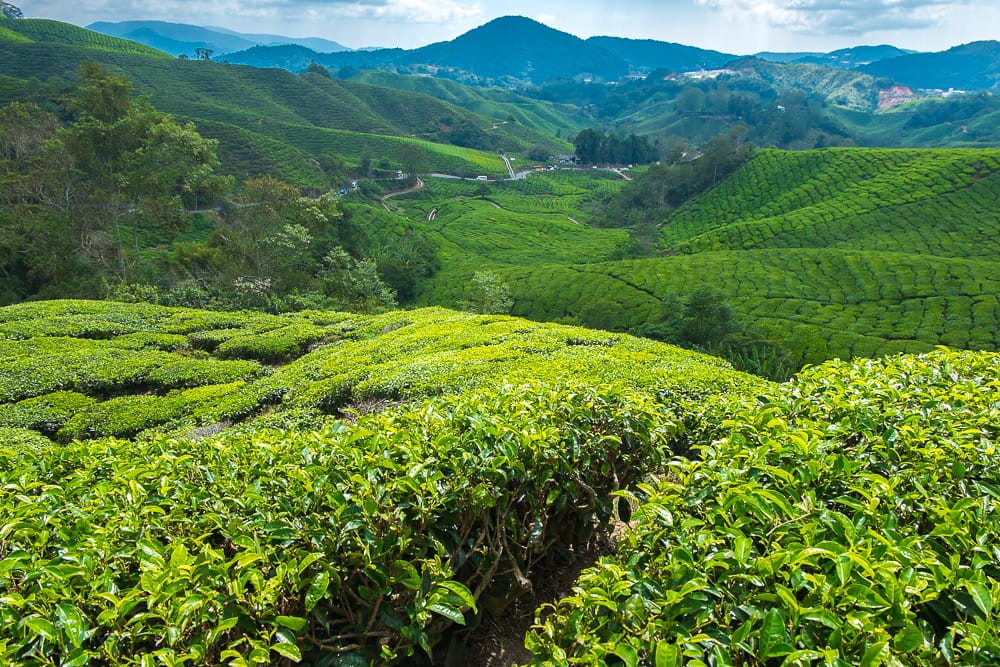
The fertile soil and mild climate created ideal conditions for tea cultivation. The result? Vast, sculpted tea estates cascading over hills in meticulously trimmed waves.
Visiting a tea plantation here is not a staged tourist attraction—it is an immersive experience. Before sipping a fresh cup, you can walk through the estates themselves, observing how the leaves are cultivated and processed. Many plantations allow visitors to explore the farms and factories without entrance fees.
The experience feels almost ceremonial.
You move from field to factory, from leaf to steam, from hillside wind to porcelain cup. The air carries a faint, earthy sweetness. Workers move with practiced rhythm across the slopes. Machinery hums in the background.
Then you sit. A cup of freshly brewed tea in hand. Cool breeze brushing your face. Green valleys unfolding in every direction.
It is not just tea. It is landscape distilled into flavor.
The Smoke House – A Tudor Memory in the Tropics
Perhaps nowhere is the British colonial legacy more tangible than at The Smoke House.
Built in 1937, this architectural ensemble recreates the aesthetic of an English Tudor village. Steep gabled roofs. Timber framing. Garden hedges trimmed with geometric precision.
The property was originally designed to ease the homesickness of British residents living in colonial Malaysia. And stepping inside today, you can almost sense that longing preserved in brick and wood.
Afternoon tea served in a Tudor-style dining room feels surprisingly natural here. Outside, mist rolls gently across manicured lawns. It is England—transplanted and softened by Malaysian greenery.
Architecturally, it stands as a deliberate statement: climate and culture intertwined.
Brinchang – Strawberries and Highland Energy
Cameron Highlands is not a single village but a collection of settlements. Among them, Brinchang stands out as the second-largest town in the region.
Historically known for its butterfly garden and strawberry farms, Brinchang remains one of the few places in Malaysia with suitable climatic conditions for strawberry cultivation. The altitude makes it possible.
Walking through a strawberry farm here feels almost European—rows of red fruit thriving under cool highland air. The experience is refreshingly unexpected in tropical Southeast Asia.
Brinchang also carries a more animated atmosphere compared to quieter tea estates. Shops, local eateries, and accommodations cluster along its streets. It is a convenient base for exploring the plateau.
Time Tunnel Museum – A Walk Through Malaysia’s Memory
To understand Cameron Highlands fully, you need context. That is where Time Tunnel Museum comes in.
Often referred to as the “Time Tunnel,” this museum presents curated collections and artifacts that reconstruct Malaysia’s past across decades. Vintage objects. Photographs. Domestic items from different eras.
It is less about spectacle and more about storytelling.
The museum invites you to see how Cameron Highlands—and Malaysia at large—has evolved. Colonial beginnings. Agricultural expansion. Tourism growth. Social transformation.
You leave with perspective.
Climate – The Real Luxury
At 1,500 meters above sea level, Cameron Highlands maintains a steady, comfortable climate. Around 25°C throughout most of the year.
In Southeast Asia, this is rare. And precious.
While the region enjoys cool weather year-round, the most pleasant period is typically from December to February. During these months, the air feels especially crisp, the sky often clearer, and the overall experience distinctly invigorating.
However, timing matters. During peak seasons such as New Year holidays, hotels fill quickly and roads become crowded. The once-quiet highland retreat transforms into a lively gathering place.
If you prefer serenity, aim for shoulder seasons. If you enjoy vibrant energy, holiday periods bring a different kind of charm.
Architectural and Environmental Harmony
Cameron Highlands stands as an example of environmental adaptation rather than environmental domination.
The British did not flatten the hills—they worked with them. Tea estates contour the natural slopes. Tudor-style buildings align with climate needs. Golf greens integrate into rolling terrain rather than imposing on it.
Even today, the region’s visual identity is cohesive: green layers, colonial structures, agricultural geometry.
For travelers accustomed to European hill towns or American mountain retreats, Cameron Highlands offers familiarity in climate—but distinct Southeast Asian texture in culture and history.
It is a convergence point.
The Journey from Kuala Lumpur
The drive from Kuala Lumpur covers approximately 300 kilometers. It is a gradual ascent—urban sprawl giving way to winding roads and forested hills.
As elevation increases, you notice subtle changes. Palm trees thin out. Air cools. Mist begins to drift between slopes.
By the time you arrive, you understand why this highland plateau has long been considered one of Malaysia’s most attractive destinations.
It offers contrast. Relief. Perspective.
Why Cameron Highlands Stays With You
Some destinations impress loudly. Cameron Highlands persuades quietly.
It is in the geometry of tea terraces.
In the Tudor silhouette of The Smoke House.
In strawberries growing where you least expect them.
In museum corridors filled with fragments of time.
It is in the temperature—the gentle 25°C that allows you to walk for hours without fatigue.
It is in the colonial story layered beneath Malaysian identity.
And it is in the realization that Southeast Asia is not defined solely by beaches and tropical heat. There are highlands. There are cooler skies. There are landscapes that whisper rather than shout.
Once you breathe that mountain air, once you sip tea overlooking emerald slopes, once you wander through Brinchang or step inside the Time Tunnel, the thought arrives naturally:
Why haven’t I come here before?
Cameron Highlands does not demand attention. It earns affection.
And that is far more powerful.
Time Tunnel Museum Visit – Stepping Into Malaysia’s Living Past
Cameron Highlands travel, Cameron Highlands Malaysia, Kuala Lumpur to Cameron, Cameron tea plantations, The Smoke House hotel, Brinchang strawberry farm, Time Tunnel Museum, Malaysia hill station, Cameron Highlands weather, British colonial Malaysia, Cameron golf course, Malaysia tea farms, best time Cameron, Malaysia highland retreat, Da Lat of Malaysia
