
Dubai city travel, architecture ambition and Arabian soul
There are cities you visit, and there are cities that visit you back, long after the plane has lifted off. Dubai is the latter. It announces itself before you arrive, a mirage that refuses to dissolve, a place where audacity has been engineered into the skyline and ambition hums beneath the sand. This is not merely a destination on a tour itinerary. It is a provocation. Come, it seems to say, and see how far imagination can be pushed before it becomes reality.
Dubai sits on the edge of the Persian Gulf like a polished blade, catching the sun and throwing it back brighter. Once a modest trading port, it has reinvented itself with the confidence of a city that does not fear excess. Yet beneath the glass towers and luxury hotels, there is an older rhythm, a pulse of wind, water, and commerce that still shapes daily life. To travel here is to oscillate between centuries in a single afternoon.
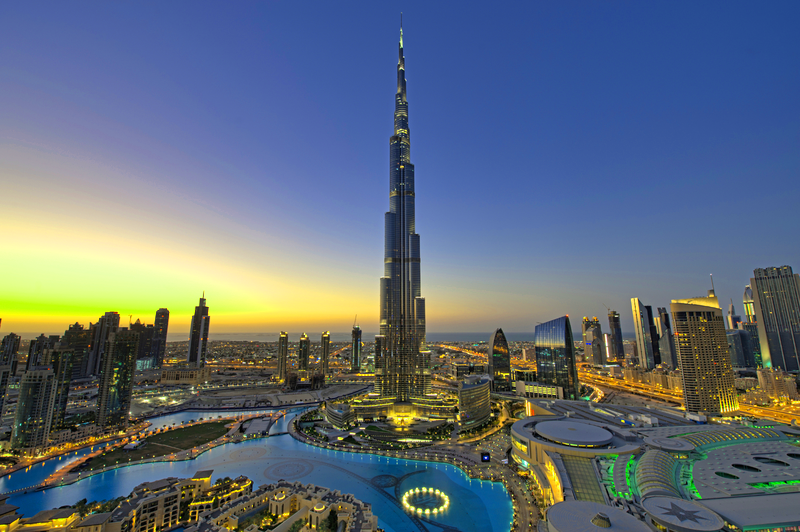
The first moment of surrender comes when Burj Khalifa enters your field of vision. It does not simply rise; it dominates, pulling the eye upward until the neck aches and perspective gives up. At 828 meters, it is less a building than a declaration. Designed with a clarity that borders on arrogance, Burj Khalifa embodies Dubai’s refusal to think small. From afar, it resembles a vertical city, a silver needle threading earth to sky. Up close, it becomes something almost mythic, a modern tower of Babel that somehow escaped divine reprimand.
Ascending Burj Khalifa is a ritual of anticipation. Elevators glide with unnerving smoothness, ears pop, conversations fall quiet. Then the doors open and Dubai unfurls beneath you. Roads curve like calligraphy. The desert presses in from the edges, a reminder that nature still frames the spectacle. At night, the city glows, orderly yet extravagant, and you realize this view is not about height. It is about control, about seeing how a city has choreographed itself into existence.
Leave the tower behind and step into another version of modern ambition: the Dubai Metro. Efficient, spotless, and almost theatrical in its precision, it is the longest fully automated metro system in the world. Nearly forty kilometers of track stitch the city together, moving residents and travelers through a landscape that never quite sits still. Stations resemble boutique hotels more than transit hubs, designed for comfort as much as function. There are no drivers, no shouted instructions, only the quiet confidence of technology doing exactly what it was built to do.
Riding the metro is a lesson in Dubai’s contradictions. Through wide windows, you glimpse skyscrapers, mosques, construction sites, and palm-lined highways in rapid succession. The train slides past shopping districts and residential neighborhoods, revealing a city that functions with remarkable coherence despite its appetite for scale. This is not chaotic growth. It is calculated momentum.
Then, abruptly, modernity loosens its grip. You find yourself stepping onto an Abra, a small wooden ferry that has crossed Dubai Creek for generations. There is no roof, no air conditioning, no spectacle. Just water, wind, and a gentle engine hum. For the price of a single dirham, you drift across the creek as traders once did, watching the city from a lower angle. On one bank, traditional Arabian houses with wind towers whisper of the past. On the other, glass and steel signal the future.
The Abra ride is brief, but it recalibrates the senses. The scent of water mixes with spices from nearby markets. Voices carry across the creek. Art galleries and old souks appear like punctuation marks in the urban narrative. This is Dubai stripped of grandeur, and it is essential. Without it, the skyscrapers would feel hollow, untethered from the human story that made them possible.
From here, indulgence resumes its rightful place. Dubai Mall is not simply a shopping center; it is an ecosystem. With more than a thousand stores, it caters to every appetite, from haute couture to practical souvenirs. But shopping is only the opening act. Inside, you encounter an Olympic-sized ice rink, where skaters glide beneath fluorescent lights while desert heat simmers outside. Nearby, cinemas unfold stories on a grand scale, echoing the city’s own cinematic ambitions.
Then there is Dubai Aquarium, an indoor ocean holding tens of thousands of marine creatures. Sharks circle with casual authority. Rays drift like living punctuation. Children press their faces to the glass, adults slow their pace, and for a moment the frenzy of consumption pauses. The aquarium is not subtle, but it is mesmerizing, a reminder that even here, where everything seems built to impress, wonder still slips through.
After the controlled spectacle of the mall, the coastline offers something softer. Dubai’s beaches stretch along the Persian Gulf, their sand pale and forgiving, the water improbably blue. In winter, the air cools, inviting long walks along the shore. The city recedes slightly, its towers becoming a distant backdrop as waves take center stage. This is where Dubai exhales.
Cafes and restaurants line the coast, blending luxury with leisure. You sip Arabic coffee, strong and fragrant, or sample traditional dishes that carry the warmth of spices and hospitality. Conversations linger. Time slows. The Gulf reflects the sky in endless gradients, and it becomes clear why travelers stay longer than planned. The beach is not an escape from Dubai. It is its counterbalance.
What makes Dubai irresistible is not any single attraction but the way these experiences converse with one another. The Burj Khalifa’s vertical ambition contrasts with the horizontal calm of the sea. The metro’s automation offsets the Abra’s simplicity. The mall’s abundance sharpens the pleasure of a quiet shoreline café. Each moment informs the next, creating a travel narrative that feels intentional rather than overwhelming.
To visit Dubai is to witness a city that has decided not to apologize for wanting more. More height. More efficiency. More beauty. Yet it has not erased its origins. It has layered them, allowing old and new to coexist in productive tension. This balance is what lingers in memory. Long after departure, you recall not just what you saw, but how the city made you feel alert, curious, and slightly intoxicated by possibility.
Dubai does not ask if you are ready. It assumes you are. And once you arrive, you understand why.
Dubai travel guide, Dubai tour experience, luxury travel Dubai, Burj Khalifa visit, Dubai Metro travel, Dubai Abra ferry, Dubai Creek tour, Dubai Mall shopping, Dubai Aquarium attraction, Persian Gulf beach Dubai, Dubai winter travel, modern architecture Dubai, Dubai city tour, Middle East luxury travel, best things to do in Dubai
